
Flamma® 552 Dichlorotriazine
Size of product (mg)
-
1 mg

-
5 mg

-
25 mg




Flamma® 552 Dichlorotriazine
Cat. No. List below
Description
Key features:
1. Excitation/Emission maxima: 550/564 nm
2. High extinction coefficient: ≥ 150,000 cm?¹M?¹
3. Low CF280: 0.079
4. Dichlorotriazine reactive group for specific hydroxyl labeling
5. Red solid appearance
6. Molecular weight: 862.89 g/mol
7. Soluble in DMF and DMSO5
Applications:
1. Labeling of polysaccharides and alcohols on biomolecules
2. Cellular labeling and detection
3. Fluorescence microscopy and imaging
4. Flow cytometry
5. Potential use in super-resolution microscopy techniques
6. Glycobiology research
Advantages:
1. Direct reactivity with polysaccharides and alcohols in aqueous solution
2. Forms stable aryl ether linkages through irreversible chlorine displacement
3. Excellent optical properties when excited with 532, 543, 546, or 555 nm laser lines
4. High pH (>9) labeling allows for selective targeting of hydroxyl groups
5. Minimal reactivity with other nucleophiles under proper conditions
6. Bright and stable fluorescence signals for extended imaging sessions
7. Compatibility with common fluorescence instrumentation
- Fluorophore: Flamma® Fluors 552
- Reactive group: Dichlorotriazine
- Excitation/Emission Max.(nm): 550/564
- Spectrally similar dyes: Alexa555, DyLight550, Cy3, ATTO550
- Extinction coefficient: ≥ 150,000 cm-1M-1
- CF280: 0.079
- Appearance: Red Solid
- Molecular Weight: 862.89 g/mol
- Solubility: DMF, DMSO
- Storage conditions: -20 ℃, protect from light
| Quick link (Cat.#) | Series | EXmax (nm) | EMmax (nm) | Spectrally similar dyes |
| PWR2112 | Flamma® 552 Dichlorotriazine | 550 | 564 | Alexa555, DyLight550, Cy3, ATTO550 |
| KWR2415 | Flamma® 581 Dichlorotriazine | 578 | 593 | Alexa594, DyLight594 |
| PWR2215 | Flamma® 648 Dichlorotriazine | 648 | 667 | Alexa647, DyLight650, Cy5 |
| PWR2515 | Flamma® 675 Dichlorotriazine | 675 | 691 | Alexa680, DyLight680, Cy5.5, IRDye680LT, CF680 |
| PWR2301 | Flamma® 749 Dichlorotriazine | 749 | 774 | Alexa750, DyLight755, Cy7.5, IRDye750 |
| PWR2603 | Flamma® 774 Dichlorotriazine | 774 | 800 | DyLight800, Cy7.5, IRDye800, CF770 |
Background
Flamma® Fluors
BioActs offers a broad range of Flamma® Fluors dyes equipped with variety of reactive and functional groups, which can cover the full spectral range from UV to NIR with their excellent fluorescence performance. Characteristic features of these superior dyes are strong absorption, high fluorescence quantum yield and high photostability. Flamma® dyes maintain good fluorescence activity and stability after conjugation to biomolecules and allow the detection of low-abundance biological structures with great sensitivity. The dyes are compatible with optical conditions of most of fluorescent equipment and are ideal for any applications in biological studies.
- Covering the full spectral range from UV to NIR
- Equipped with a variety of reactive groups: NHS and Sulfo-NHS ester, Vinylsulfone, Maleimide, Click chemistry, isothiocyanate, hydrazide and hydrophobic substances.
- High quantum yields and photostability
- High purity and compatible with most of biomolecules
Flamma® Fluors Dichlorotrazine

Flamma® Fluors dichlorotriazine is for labeling hydroxyl groups. Hydroxyls irreversibly displace one of chlorine at triazine ring via SNAr reaction pathway to yield an aryl ether linkage. Dichlorotriazines are among the few reactive groups that are reported to react directly with polysaccharides and other alcohols in aqueous solution, provided that the pH is >9 and other nucleophiles are not present.

Figure 1. Absorption (upper) and emission (bottom) spectra overlap of Flamma® Fluors

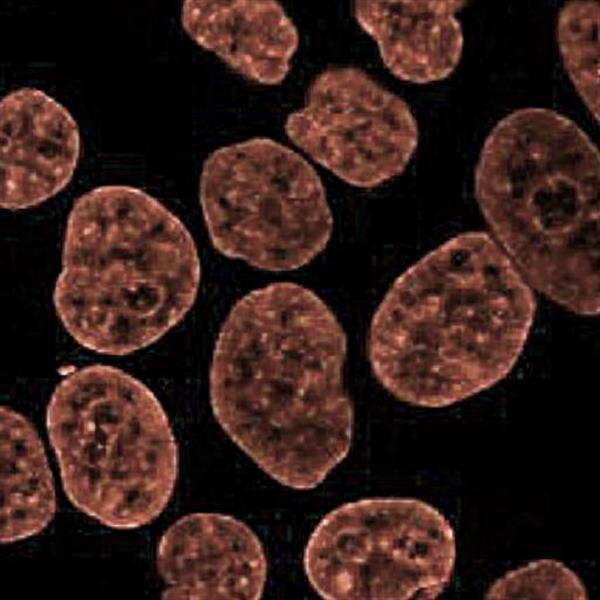
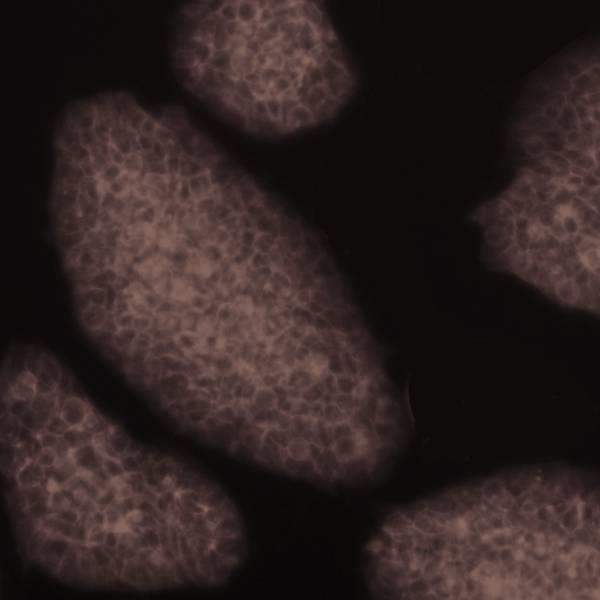
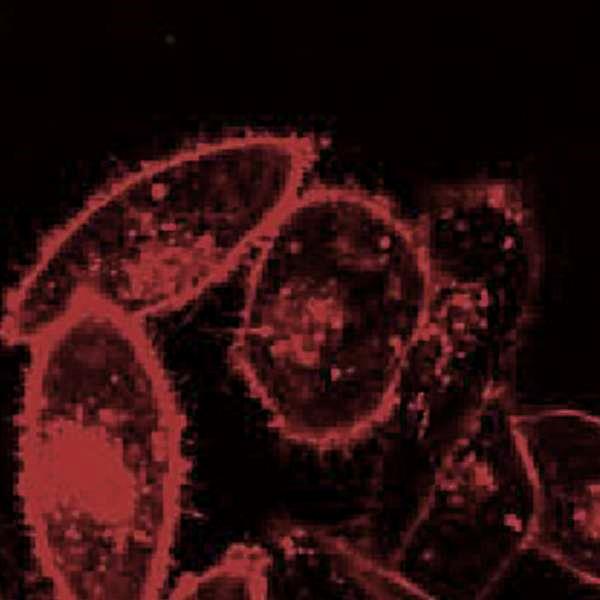
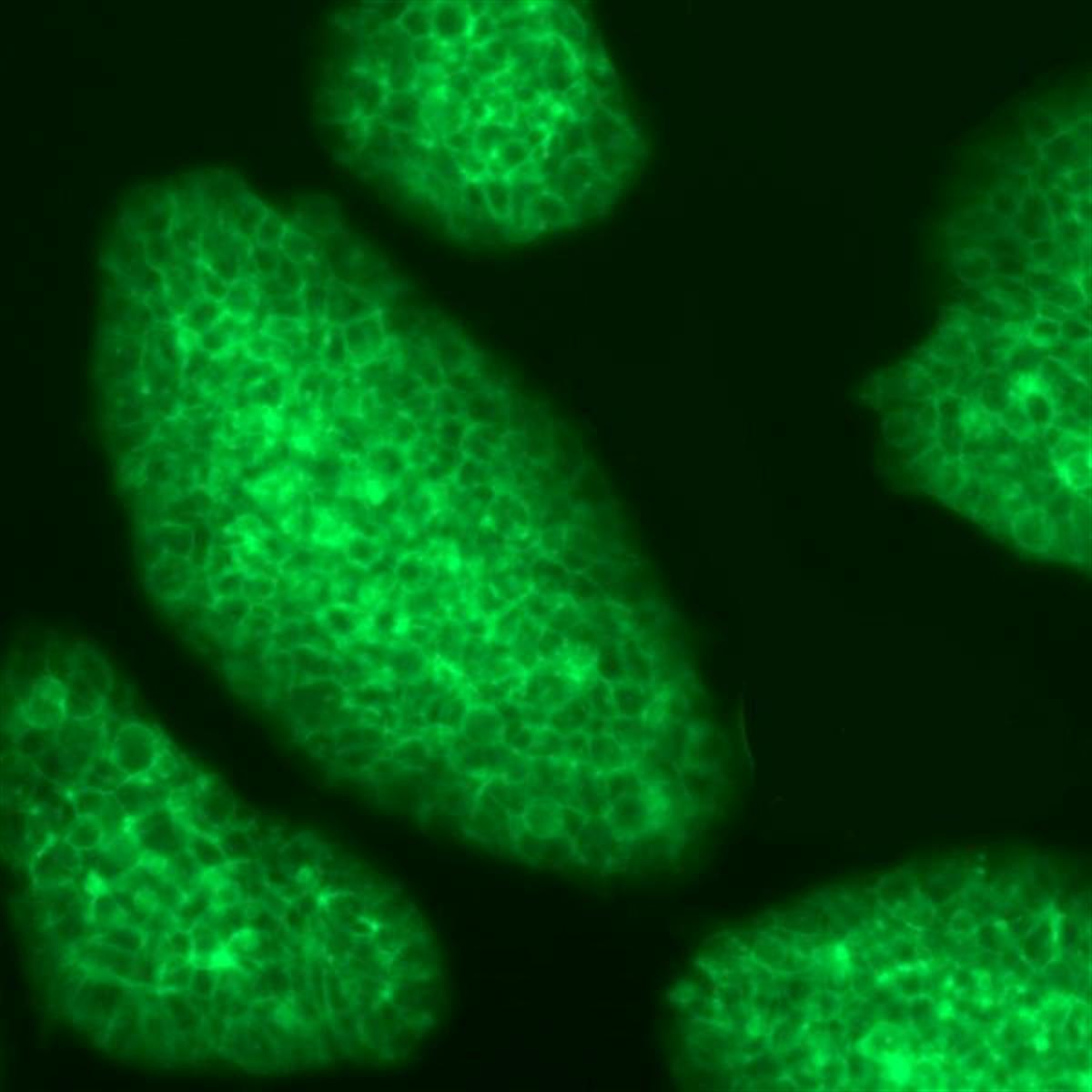
Figure 2. Immunofluorescence imaging and in situ hybridization imaging

Figure 3. Fluorescence images of Flamma® 749 (upper) and Flamma® 774 (bottom) carboxylic acid injected mouse model
Citation & Reference
1. Xu, Peisheng. Zwitterionic chitosan derivatives for pH-sensitive stealth coating. Biomacromolecules 11.9 (2010): 2352-2358.
2. Ibrahim, Basma M. A strategy to deliver genes to cystic fibrosis lungs: a battle with environment. Journal of controlled release 155.2 (2011): 289-295.
3. Oh, Keun Sang. Accurate sequential detection of primary tumor and metastatic lymphatics using a temperature-induced phase transition nanoparticulate system. International journal of nanomedicine 9 (2014): 2955.
4. Yhee, Ji Young. Tumor-targeting transferrin nanoparticles for systemic polymerized siRNA delivery in tumor-bearing mice. Bioconjugate chemistry 24.11 (2013): 1850-1860.
5. Yoon, Hong Yeol. Glycol chitosan nanoparticles as specialized cancer therapeutic vehicles: Sequential delivery of doxorubicin and Bcl-2 siRNA. Scientific reports 4 (2014).
6. Ryu, Ju Hee. Early diagnosis of arthritis in mice with collagen?induced arthritis, using a fluorogenic matrix metalloproteinase 3–specific polymeric probe. Arthritis & Rheumatism 63.12 (2011): 3824-3832.
7. Hollis, Christin P. In vivo investigation of hybrid paclitaxel nanocrystals with dual fluorescent probes for cancer theranostics. Pharmaceutical research 31.6 (2014): 1450-1459.
8. Koo, Heebeom. The movement of self-assembled amphiphilic polymeric nanoparticles in the vitreous and retina after intravitreal injection. Biomaterials 33.12 (2012): 3485-3493.
9. Zhu, Lei. Real-time monitoring of caspase cascade activation in living cells. Journal of controlled release 163.1 (2012): 55-62.
10. Yoon, Hong Yeol. Bioreducible hyaluronic acid conjugates as siRNA carrier for tumor targeting. Journal of Controlled Release 172.3 (2013): 653-661.
11. Yhee, Ji Young. Cancer-targeted MDR-1 siRNA delivery using self-cross-linked glycol chitosan nanoparticles to overcome drug resistance. Journal of Controlled Release 198 (2015): 1-9.
12. Park, Jin Woo. Wide-Ranged Fluorescent Molecular Weight Size Markers for Electrophoresis. Bulletin of the Korean Chemical Society 34.1 (2013): 29-30.
13. Huang, Xinglu. Multiplex Imaging of an Intracellular Proteolytic Cascade by using a Broad?Spectrum Nanoquencher. Angewandte Chemie International Edition 51.7 (2012): 1625-1630.