Flamma® 675 Hydrazide
Product#: PWH1515
$1,100.80
Size of product (mg)
-
1 mg

-
5 mg

-
25 mg

Availability:
Ships in 1-2 Weeks
Flamma® 675 Hydrazide
Cat. No. List below
Description
Flamma® Fluors 675 Hydrazide is an advanced near-infrared (NIR) fluorescent dye designed for specialized bioimaging applications. This reactive dye, derived from a benzindocyanine structure, offers exceptional stability and versatility in fluorescence signaling, particularly for labeling biomolecules containing aldehydes and ketones.
The dye exhibits maximal excitation at 675 nm and emission at 691 nm, aligning closely with popular NIR dyes such as Alexa 680, Cy5.5, IRDye 680LT, and DyLight 680. This spectral similarity facilitates easy integration into existing imaging protocols. Flamma 675 can be efficiently excited using a 633 nm laser line, with emission occurring in the NIR region, which is advantageous for deep tissue penetration in biological samples.
The hydrazide reactive group of Flamma 675 is specifically designed to target aldehydes and ketones. Through a reductive amination reaction, it forms an imine linkage with these functional groups. This reactivity makes it particularly suitable for labeling:
1. Free reducing sugars on biomolecules
2. Oxidized polysaccharides
3. Modified glycoproteins
It's important to note that for optimal labeling of polysaccharides and glycoproteins, primary and secondary alcohols are typically oxidized to aldehydes and ketones prior to conjugation. Flamma 675 Hydrazide excels in various biomedical research applications such as labeling of polysaccharides, glycoprotein modification, biomolecule tagging (those bearing aldehyde or ketone groups, and In vitro and in vivo imaging studies. Flamma 675 Hydrazide offers comparable spectral properties to other popular NIR dyes, making it a suitable alternative or complement in multi-color imaging experiments. Its specific reactivity towards aldehydes and ketones sets it apart for certain applications.The hydrazide functionality makes this dye particularly valuable in glycobiology research, allowing for the study of carbohydrate structures and modifications. This can be especially useful in investigating glycosylation patterns in proteins or cellular glycomes.
Researchers should be aware that the efficiency of labeling may depend on the accessibility of the target aldehydes or ketones. In some cases, mild oxidation of the sample might be necessary to create more reactive sites.The high extinction coefficient (≥ 200,000 cm^-1^M^-1^) indicates strong light absorption, which contributes to the dye's sensitivity in detection applications.
Flamma® Fluors 675 Hydrazide combines specific reactivity with the advantages of NIR fluorescence, making it a powerful tool for researchers in glycobiology, cell biology, and biomedical imaging. Its ability to label aldehyde and ketone-containing biomolecules opens up new possibilities for studying complex biological systems and processes, particularly in the realm of carbohydrate biology and glycoprotein research.
The dye exhibits maximal excitation at 675 nm and emission at 691 nm, aligning closely with popular NIR dyes such as Alexa 680, Cy5.5, IRDye 680LT, and DyLight 680. This spectral similarity facilitates easy integration into existing imaging protocols. Flamma 675 can be efficiently excited using a 633 nm laser line, with emission occurring in the NIR region, which is advantageous for deep tissue penetration in biological samples.
The hydrazide reactive group of Flamma 675 is specifically designed to target aldehydes and ketones. Through a reductive amination reaction, it forms an imine linkage with these functional groups. This reactivity makes it particularly suitable for labeling:
1. Free reducing sugars on biomolecules
2. Oxidized polysaccharides
3. Modified glycoproteins
It's important to note that for optimal labeling of polysaccharides and glycoproteins, primary and secondary alcohols are typically oxidized to aldehydes and ketones prior to conjugation. Flamma 675 Hydrazide excels in various biomedical research applications such as labeling of polysaccharides, glycoprotein modification, biomolecule tagging (those bearing aldehyde or ketone groups, and In vitro and in vivo imaging studies. Flamma 675 Hydrazide offers comparable spectral properties to other popular NIR dyes, making it a suitable alternative or complement in multi-color imaging experiments. Its specific reactivity towards aldehydes and ketones sets it apart for certain applications.The hydrazide functionality makes this dye particularly valuable in glycobiology research, allowing for the study of carbohydrate structures and modifications. This can be especially useful in investigating glycosylation patterns in proteins or cellular glycomes.
Researchers should be aware that the efficiency of labeling may depend on the accessibility of the target aldehydes or ketones. In some cases, mild oxidation of the sample might be necessary to create more reactive sites.The high extinction coefficient (≥ 200,000 cm^-1^M^-1^) indicates strong light absorption, which contributes to the dye's sensitivity in detection applications.
Flamma® Fluors 675 Hydrazide combines specific reactivity with the advantages of NIR fluorescence, making it a powerful tool for researchers in glycobiology, cell biology, and biomedical imaging. Its ability to label aldehyde and ketone-containing biomolecules opens up new possibilities for studying complex biological systems and processes, particularly in the realm of carbohydrate biology and glycoprotein research.
Specifications
Background
Flamma® Fluors
BioActs offers a broad range of Flamma® Fluors dyes equipped with variety of reactive and functional groups, which can cover the full spectral range from UV to NIR with their excellent fluorescence performance. Characteristic features of these superior dyes are strong absorption, high fluorescence quantum yield and high photostability. Flamma® dyes maintain good fluorescence activity and stability after conjugation to biomolecules and allow the detection of low-abundance biological structures with great sensitivity. The dyes are compatible with optical conditions of most of fluorescent equipment and are ideal for any applications in biological studies.
- Fluorophore: Flamma® Fluors 675
- Reactive group: Hydrazide
- Excitation/Emission Max.(nm): 675/691
- Spectrally similar dyes: Alexa680, DyLight680, Cy5.5, IRDye680LT, CF680
- Extinction coefficient: ≥ 200,000 cm-1M-1
- CF280: 0.09
- Appearance: Blue Solid
- Molecular Weight: 959.14 g/mol
- Solubility: DMF, DMSO
- Storage conditions: -20 ℃, protect from light
| Quick link (Cat.#) | FSD series | EXmax (nm) | EMmax (nm) | Spectrally similar dyes |
| CWH1001 | Flamma® 496 Hydrazide | 496 | 520 | Alexa488, FITC, Cy2 |
| PWH1122 | Flamma® 552 Hydrazide | 550 | 564 | Alexa555, DyLight549, Cy3, ATTO550 |
| KWH1415 | Flamma® 581 Hydrazide | 578 | 593 | Alexa594, DyLight594 |
| PWH1215 | Flamma® 648 Hydrazide | 648 | 663 | Alexa647, DyLight650, Cy5 |
| PWH1515 | Flamma® 675 Hydrazide | 675 | 691 | Alexa680, DyLight680, Cy5.5, IRDye680LT, CF680 |
| PWH1301 | Flamma® 749 Hydrazide | 749 | 774 | Alexa750, DyLight755, Cy7.5, IRDye750 |
| PWH1603 | Flamma® 774 Hydrazide | 774 | 800 | Cy7.5, DyLight800, IRDye800 |
Background
Flamma® Fluors
BioActs offers a broad range of Flamma® Fluors dyes equipped with variety of reactive and functional groups, which can cover the full spectral range from UV to NIR with their excellent fluorescence performance. Characteristic features of these superior dyes are strong absorption, high fluorescence quantum yield and high photostability. Flamma® dyes maintain good fluorescence activity and stability after conjugation to biomolecules and allow the detection of low-abundance biological structures with great sensitivity. The dyes are compatible with optical conditions of most of fluorescent equipment and are ideal for any applications in biological studies.
- Covering the full spectral range from UV to NIR
- Equipped with a variety of reactive groups: NHS and Sulfo-NHS ester, Vinylsulfone, Maleimide, Click chemistry, isothiocyanate, hydrazide and hydrophobic substances.
- High quantum yields and photostability
- High purity and compatible with most of biomolecules
What are the advantages?
- Specific Reactivity: Targets aldehydes and ketones, allowing for selective labeling of certain biomolecules.
- NIR Emission: Allows for deep tissue penetration and reduced autofluorescence in biological samples.
- Stability: Provides consistent and reliable fluorescence signals.
- Versatility: Compatible with a wide range of biomolecules and imaging techniques.

Flamma® Fluors hydrazide dyes can label aldehyde and ketone through reductive amination reaction to form an imine linkage. The main labeling target for hydrazides are free reducing sugars on biomolecules, and prior to conjugation, primary and secondary alcohols on polysaccharide and glycoprotein are usually oxidized to aldehyde and ketone. Fluorescent modification of aldehyde or carbonyl groups in carbohydrates is also frequently utilized for their analysis by HPLC, capillary electrophoresis and other methods. Hydrazide dyes can also label biomolecules, which introduced aldehyde by genetical or chemical modification.

Figure 1. Absorption (upper) and emission (bottom) spectra overlap of Flamma® Fluors

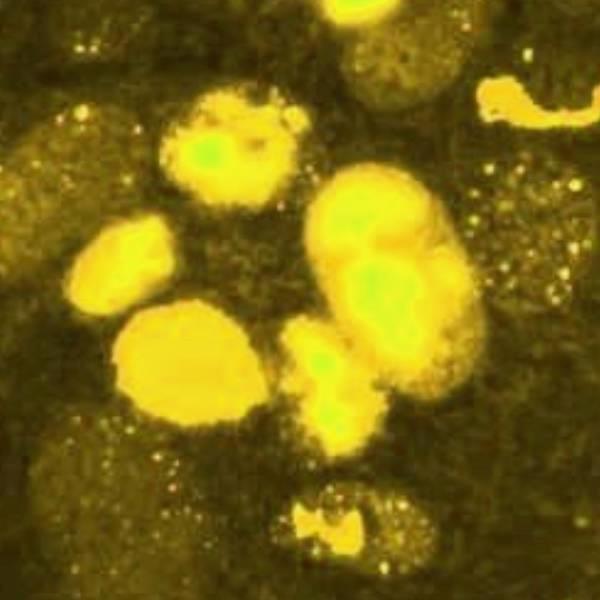
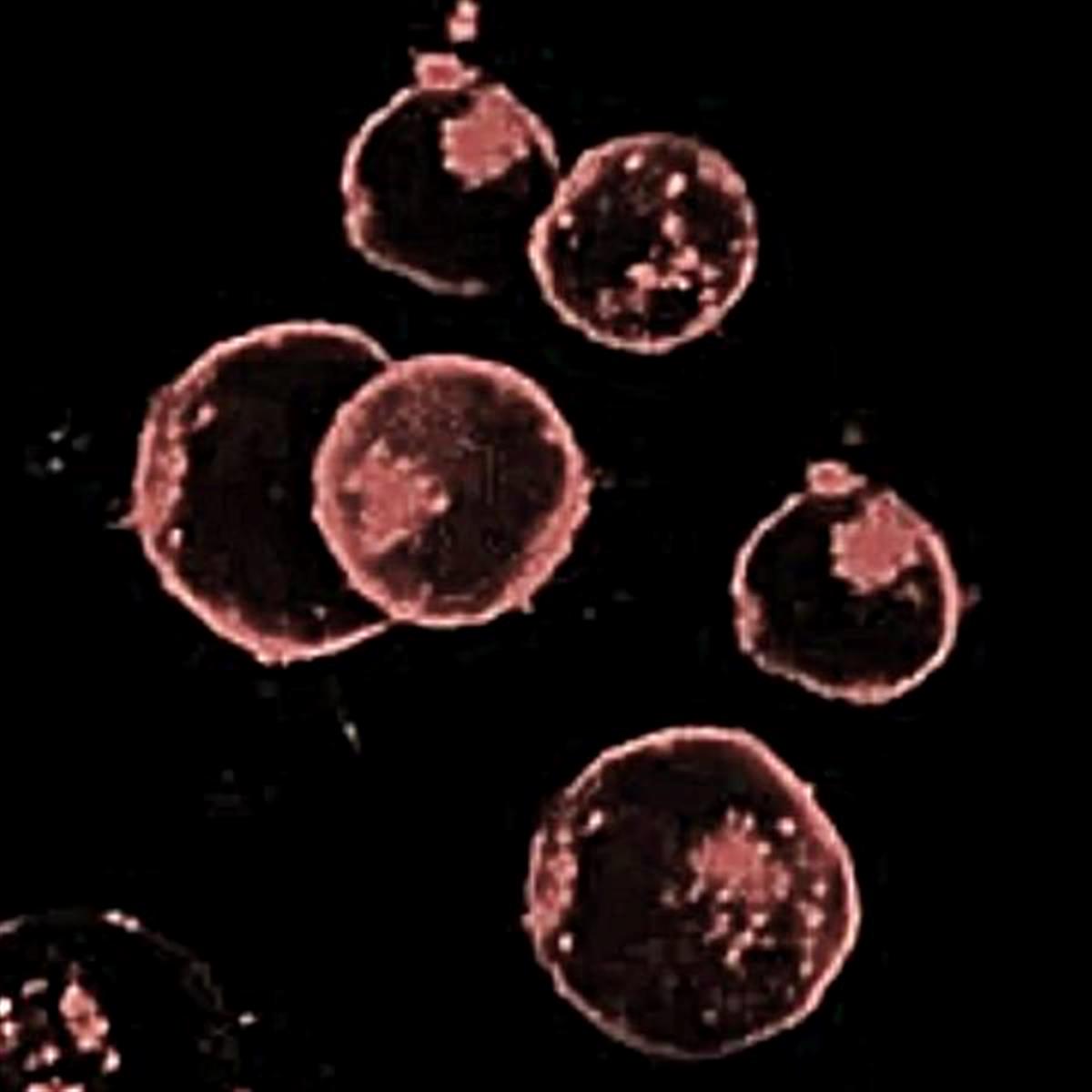
Figure 2. Immunofluorescence imaging and in situ hybridization imaging

Figure 3. Fluorescence images of Flamma® 749 (upper) and Flamma® 774 (bottom) carboxylic acid injected mouse model
Citation & Reference
Flamma® Fluors Hydrazide
1. Xu, Peisheng. Zwitterionic chitosan derivatives for pH-sensitive stealth coating. Biomacromolecules 11.9 (2010): 2352-2358.
2. Ibrahim, Basma M. A strategy to deliver genes to cystic fibrosis lungs: a battle with environment. Journal of controlled release 155.2 (2011): 289-295.
3. Oh, Keun Sang. Accurate sequential detection of primary tumor and metastatic lymphatics using a temperature-induced phase transition nanoparticulate system. International journal of nanomedicine 9 (2014): 2955.
4. Yhee, Ji Young. Tumor-targeting transferrin nanoparticles for systemic polymerized siRNA delivery in tumor-bearing mice. Bioconjugate chemistry 24.11 (2013): 1850-1860.
5. Yoon, Hong Yeol. Glycol chitosan nanoparticles as specialized cancer therapeutic vehicles: Sequential delivery of doxorubicin and Bcl-2 siRNA. Scientific reports 4 (2014).
6. Ryu, Ju Hee. Early diagnosis of arthritis in mice with collagen?induced arthritis, using a fluorogenic matrix metalloproteinase 3–specific polymeric probe. Arthritis & Rheumatism 63.12 (2011): 3824-3832.
7. Hollis, Christin P. In vivo investigation of hybrid paclitaxel nanocrystals with dual fluorescent probes for cancer theranostics. Pharmaceutical research 31.6 (2014): 1450-1459.
8. Koo, Heebeom. The movement of self-assembled amphiphilic polymeric nanoparticles in the vitreous and retina after intravitreal injection. Biomaterials 33.12 (2012): 3485-3493.
9. Zhu, Lei. Real-time monitoring of caspase cascade activation in living cells. Journal of controlled release 163.1 (2012): 55-62.
10. Yoon, Hong Yeol. Bioreducible hyaluronic acid conjugates as siRNA carrier for tumor targeting. Journal of Controlled Release 172.3 (2013): 653-661.
11. Yhee, Ji Young. Cancer-targeted MDR-1 siRNA delivery using self-cross-linked glycol chitosan nanoparticles to overcome drug resistance. Journal of Controlled Release 198 (2015): 1-9.
12. Park, Jin Woo. Wide-Ranged Fluorescent Molecular Weight Size Markers for Electrophoresis. Bulletin of the Korean Chemical Society 34.1 (2013): 29-30.
13. Huang, Xinglu. Multiplex Imaging of an Intracellular Proteolytic Cascade by using a Broad?Spectrum Nanoquencher. Angewandte Chemie International Edition 51.7 (2012): 1625-1630.