Flamma® 496 Vinylsulfone
Size of product (mg)
-
1 mg

-
5 mg

-
25 mg

Flamma® 496 Vinylsulfone
Cat. No. List below
Description
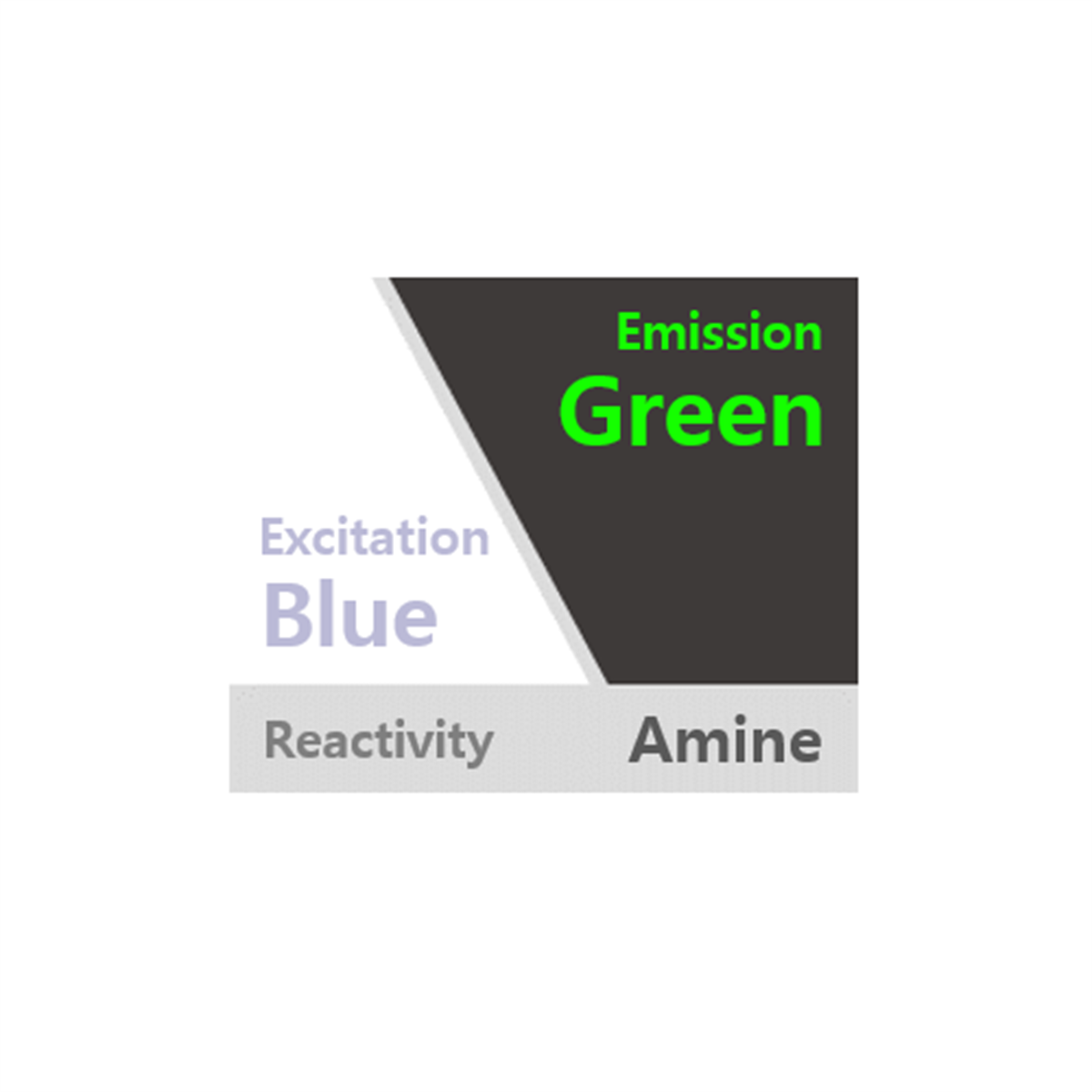
With excitation and emission maxima at 496 nm and 520 nm respectively, Flamma 496 is spectrally similar to Alexa 488 and FAM. It can be efficiently excited using a 488 nm laser line, offering excellent compatibility with common fluorescence imaging systems.
Key Features:
1. Bright green fluorescence with Ex/Em maxima at 496/520 nm
2. pH insensitive across a wide range
3. High temperature stability
4. Excellent photostability and optical properties
5. Efficient conjugation to biomolecules via vinylsulfone chemistry
6. High dye-to-protein (d/P) ratio for enhanced signal strength
7. High extinction coefficient (≥ 66,000 cm?¹M?¹) for improved sensitivity
Applications:
1. Fluorescence microscopy
2. Flow cytometry
3. Protein and nucleic acid labeling
4. Labeling of antibodies, peptides, proteins, and ligands
5. Amplification substrate optimization
6. Applications requiring pH stability
7. Cellular labeling and detection
Advantages:
1. High sensitivity for detecting low-abundance biomolecules
2. Stable fluorescence signal in bioimaging
3. Versatile labeling capabilities for various biomolecules
4. Compatible with common 488 nm laser excitation sources
5. Optimized for cellular labeling and detection
6. Forms stable amino linkages with primary amines
7. Low CF280 value (0.14) for minimal interference with protein absorbance
The vinylsulfone reactive group of Flamma 496 readily forms stable amino linkages with primary amines of amino-modified oligonucleotides or proteins. This chemistry ensures efficient and durable labeling of target biomolecules under various experimental conditions.
Flamma® Fluors 496 Vinylsulfone offers researchers a powerful tool for advanced fluorescence labeling, combining high sensitivity, excellent optical properties, and versatile conjugation chemistry. Its unique pH insensitivity and high-temperature stability make it particularly suitable for challenging experimental conditions, providing clear signals with minimal background interference and simplified experimental procedures across a wide range of biological studies.
- Fluorophore: Flamma® Fluors 496
- Reactive group: Vinylsulfone
- Excitation/Emission Max.(nm): 496/520
- Spectrally similar dyes: Alexa488, FAM
- Extinction coefficient: ≥ 66,000 cm-1M-1
- CF280: 0.14
- Appearance: Yellow Solid
- Molecular Weight: 531.48 g/mol
- Solubility: DMF, DMSO
- Storage conditions: 4 ℃, protect from light
| Quick link (Cat.#) | FSD series | EXmax (nm) | EMmax (nm) | Spectrally similar dyes |
| CWA1002 | Flamma® 488 Vinylsulfone | 495 | 519 | Alexa488, Cy2 |
| CWA1001 | Flamma® 496 Vinylsulfone | 496 | 520 | Alexa488, FAM |
| PWA1122 | Flamma® 552 Vinylsulfone | 550 | 564 | Alexa555, DyLight549, Cy3, ATTO550, CF555 |
| PWA1415 | Flamma® 581 Vinylsulfone | 581 | 596 | Alexa594, DyLight594 |
| KOA1001 | Flamma® 594 Vinylsulfone | 590 | 617 | Alexa594, DyLight594 |
| PWA1215 | Flamma® 648 Vinylsulfone | 648 | 683 | Alexa647, DyLight650, Cy5 |
| PWA1515 | Flamma® 675 Vinylsulfone | 675 | 691 | Alexa680, DyLight680, Cy5.5, IRDye680LT, CF680 |
| PWA1308 | Flamma® 749 Vinylsulfone | 749 | 774 | Alexa750, DyLight755, Cy7, IRDye750 |
| PWA1603 | Flamma® 774 Vinylsulfone | 774 | 795 | Cy7.5, CF 770, DyLight 800, IRDye800 |
| POA1803 | Flamma® 800 Vinylsulfone | 774 | 789 | Cy7.5, DyLight800, IRDye800 |
Background
Flamma® Fluors
BioActs offers a broad range of Flamma® Fluors dyes equipped with variety of reactive and functional groups, which can cover the full spectral range from UV to NIR with their excellent fluorescence performance. Characteristic features of these superior dyes are strong absorption, high fluorescence quantum yield and high photostability. Flamma® dyes maintain good fluorescence activity and stability after conjugation to biomolecules and allow the detection of low-abundance biological structures with great sensitivity. The dyes are compatible with optical conditions of most of fluorescent equipment and are ideal for any applications in biological studies.
- Covering the full spectral range from UV to NIR
- Equipped with a variety of reactive groups: NHS and Sulfo-NHS ester, Vinylsulfone, Maleimide, Click chemistry, isothiocyanate, hydrazide
and hydrophobic substances. - High quantum yields and photostability
- High purity and compatible with most of biomolecules
Flamma® Fluors Vinylsulfone

BioActs’ leading technology developed highly reactive yet stable and pH insensitive Flamma® Fluors Vinylsulfone dyes. Vinylsulfone reactive group mainly react with the primary amine of biomolecules under a wide range of pH from 5 to 10 though the labeling reaction rate is proportional to the basicity of medium. Vinylsulfone dyes are stable in both organic and aqueous solution at higher temperature, thus they can be dissolved in water avoiding organic solvents such as DMSO or DMF, and the aqueous stock solution can be stored in a refrigerator. Vinylsulfone reacting group is added by an amine via 1,2 addition pathway to form a stable amino linkage between dye and the biomolecule, therefore none of side product would be generated during conjugation step. BioActs recommends Flamma® Fluors Vinylsulfone for labeling biomolecules in harsh conditions such as having less reactive amines, running the reaction in prolong period, at high temperature or under strong basic or acidic environment.
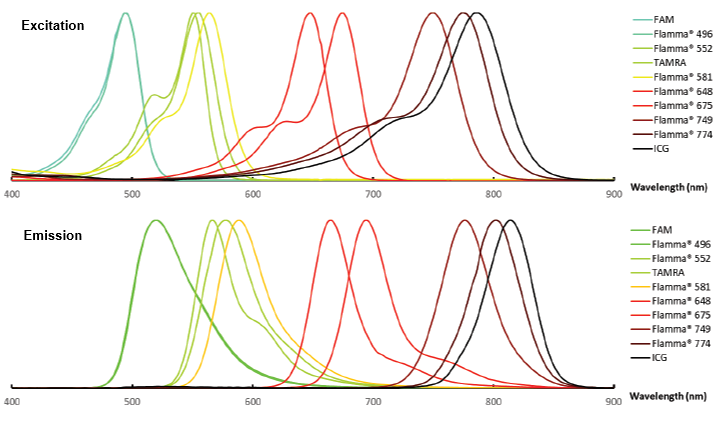
Figure 1. Absorption (upper) and emission (bottom) spectra overlap of Flamma® Fluors
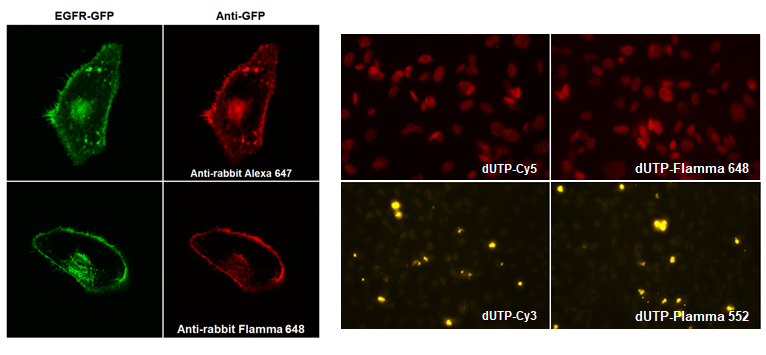
Figure 2. Immunofluorescence imaging and in situ hybridization imaging
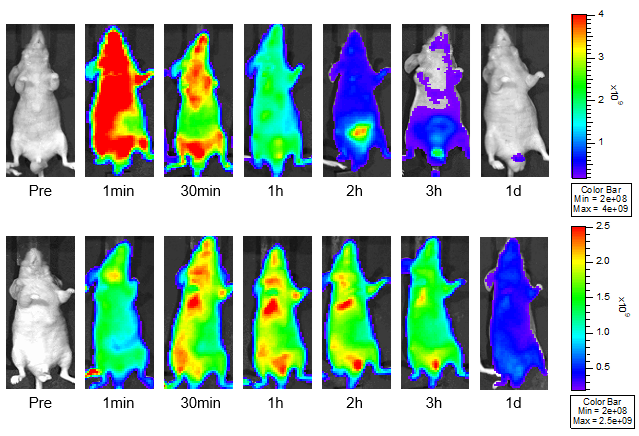
Figure 3. Fluorescence images of Flamma® 749 (upper) and Flamma® 774 (bottom) carboxylic acid injected mouse model
Citation & Reference
1. Lim, Chang-Keun. Phthalocyanine-aggregated polymeric nanoparticles as tumor-homing near-infrared absorbers for photothermal therapy of cancer. Theranostics 2.9 (2012): 871-879.
2. Park, Jin Woo. Novel cyanine dyes with vinylsulfone group for labeling biomolecules. Bioconjugate chemistry 23.3 (2012): 350-362.
3. Lim, Chang-Keun. Gadolinium-coordinated elastic nanogels for in vivo tumor targeting and imaging. Biomaterials 34.28 (2013): 6846-6852.
4. Keunsoo Jeong. Poly (oxyethylene sugaramide) s: unprecedented multihydroxyl building blocks for tumor-homing nanoassembly. Journal of Materials Chemistry B 1.28 (2013): 3437-3442.
5. Lee, So Jin. TNF-α gene silencing using polymerized siRNA/thiolated glycol chitosan nanoparticles for rheumatoid arthritis. Molecular Therapy 22.2 (2014): 397-408.
6. Yoon, Hong Yeol. Photo-crosslinked hyaluronic acid nanoparticles with improved stability for in vivo tumor-targeted drug delivery. Biomaterials 34.21 (2013): 5273-5280.
7. Park, Solji. Amphiphilized poly (ethyleneimine) nanoparticles: a versatile multi-cargo carrier with enhanced tumor-homing efficiency and biocompatibility. Journal of Materials Chemistry B 3.2 (2015): 198-206.
8. Lee, Eunjung. Co-delivery of chemosensitizing siRNA and an anticancer agent via multiple monocomplexation-induced hydrophobic association. Journal of Controlled Release 210 (2015): 105-114.
9. Xu, Peisheng. Zwitterionic chitosan derivatives for pH-sensitive stealth coating. Biomacromolecules 11.9 (2010): 2352-2358.
10. Ibrahim, Basma M. A strategy to deliver genes to cystic fibrosis lungs: a battle with environment. Journal of controlled release 155.2 (2011): 289-295.
11. Oh, Keun Sang. Accurate sequential detection of primary tumor and metastatic lymphatics using a temperature-induced phase transition nanoparticulate system. International journal of nanomedicine 9 (2014): 2955.
12. Yhee, Ji Young. Tumor-targeting transferrin nanoparticles for systemic polymerized siRNA delivery in tumor-bearing mice. Bioconjugate chemistry 24.11 (2013): 1850-1860.
13. Yoon, Hong Yeol. Glycol chitosan nanoparticles as specialized cancer therapeutic vehicles: Sequential delivery of doxorubicin and Bcl-2 siRNA. Scientific reports 4 (2014).
14. Ryu, Ju Hee. Early diagnosis of arthritis in mice with collagen?induced arthritis, using a fluorogenic matrix metalloproteinase 3–specific polymeric probe. Arthritis & Rheumatism 63.12 (2011): 3824-3832.
15. Hollis, Christin P. In vivo investigation of hybrid paclitaxel nanocrystals with dual fluorescent probes for cancer theranostics. Pharmaceutical research 31.6 (2014): 1450-1459.
16. Koo, Heebeom. The movement of self-assembled amphiphilic polymeric nanoparticles in the vitreous and retina after intravitreal injection. Biomaterials 33.12 (2012): 3485-3493.
17. Zhu, Lei. Real-time monitoring of caspase cascade activation in living cells. Journal of controlled release 163.1 (2012): 55-62.
18. Yoon, Hong Yeol. Bioreducible hyaluronic acid conjugates as siRNA carrier for tumor targeting. Journal of Controlled Release 172.3 (2013): 653-661.
19. Yhee, Ji Young. Cancer-targeted MDR-1 siRNA delivery using self-cross-linked glycol chitosan nanoparticles to overcome drug resistance. Journal of Controlled Release 198 (2015): 1-9.
20. Park, Jin Woo. Wide-Ranged Fluorescent Molecular Weight Size Markers for Electrophoresis. Bulletin of the Korean Chemical Society 34.1 (2013): 29-30.
21. Huang, Xinglu. Multiplex Imaging of an Intracellular Proteolytic Cascade by using a Broad Spectrum Nanoquencher. Angewandte Chemie International Edition 51.7 (2012): 1625-1630.