Xylose-Lysine Deoxycholate Agar Plates
Catalog No.: DCP-XLDAP
Features:
pH: 7.4 ± 0.2
Uses: Clinical, food, environmental samples
Size: 100mm
Storage: Keep away from light at 2–8°C
Shipping Condition: Blue ice
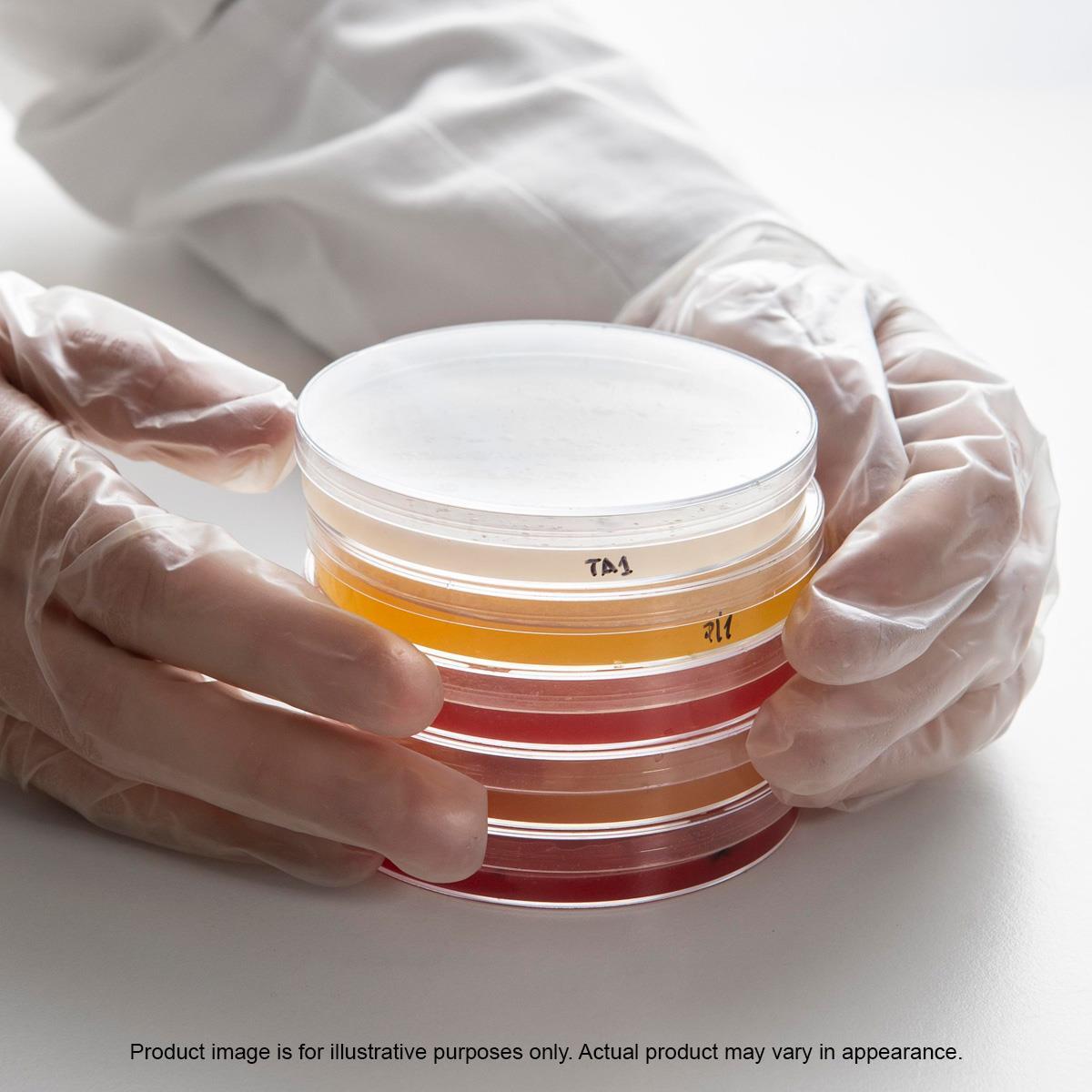
Appearance: clear to slightly opalescent bright red agar
Sterile
Shelf Life: 4 weeks
*All agar plates are manufactured with ultrapure water, deionized and demineralized to minimize ionic and organic contaminants. The premium ISO certified agar solution is sterilized by a full cycle of autoclaving. Each 100mm plate has 20mL of agar medium in premium plastic dish
Description:
Xylose-Lysine Deoxycholate (XLD) agar is a selective and differential medium formulated to be used for the isolation and differentation of enteric pathogens such as Salmonella and Shigella, from clinical, food, and environmental samples. XLD agar inhibits Gram-positive organisms, allowing the growth of Gram-negative enteric bacteria. Lactose/sucrose/xylose fermanters (many coliforms) would typically produce yellow colonies and yellow surrounding medium due to acid production. Salmonella forms red colonies with black centers, reflecting lysine decarboxylation and H2S production in the presence of thiosulfate and ferric ions. Shigella, which does not ferment xylose and lacks H2S production, typically yields small red colonies without black centers on the red background medium. The applications of XLD is used in the isolation and presumptive identification of Salmonella and Shigella from stool speciments,food products, and enironmental or water samples.
How it Works:
Xylose-Lysine Deoxycholate (XLD) agar works by combining selective inhibition with multiple differential biochemical reactions to higlight enteric gram-negative neteric bacterica, especially Salmonella and Shigella. Sodium deoxycholate suppresses most Gram-positive organisms and non-enteric bacterica, allowing Gram-negative enteric rods to grow. Yeast extract and salts support recovery of fastidious enteric pathogens while maintaining osmotic balance, so target organisms are not overly stressed by the inhibitor. Xylose, lactose, and sucrose are fermentable sugars; their degradation to acid lowers pH and turns the phenol red indicator from red to yellow. Shigella does not ferment xylose (and often not lactose or sucrose), so it does not acidify the medium and its colonies remain red on a red background.
After Xylose is exhausted, Lysine decarboxylase in Salmonella uses L-lysine to generate amines raising pH back to alkaline and changing phenol red back from yellow to red, so colonies appear red despite initial acid production.
Sodium thiosulfate serves as a sulfur source and ferric ammonium citrate as an indicator system; H2S producing bacteria convert thiosulfate to H₂S, which reacts with ferric ions to form black iron sulfide. Salmonella that produce H2S therefore appear as red colonies with black centers, while non H₂S producing Shigella remain red without blackening, and strong fermenters stay yellow with little or no black.
* This product is manufactured under ISO 13485-certified and CE-approved facilities (Suppliers of DiagnoCine Precision). All final packaging, quality assurance, and testing are done at the DiagnoCine R&D and Quality Testing Center. All specific customization requests and assembly were accomplished at DiagnoCine Precision in Totowa, New Jersey, USA