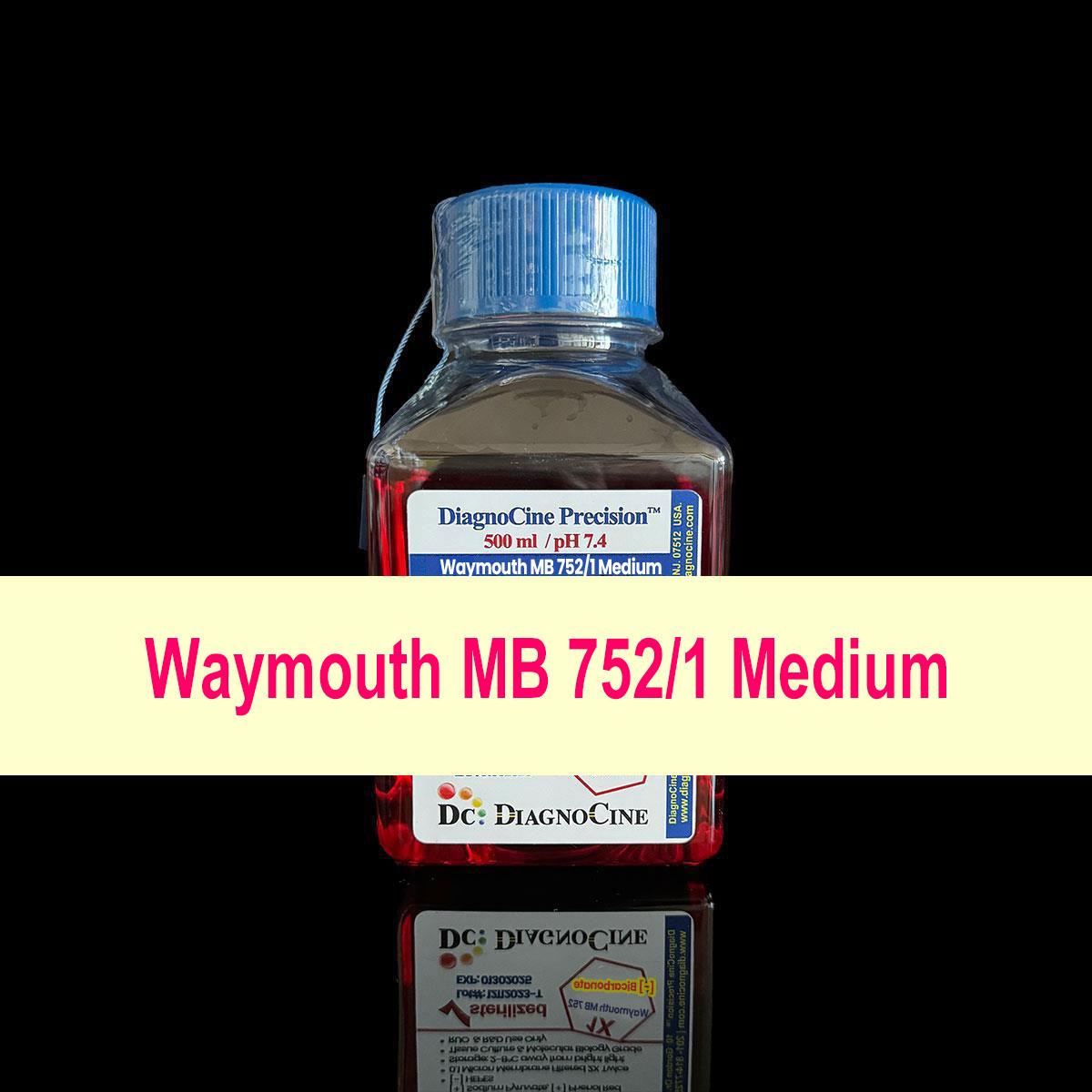
FluxMPS™ Waymouth MB 752/1 Medium
Select WaymouthMedium
- see the table below
FluxMPS™ Waymouth MB 752/1 Medium
FluxMPS™ Waymouth MB 752/1 Medium is a 1X liquid, ready-to-use formulation of the chemically defined, synthetic basal medium developed in 1959 by Charity Waymouth at the Jackson Laboratory, Bar Harbor, Maine, for the cultivation of mouse L cells, NCTC clone 929. Waymouth's medium is a comparatively simple medium with fewer ingredients than its other synthetic counterparts, comprising amino acids, vitamins, the purine base hypoxanthine, salts, and glucose. This medium can be used for culturing many fastidious cell lines and also whole organ culture.
- 2 configurations: with L-Glutamine and Sodium Bicarbonate (standard), and without Sodium Bicarbonate, each independently toggling L-Glutamine, Sodium Bicarbonate, HEPES, and Phenol Red
- AL091A is Waymouth Medium MB 752/1 with L-glutamine and sodium bicarbonate
- 5.0 g/L standard glucose concentration — the highest glucose level of any classical cell culture medium
- A 40-component formulation: 18 amino acid entries, 11 vitamins (including ascorbic acid, vitamin B12, and biotin), a distinctive dual-magnesium / dual-phosphate inorganic salt set, the purine base hypoxanthine, and reduced glutathione
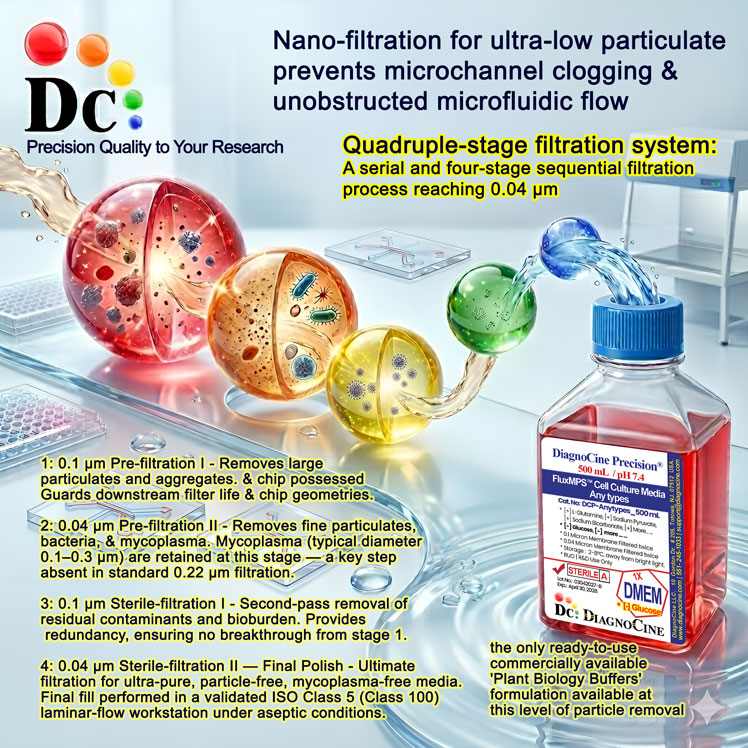
- Purified through FluxMPS™ quadruple-stage 0.1 micron / 0.04 micron filtration, engineered for organ-on-chip (OoC), tissue-on-chip (ToC), and lab-on-chip (LoC) microfluidic platforms
- Used for serum-free NCTC clone 929 (L929) mouse fibroblast culture, whole-organ culture (trachea, fetal lung, bladder), carcinoma cell line establishment from malignant effusions, and mouse oocyte culture research
- Available in 500 mL and 1000 mL sizes; store at 2-8°C protected from light; users are advised to review the literature for recommendations regarding medium supplementation and physiological growth requirements specific for different cell lines; every standard concentration and additive is customizable on request
- Concentration1X
- Glucose5.0 g/L
- Configurable supplementsL-Glutamine / Sodium Bicarbonate / HEPES / Phenol Red
- FiltrationFluxMPS™ quadruple-stage, 0.04 micron final
- Sizes500 mL, 1000 mL
- Storage2-8°C, protected from light
At-a-Glance Supplement Matrix
Please select the supplement(s) of interest, then click Search. Every matching configuration lights up below. Click the catalog number or the View button to go straight to that product page.
| Name | Cat No. | L-Glutamine | Sodium Bicarbonate | HEPES | Phenol Red | Product Page |
|---|---|---|---|---|---|---|
| Waymouth Medium MB 752/1, w/ L-Glutamine and Sodium Bicarbonate | DCP-WMBM1X | check | check | remove | check | Viewarrow_forward |
| Waymouth Medium MB 752/1, w/o Sodium Bicarbonate | DCP-WMBM-B1X | check | remove | remove | check | Viewarrow_forward |
Waymouth MB 752/1
Waymouth Medium MB 752/1 is a chemically defined, synthetic basal medium developed in 1959 by Charity Waymouth at the Jackson Laboratory, Bar Harbor, Maine, for the serum-free cultivation of mouse L-strain fibroblast sublines (NCTC clone 929, L929). It was designed not merely to sustain survival but to achieve rapid proliferative growth in the complete absence of serum or protein supplement, a goal that distinguished it from the Eagle-lineage media and placed it among the earliest fully defined synthetic media capable of supporting continuous mammalian cell passage. The formulation contains 40 components: 18 amino acids, 11 vitamins (including ascorbic acid, vitamin B12, and biotin), a distinctive dual-magnesium / dual-phosphate inorganic salt set, the purine base hypoxanthine, reduced glutathione, and an exceptionally high glucose concentration of 5000 mg/L (27.8 mM), the highest of any classical cell culture medium. Beyond its founding application in L929 fibroblast biology, Waymouth MB 752/1 has been adopted for whole-organ culture, establishment of carcinoma cell lines from malignant effusions, surfactant-biosynthesis studies in fetal lung explants, tracheal epithelial differentiation, and bladder organ culture. Its defining compositional signature is a combination of features not found together in any other classical medium: the highest choline chloride content (250 mg/L), the highest thiamine (10 mg/L), the highest glucose (5000 mg/L), a dual-magnesium salt system (MgCl2 + MgSO4), the preformed purine hypoxanthine, and ascorbic acid, all in a protein-free, lipid-free synthetic matrix.
Origins and Development
Charity Waymouth and the Jackson Laboratory
Charity Waymouth (1915-2002) was a British-born cell biologist educated at the Universities of London and Aberdeen, who spent the majority of her career at the Jackson Laboratory in Bar Harbor, Maine. Her research centered on the nutritional, metabolic, and growth requirements of mammalian cells in vitro, approached with the objective of understanding what a cell truly requires at the molecular level, rather than simply supplying serum as an undefined supplement.
NCTC Clone 929 (L929): The Target Cell Line
The mouse L strain was originally derived from normal subcutaneous areolar and adipose tissue of a 100-day-old male C3H/An mouse by W. R. Earle at the National Cancer Institute in 1940. NCTC clone 929, the specific subline for which Waymouth's medium was developed, was cloned from the 95th subculture generation of the parent strain by K. K. Sanford in March 1948 using single-cell capillary isolation; it was the first cloned mammalian cell strain ever established. L929 is a fibroblast-like, immortalized cell that proliferates rapidly and is widely used as a model for fibroblast biology, cytotoxicity testing, M-CSF production for bone-marrow macrophage differentiation, and viral replication studies.
The 1959 Paper and the MB Numbering System
Waymouth published the foundational formulation in the Journal of the National Cancer Institute: Waymouth, C. (1959), "Rapid proliferation of sublines of NCTC clone 929 (strain L) mouse cells in a simple chemically defined medium (MB 752/1)," JNCI 22(5): 1003-1017 (PMID 13655076; DOI 10.1093/jnci/22.5.1003). The designation "MB 752/1" follows Waymouth's internal sequential medium-numbering system from her screening series; the precise expansion of "MB" is not definitively documented. The paper reported that L929 sublines in this 40-component defined solution underwent more than 30 passages in continuous rapid proliferative growth, with populations increasing 7.5- to 8.5-fold from an inoculum of 2-3 x 10^5 cells/mL over 8 days, equivalent to roughly a 24-hour doubling time. This was significant because prior attempts to culture mammalian cells in fully synthetic, protein-free media had either failed after a few passages or resulted in grossly suboptimal growth.
Relation to the Broader Medium Lineage
Waymouth MB 752/1 does not descend from the Eagle lineage (BME to MEM then to DMEM). It was developed independently at the Jackson Laboratory as an empirically optimized formulation for L929, drawing on published knowledge of amino acid and vitamin requirements but designed de novo rather than as a modification of any existing formulation. It therefore represents a parallel branch in the classical-medium family tree optimized for serum-free fibroblast proliferation rather than adherent epithelial monolayers (Eagle), suspension lymphoid cultures (RPMI), or high-density hematopoietic proliferation (IMDM). Compositionally, it resembles Medium 199 and CMRL 1066 in its comprehensive, multi-category approach, reflecting the goal of full nutritional sufficiency without serum. Users are advised to review the literature for recommendations regarding medium supplementation and physiological growth requirements specific for different cell lines.
Waymouth MB 752/1 in the Classical Medium Family Tree
- BME / Eagle Lineage (Eagle, 1955 onward) — MEM, DMEM, and derivatives, optimized for adherent epithelial and fibroblast monolayer culture. Waymouth MB 752/1 does not descend from this lineage.
- RPMI 1640 (Moore et al., Roswell Park, 1966/1967) — a McCoy's 5A-derived medium optimized for suspension lymphoid culture; a separate branch from Waymouth.
- CMRL series (Parker et al., Medium 199 1950, CMRL 1066 1957) — maximal-complexity defined synthetic media; compositionally, Waymouth MB 752/1 resembles this group in its comprehensive, multi-category nutrient approach (ascorbic acid, B12, hypoxanthine, glutathione), though independently developed.
- Waymouth MB 752/1 (Charity Waymouth, Jackson Laboratory, 1959) — an independently, empirically designed formulation for serum-free rapid proliferation of NCTC clone 929 (L929) mouse fibroblasts, drawing on published amino acid and vitamin requirement knowledge but built de novo rather than as a modification of BME, RPMI, or CMRL. It represents a parallel branch optimized for serum-free fibroblast proliferation, whole-organ culture, and fastidious cell lines rather than the adherent, suspension, or hematopoietic applications of the other classical lineages.
Waymouth MB 752/1 Standard Formulation Reference
The tables below reproduce the canonical Waymouth MB 752/1 formulation as published in the source formulation record. All values are as stated in the source; no additional numeric values are implied for any specific catalog number beyond what is stated here and in the supplement matrix above.
| Ingredient | mg/L |
|---|---|
| Calcium chloride dihydrate (CaCl2.2H2O) | 120.000 |
| Magnesium chloride, anhydrous (MgCl2) | 112.560 |
| Magnesium sulfate, anhydrous (MgSO4) | 97.720 |
| Potassium chloride (KCl) | 150.000 |
| Potassium phosphate monobasic (KH2PO4) | 80.000 |
| Sodium bicarbonate (NaHCO3) | 2240.000 |
| Sodium chloride (NaCl) | 6000.000 |
| Sodium phosphate dibasic, anhydrous (Na2HPO4) | 300.000 |
| Amino Acid | mg/L |
|---|---|
| Glycine | 50.000 |
| L-Arginine hydrochloride | 75.000 |
| L-Aspartic acid | 60.000 |
| L-Cysteine hydrochloride monohydrate | 90.000 (~61 as free base) |
| L-Cystine dihydrochloride | 19.550 |
| L-Glutamic acid | 150.000 |
| L-Glutamine | 350.000 |
| L-Histidine hydrochloride monohydrate | 150.000 (~128 as free base) |
| L-Isoleucine | 25.000 |
| L-Leucine | 50.000 |
| L-Lysine hydrochloride | 240.000 |
| L-Methionine | 50.000 |
| L-Phenylalanine | 50.000 |
| L-Proline | 50.000 |
| L-Threonine | 75.000 |
| L-Tryptophan | 40.000 |
| L-Tyrosine disodium salt dihydrate | 57.660 |
| L-Valine | 65.000 |
| Vitamin | mg/L |
|---|---|
| Ascorbic acid (Vitamin C) | 17.500 |
| D-Biotin | 0.020 |
| Choline chloride | 250.000 |
| D-Calcium pantothenate | 1.000 |
| Folic acid | 0.400 |
| myo-Inositol | 1.000 |
| Niacinamide (Nicotinamide) | 1.000 |
| Pyridoxine hydrochloride | 1.000 |
| Riboflavin | 1.000 |
| Thiamine hydrochloride | 10.000 |
| Vitamin B12 (Cyanocobalamin) | 0.200 |
| Other Components | Amount |
|---|---|
| D-Glucose (Dextrose) | 5000.000 mg/L (~27.8 mM) |
| Glutathione (reduced, GSH) | 15.000 mg/L |
| Hypoxanthine (as sodium salt) | 29.000 mg/L (~25 free base, ~0.18 mM) |
| Phenol red sodium salt | 11.000 mg/L |
The salt set has two features that distinguish it from all other classical media: a dual-magnesium system (both MgCl2 and MgSO4) and a dual-phosphate system (both monobasic KH2PO4 and dibasic Na2HPO4). No iron source is included; iron is supplied only by serum. No sodium pyruvate is present in the standard base. No lipid components (no cholesterol, Tween 80, or fatty acids) are included, distinguishing it from Medium 199 and CMRL 1066; a lipid or serum supplement is advisable for lipid-auxotrophic cells. At 2.24 g/L NaHCO3 and 5% CO2, the medium equilibrates to pH 7.1-7.7. The higher osmolality with bicarbonate (305-345 mOsm/kg) versus the bicarbonate-free powder (240-280 mOsm/kg) reflects the osmotic contribution of NaHCO3 at this glucose concentration.
Waymouth MB 752/1 vs. Classical Media
| Feature | Waymouth MB 752/1 | DMEM (High-Glucose) | RPMI 1640 | Medium 199 | CMRL 1066 |
|---|---|---|---|---|---|
| Developer & year | Charity Waymouth - Jackson Lab, 1959 | Dulbecco & Freeman, 1959 | Moore et al. - Roswell Park, 1966/1967 | Morgan, Morton & Parker - CMRL, 1950 | Parker et al. - CMRL, 1957 |
| Lineage | Independent (Jackson Lab empirical design) | Eagle BME derivative | McCoy's 5A derivative | CMRL original | CMRL series |
| Total components | 40 (original paper) | ~35 | ~47 | ~58 | ~58 |
| Primary design goal | Serum-free rapid L929 proliferation | Adherent monolayer culture | Suspension lymphoid culture | Universal defined synthetic | Maximum defined complexity |
| Amino acids (entries) | 18 (dual cysteine/cystine) | 15 | 20 | 21 | 19 |
| Vitamins (count) | 11 (incl. ascorbate, B12, biotin) | 8 | 11 | 17 | 12 |
| Ascorbic acid | 17.500 mg/L | Absent | Absent | Present | Present |
| Vitamin B12 | 0.200 mg/L | Absent | 0.005 mg/L | Absent | 0.001 mg/L |
| Thiamine | 10.000 mg/L | 1.000 mg/L | 1.000 mg/L | 0.010 mg/L | 0.040 mg/L |
| Choline chloride | 250.000 mg/L | 4.000 mg/L | 3.000 mg/L | 0.500 mg/L | 0.500 mg/L |
| Reduced glutathione | 15.000 mg/L | Absent | 1.000 mg/L | 0.050 mg/L | 10.000 mg/L |
| Hypoxanthine | 29.000 mg/L (sodium salt) | Absent | Absent | 0.300 mg/L | 0.300 mg/L |
| Glucose | 5000 mg/L (~27.8 mM) | 4500 mg/L (25 mM) | 2000 mg/L (11.1 mM) | 1000 mg/L (5.5 mM) | 1000 mg/L (5.5 mM) |
| Sodium pyruvate | Absent | Optional (110 mg/L) | Absent (standard) | Absent | Absent |
| Magnesium | MgCl2 + MgSO4 (dual) | MgSO4 only | MgSO4 only | MgSO4 only | MgSO4 only |
| Phosphate system | KH2PO4 + Na2HPO4 (dual) | NaH2PO4 only | Na2HPO4 only | NaH2PO4 only | NaH2PO4 only |
| Iron source | None (serum-dependent) | Fe(NO3)3.9H2O | None | Fe(NO3)3.9H2O | None |
| NaHCO3 | 2240 mg/L | 3700 mg/L | 2000 mg/L | 2200 mg/L | 2200 mg/L |
| pH (with NaHCO3) | 7.10-7.70 | ~7.2 | 7.0-7.4 | 7.2 | 7.2 |
| Osmolality (with NaHCO3) | 305-345 mOsm/kg | 320-355 mOsm/kg | 255-310 mOsm/kg | 310-350 mOsm/kg | 270-330 mOsm/kg |
| Serum for routine culture | 5-10% FBS (or serum-free + supplements) | 10% FBS | 10% FBS | 10% FBS | 10% FBS |
| Cholesterol | Absent | Absent | Absent | 0.200 mg/L | Absent |
| Fat-soluble vitamins | Absent | Absent | Absent | A, D2, E, K3 | Absent |
| Preformed purines | Hypoxanthine | None | None | Adenine, hypoxanthine | Adenine sulfate, hypoxanthine |
| Coenzymes | None | None | None | None | CoA, FAD, TPP, NAD, NADP |
| Primary validated cell | L929 mouse fibroblast (serum-free) | HEK293, MEFs | Jurkat, PBMCs, hybridomas | Chick embryo fibroblasts, oocytes | Pancreatic islets |
| Key organ-culture use | Trachea, fetal lung, bladder | Not used | Not used | General | Pancreas, islet |
Waymouth MB 752/1: Charity Waymouth, Jackson Laboratory, 1959. DMEM: Dulbecco & Freeman 1959. RPMI 1640: Moore, Gerner & Franklin, Roswell Park, 1966/1967. Medium 199: Morgan, Morton & Parker, CMRL, 1950. CMRL 1066: Parker et al., CMRL, 1957.
Why FluxMPS™
Quadruple-Stage Purity
Every FluxMPS™ Waymouth MB 752/1 configuration is purified to 0.04 microns — finer than any ready-to-use cell culture media currently available — before it ever reaches your chip.
Engineered for Microfluidics
Designed from the ground up for Organ-on-Chip (OoC), Tissue-on-Chip (ToC), and Lab-on-Chip (LoC) platforms, where the medium itself is part of the instrument.
Particulate & Aggregate Removal
The quadruple-stage architecture eliminates microscopic particulates and protein aggregates that silently block micro-channels and disrupt laminar flow — a particular concern for serum-free, fastidious cultures.
Optical Clarity
Optical clarity supports real-time imaging and integrated biosensing on Organ-on-Chip platforms without background interference.
Regulatory-Aligned Foundation
Formulated to support FDA-recognized physiological modeling standards, providing a validated, reproducible media foundation as downstream data moves toward regulatory scrutiny.
Translational Research Ready
A single, consistent media platform supporting drug discovery, toxicology screening, and translational research from bench through preclinical modeling.
Quadruple-Stage Filtration
Every FluxMPS™ Waymouth MB 752/1 batch passes through a four-stage filtration train before final fill, engineered specifically for microfluidic cell culture applications.
-
1
0.1 µmPre-filtration Stage One
Bulk particulate reduction prior to sterile filtration.
-
2
0.1 µmPre-filtration Stage Two
Second-pass pre-filtration to protect the downstream sterile filters and extend their working life.
-
3
0.04 µmSterile Filtration Stage One
First sterile-filtration pass at 0.04 microns — finer than any ready-to-use cell culture media currently available.
-
4
0.04 µmSterile Filtration Stage Two
Second sterile-filtration pass, eliminating microscopic particulates and protein aggregates before final fill.
Built for Continuous Flow
Zero-clogging performance across complex micro-channel geometries and long-term automated perfusion studies running continuously for weeks.
Validated Cell Lines & Applications
This medium can be used for culturing many fastidious cell lines and also whole organ culture. Users are advised to review the literature for recommendations regarding medium supplementation and physiological growth requirements specific for different cell lines.
L929 Mouse Fibroblasts (Serum-Free)
The founding and defining application is the serum-free culture of NCTC clone 929 (L929) sublines, maintained for more than 30 consecutive serum-free passages in Waymouth's original experiments, with a ~24-hour doubling time and a 7.5- to 8.5-fold population increase over 8 days. The medium is also used with 5-10% FBS for routine L929 maintenance.
Rat Trachea Organ Culture
Serum-free, vitamin A-free Waymouth MB 752/1 selectively induces squamous metaplasia (keratinizing differentiation) of tracheal mucociliary epithelium, while added serum preserves secretory mucociliary function and added retinol drives hypersecretory activity — an experimental standard for vitamin A-deficiency models in tracheal organ culture.
Fetal Lung Organ Culture (Surfactant Biosynthesis)
In comparative studies of fetal-lung explant surfactant production, Waymouth MB 752/1 was among the media supporting the largest increases in surfactant-fraction phospholipids, outperforming RPMI 1640 and Medium 199, and was notably associated with net glycogen accumulation in vitro.
Rat Bladder Organ Culture (Carcinogen Studies)
Transitional epithelial morphology of normal rat bladder is well maintained in serum-free Waymouth MB 752/1, whereas Ham's F-12 causes marked epithelial hyperplasia; carcinogen-induced hyperplastic states are faithfully maintained in vitro in Waymouth, making it a medium of choice for bladder carcinogenesis organ culture.
Carcinoma Cell Line Establishment from Malignant Effusions
Waymouth MB 752/1 has been recommended for the initial primary culture of carcinoma cell lines from malignant pleural effusions and ascites, where the medium's richness — high glutamine, dual cysteine, glutathione, hypoxanthine, ascorbic acid, and elevated choline — supports initial attachment and clonal expansion before transfer to routine maintenance media.
Mouse Oocyte Culture & Meiotic Regulation Research
Waymouth MB 752/1 is used in comparative reproductive-biology studies because of its distinctive interaction with hypoxanthine-mediated meiotic arrest: hypoxanthine-maintained arrest, effective in several media (MEM, Ham's F-10, L-15), is ineffective in Waymouth MB 752/1, and the addition of pyruvate restores arrest — making it a useful experimental variable for dissecting purine-cAMP-mediated meiotic checkpoint mechanisms. In comparative evaluations for human diploid skin fibroblast culture, Waymouth MB 752/1 supported strong proliferation in mass culture but gave lower plating efficiency than Eagle's MEM, DMEM, and Ham's F-12 for colony formation from small cell numbers.
Practical Considerations
Serum-Free Use
Waymouth MB 752/1 was designed for serum-free L929 culture and demonstrated continuous serum-free passage in the founding study. For other cell lines, serum-free use typically requires growth factors, transferrin, insulin, and albumin or a lipid supplement, since the medium lacks all protein, lipid, and hormonal factors. Because it contains no transferrin, iron delivery is serum-dependent in standard supplemented culture.
High Glucose & Osmolality
The 5000 mg/L glucose contributes substantially to osmolality. The osmotic contribution of 2.24 g/L NaHCO3 (vs. 3.7 g/L in DMEM) does not fully offset the extra glucose, so net osmolality with bicarbonate (305-345 mOsm/kg) is similar to or slightly above high-glucose DMEM. For osmotically sensitive cells, verify osmolality before use.
Phenol Red & L929-Conditioned Medium
At 11 mg/L, phenol red matches DMEM and MEM and is higher than RPMI 1640 (5 mg/L); phenol-red-free preparations are available from some suppliers for steroid-hormone-receptor studies. In modern protocols for bone-marrow-derived macrophages, L929 cells are routinely maintained in DMEM + 10% FBS (not Waymouth), and their conditioned medium is collected as an M-CSF source; Waymouth MB 752/1 remains the reference medium for the original L929 cell biology.
Storage & Shelf Life
Liquid medium: 2-8°C, protected from light, 12-month shelf life. After serum supplementation, use within approximately 3 weeks.
Frequently Asked Questions
Verified References
- Waymouth, C. (1959). Rapid proliferation of sublines of NCTC clone 929 (strain L) mouse cells in a simple chemically defined medium (MB 752/1). Journal of the National Cancer Institute, 22(5): 1003-1017. PMID 13655076. DOI 10.1093/jnci/22.5.1003.
- Waymouth, C. (1956). A serum-free nutrient solution sustaining rapid and continuous proliferation of strain L (Earle) mouse cells. Journal of the National Cancer Institute, vol. 17.
- Earle, W.R., et al. (1943). Production of malignancy in vitro. IV. The mouse fibroblast cultures and changes seen in the living cells. Journal of the National Cancer Institute, 4: 165-212.
- Sanford, K.K., Earle, W.R. & Likely, G.D. (1948). The growth in vitro of single isolated tissue cells. Journal of the National Cancer Institute, 9(3): 229-246. PMID 18105872. DOI 10.1093/jnci/9.3.229.
- Earle, W.R., Sanford, K.K., Evans, V.J., Waltz, H.K., & Shannon, J.E. Jr. (1951). The influence of inoculum size on proliferation in tissue cultures. Journal of the National Cancer Institute, 12(1): 133-153. PMID 14874126.
- Sanford, K.K., Hobbs, G.L., & Earle, W.R. (1956). The tumor-producing capacity of strain L mouse cells after 10 years in vitro. Cancer Research, 16(2): 162-166. PMID 13293658.
- Johnson, M.J. (1963). Amino acid utilization by 929-L fibroblasts in chemically defined media. Journal of the National Cancer Institute, 31: 611-625.
- Thomas, J.A. & Johnson, M.J. (1967). Trace metal requirements of NCTC clone 929 strain L cells. Journal of the National Cancer Institute, 39: 337-345.
- Eppig, J.J. & Downs, S.M. (1987). The effect of hypoxanthine on mouse oocyte growth and development in vitro: maintenance of meiotic arrest and gonadotropin-induced oocyte maturation. Developmental Biology, 119: 313-321.
- Eppig, J.J. & Hosoe, M. (1997). Culture conditions affect meiotic regulation in cumulus cell-enclosed mouse oocytes. Molecular Reproduction and Development, 46(4): 551-566.
- Yao, T. & Asayama, Y. (2017). Animal-cell culture media: history, characteristics, and current issues. Reproductive Medicine and Biology, 16(2): 99-117. PMID 29259457. PMC5661806.
FluxMPS™ — Precision Cell Culture Media for Microphysiological Systems
Built for the architecture of the future. Not the flask of the past.
Traditional cell culture media were formulated for static well plates and flasks — environments that tolerate impurities, precipitates, and particle loads that would immediately compromise a microfluidic system. FluxMPS™ was designed from the ground up for Organ-on-Chip (OoC), Tissue-on-Chip (ToC), and Lab-on-Chip (LoC) platforms, where the medium itself is part of the instrument.
Purity That Protects Your Platform
FluxMPS™ is purified to 0.04 microns — finer than any ready-to-use cell culture media currently available. At this level, the microscopic particulates and protein aggregates that silently block micro-channels, disrupt laminar flow, and generate false biological signals are eliminated before the media ever reaches your chip.
The result: your platform stays operational, your data stays clean, and your biology drives the result — not your media.
Engineered for Flow, Not Just Growth
The name FluxMPS™ reflects its core design principle. Every component is optimized for consistent, laminar flow performance across:
- Complex micro-channel geometries
- Capillary-bed and vascular simulations
- Long-term automated perfusion studies running continuously for weeks
Zero-clogging performance is not a feature — it is the baseline specification.
Applications & Performance
| Application | What FluxMPS™ Delivers |
|---|---|
| Microfluidics | Stable shear stress; no channel blockage |
| Metabolic Tracing | Ultra-pure matrix with no contaminant interference |
| Long-term Perfusion | Consistent formulation stability over weeks of continuous flow |
| Organ-on-Chip | Optical clarity for real-time imaging and integrated biosensing |
Regulatory Foundation
FluxMPS™ is formulated to support FDA-recognized physiological modeling standards, providing a validated, reproducible media foundation for drug discovery, toxicology screening, and translational research. When your downstream data needs to stand up to regulatory scrutiny, your upstream media cannot be an afterthought.
The Bottom Line
Microfluidic platforms are precision instruments. They require precision inputs.
FluxMPS™ is the only ready-to-use cell culture medium engineered specifically to meet that standard — protecting your chip, your cells, and your science.