Anti-Rpn7 (S.cerevisiae) antibody, affinity purified
Anti-Rpn7 (S.cerevisiae) antibody, affinity purified
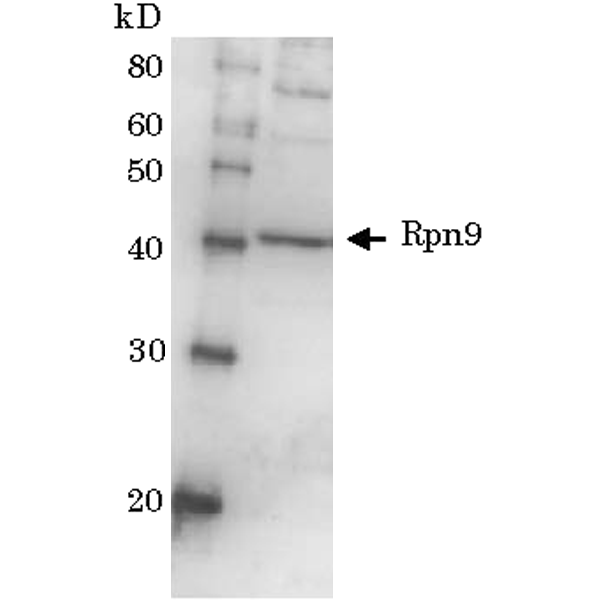
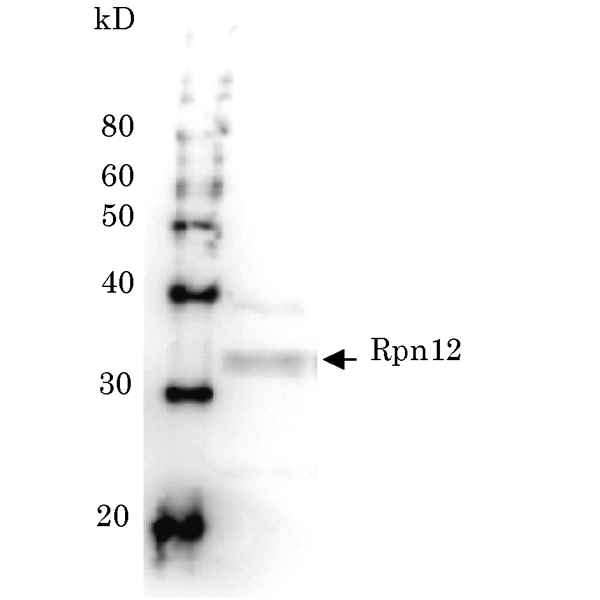
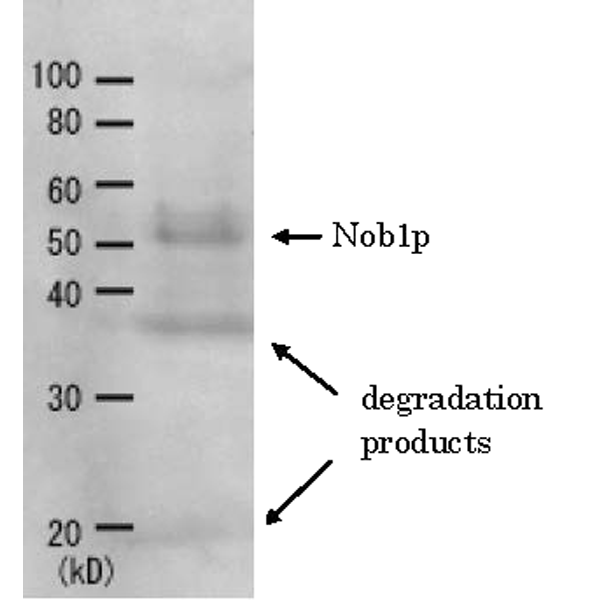
DiagnoCine offers excellent RPN (5, 7, 9, 12) | Affinity Purified Antibodies from S.cerevisiae to researchers studying Ubiquitination, Proteosome, DNA repair, Signal transduction, Apoptosis, Metabolic Regulation, Damaged & Misfolded Proteins, and Cell Cycle Regulation.
Human diseases include Neurodegenerative Diseases, Cardiovascular Diseases, Inflammatory Responses, Autoimmune Diseases, Systemic DNA Damage responses leading to Alzheimer's Disease, Parkinson's Disease, Pick's Disease, Amyotrophic Lateral Sclerosis (ALS), Huntington's Disease, Creutzfeldt–Jakob Disease, Muscular Dystrophies, and Several Rare forms of Neurodegenerative Diseases associated with Dementia.
RPN antibodies have excellent quality and this highly pure antibody can be adapted for Western blotting, Immunoprecipitation, and other methods after optimization.
General Information
| Cat. No. | :FNK-62-205 |
| Size | :100µl |
| Host Animal | :Rabbit |
| Reactivity | :S. cerevisiae Rpn7p. Not tested with other species |
| Label | :Unlabeled |
| Product | :Rabbit polyclonal antibody affinity purified with recombinant Rpn7p |
| Immunogen | :Recombinant yeast Rpn7p expressed in E. coli(Ref. 4) |
| Application |
|
| Storage | :-20℃. To avoid repeated freezing and thawing, store the antibody solution in aliquots |
| Form | :Purified IgG in 100 mM NaCl, 10 mM Tris-HCl pH 7.4, 0.05 % sodium azide |
| Data Link | :SGD RPN7/YPR108W |
Description
The 26 S proteasome is a protein complex with a molecular mass of 2000 kDa and is highly conserved among eukaryotic organisms. It is essential not only for eliminating damaged or misfolded proteins but also for degrading short-lived regulatory proteins involved in cell cycle regulation, DNA repair, signal transduction, apoptosis, and metabolic regulation (1). Rpn7 is one of the lid subunits of the 26 S proteasome regulatory particle (1, 2). The RPN7 gene is known to be essential and required for the integrity of the 26 S complex by establishing a correct lid structure (3, 4).
 |
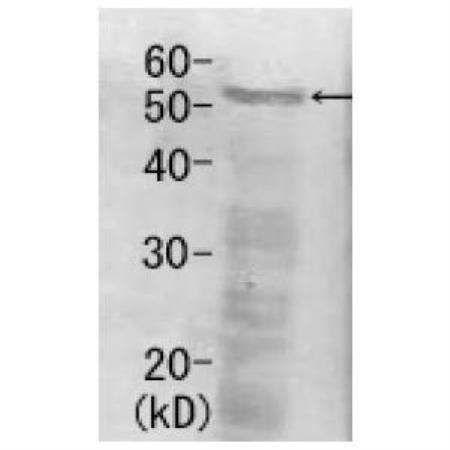
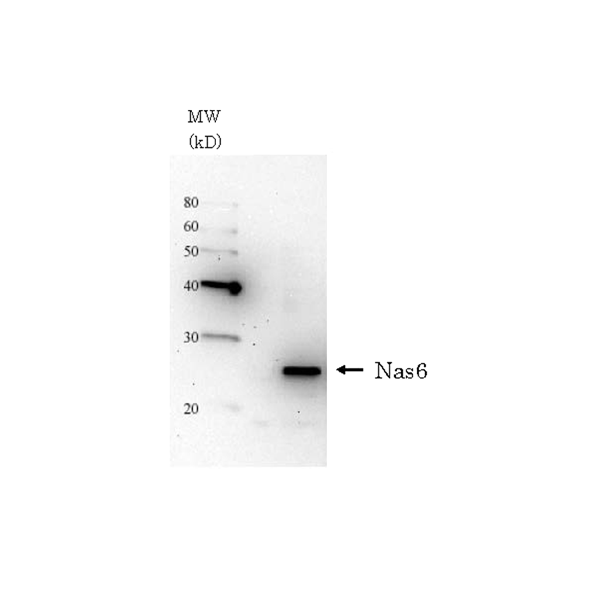
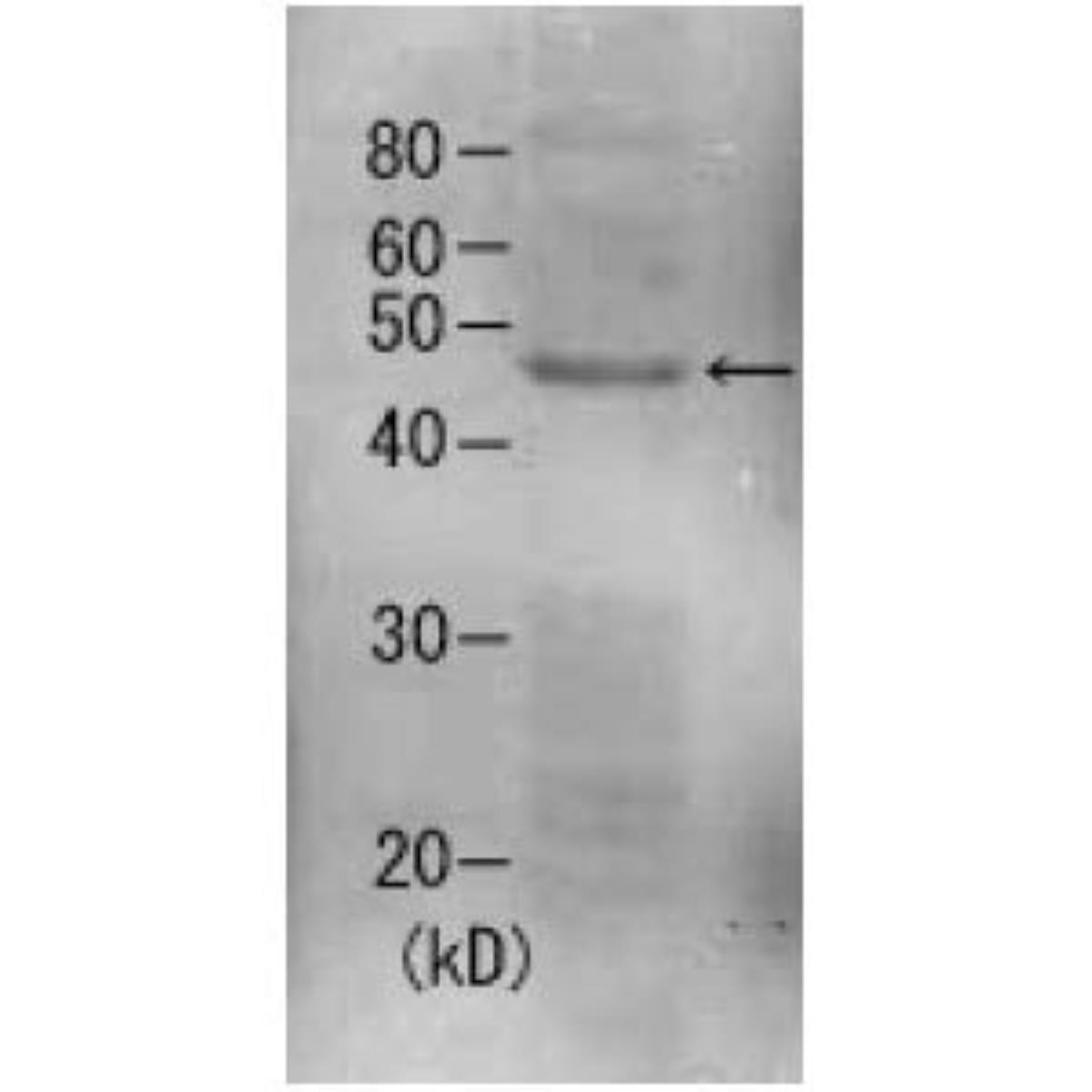
Fig.1 Detection of Rpn7 (49kDa) in the crude extract of S. cerevisiae by Western blotting using this antibody. |
References
- Hershko A and Ciechanover A “THE UBIQUITIN SYSTEM”Annu Rev Biochem 67: 425-479 (1998) PMID: 9759494
- Finley D et al “Unified nomenclature for subunits of the Saccharomyces cerevisiae proteasome regulatory particle”Trends Biochem Sci 23:244-245 (1998) PMID 9697412
- Isono E et al “Rpn7 Is required for the structural integrity of the 26 S proteasome of Saccharomyces cerevisiae” J Biol Chem 279:27168-76 (2004) PMID: 15102831
- Isono E et al “The assembly pathway of the 19S regulatory particle of the yeast 26S proteasome” Mol Biol Cell 18:569-76 (2007) PMID: 17135287
Aliases for PSMD6 Gene
- Proteasome 26S Subunit, Non-ATPase 6 2 3 5
- Proteasome (Prosome, Macropain) 26S Subunit, Non-ATPase, 6 2 3
- 26S Proteasome Non-ATPase Regulatory Subunit 6 3 4
- Proteasome Regulatory Particle Subunit P44S10 3 4
- Phosphonoformate Immuno-Associated Protein 4 3 4
- Breast Cancer-Associated Protein SGA-113M 3 4
- KIAA0107 2 4
- P44S10 2 3
- Rpn7 2 3
- P42A 3 4
- S10 2 3
- 26S Proteasome Regulatory Subunit RPN7 4
- 26S Proteasome Regulatory Subunit S10 4
- SGA-113M 3
- PFAAP4 4
- PSMD6 5