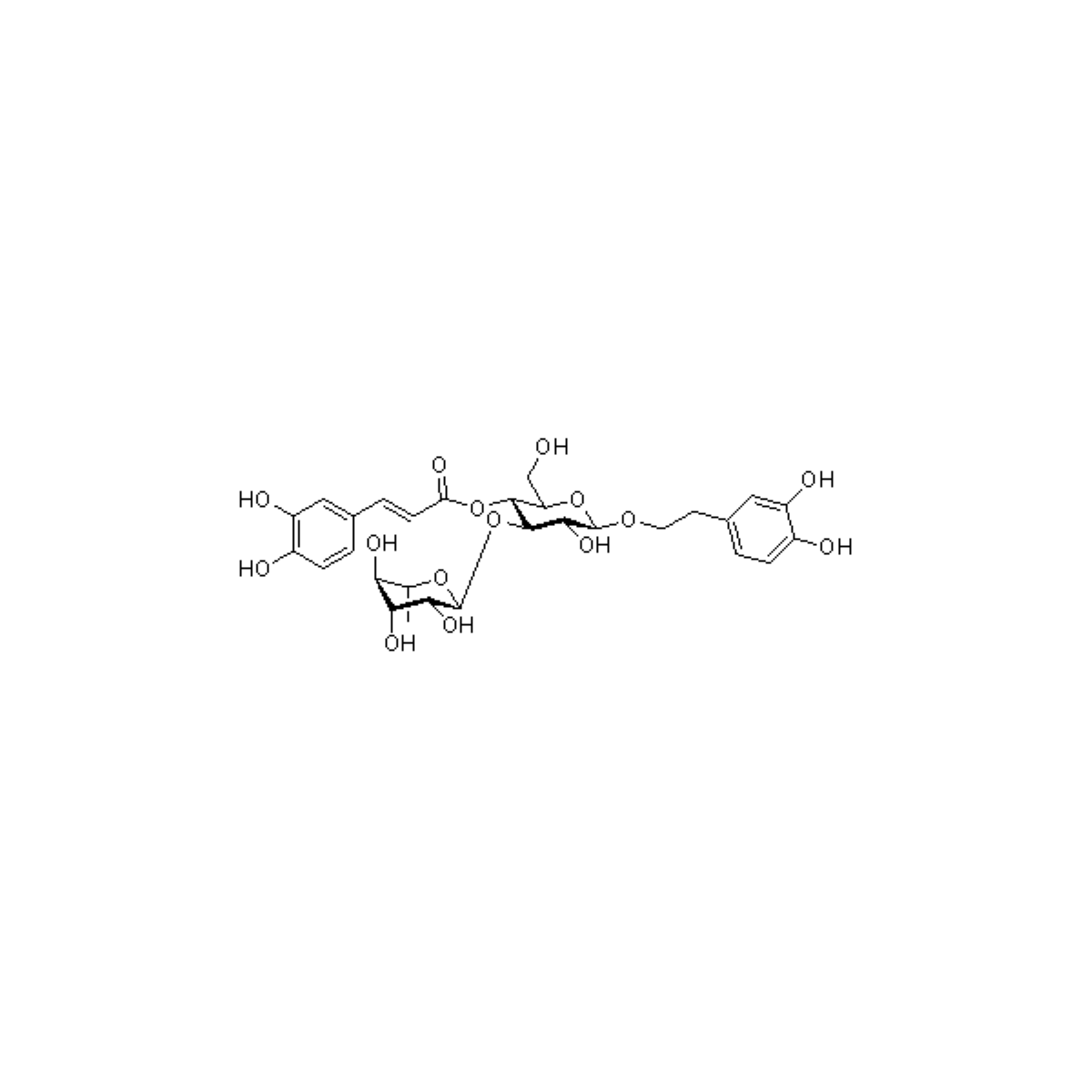
Verbascoside (Acteoside)
Product#: FNK-2400247
$389.72
Availability:
Ships in 1-2 Weeks
Verbascoside (Acteoside)
- CAT Number : FNK-2400247
- CAS Number : 61276-17-3
- Molecular Weight : 624.59
- Molecular Formula : C29H36O15
- Pack size: 5 mg
- Store: Store at 2-10℃ in a dry and dark place.
- Purity: (HPLC) ≥98%
Verbascoside, also known as acteoside, is a natural phenylpropanoid glycoside found in a variety of plants, including lemon verbena and olive. It exhibits multiple biological activities, including antioxidant, anti-inflammatory, and antimicrobial properties.
Properties
- Molecular formula: C29H36O15
- Molecular weight: 624.6 g/mol
- Appearance: Crystalline solid
- Solubility: Soluble in ethanol, DMSO, and dimethyl formamide; approximately 30 mg/ml in these solvents
- UV/Vis λmax: 220, 335 nm
- Research tool for studying antioxidant and anti-inflammatory mechanisms
- Potential therapeutic agent for neuroprotection and cancer treatment
- Used in biochemical studies related to antimicrobial activity
- Investigated for its wound-healing and gastroprotective effects
- For research use only - not for human or veterinary diagnostic or therapeutic use
- Handle with appropriate personal protective equipment
- Store at -20°C for optimal stability
- Avoid ingestion, inhalation, and contact with eyes, skin, or clothing
- Wash thoroughly after handling
Neurodegenerative Diseases:
- Verbascoside exhibits neuroprotective effects by blocking amyloid deposition and reducing amyloid β peptide toxicity, which is relevant in Alzheimer's disease (AD). It inhibits amyloid β peptide oligomerization and enhances its degradation, offering potential therapeutic benefits for AD.
- It also shows inhibitory effects on enzymes like monoamine oxidase (MAO) and acetylcholinesterase (AChE), which are involved in neurodegenerative diseases.
Cancer:
- Verbascoside has demonstrated anti-tumor activity against various cancers, including ovarian cancer, glioblastoma, prostate cancer, breast cancer, and colorectal cancer. It exerts its effects by inhibiting cell proliferation, migration, and promoting apoptosis.
- In ovarian cancer, verbascoside inhibits the AKT/NF-κB pathway and promotes M1 macrophage polarization, which contributes to its anti-tumor efficacy.
Inflammatory Diseases:
- Verbascoside has anti-inflammatory properties that help in conditions characterized by inflammation. It modulates signaling pathways like NF-κB and MAPK to exert its effects.
- Its ability to enhance antioxidant enzyme activities also contributes to its anti-inflammatory effects.
Cardiovascular Diseases:
- Verbascoside offers cardiovascular protection through its antioxidant and anti-inflammatory activities. It helps in reducing oxidative stress and improving endothelial function.
Diabetes:
- The compound has shown potential in managing diabetes by improving insulin secretion and reducing oxidative stress.
Bone and Cartilage Disorders:
- Verbascoside supports bone health by regulating bone remodeling markers and enhancing osteogenesis. It decreases osteoclastogenesis and promotes bone mineralization.
Liver Diseases:
- Its hepatoprotective effects are attributed to its ability to reduce liver inflammation and damage caused by various factors like toxins or infections.
Cellular Signaling Pathways Affected
PKC/HMGB1/RAGE/NF-κB pathway:
- Verbascoside inhibits this pathway in gingival cells under high glucose conditions, leading to reduced oxidative stress and inflammation.
AKT/NF-κB pathway:
- Verbascoside downregulates CCN1 and inhibits the AKT/NF-κB signaling pathway in ovarian cancer cells.
- It reduces the phosphorylation of AKT and NF-κB in colon cancer cells when combined with 5-FU.
MAPK pathway:
- Verbascoside attenuates the activation of TAK1/JNK/AP-1 signaling in LPS-treated U937 cells.
- It shows synergistic effects with temozolomide in glioblastoma cells through the MAPK pathway.
Nrf2/HO-1 axis:
- Verbascoside activates this antioxidant pathway, promoting the nuclear translocation of Nrf2 and increasing the expression of HO-1.
STAT3 pathway:
- Verbascoside targets SHP-1 (a protein tyrosine phosphatase) to inhibit STAT3 activation in cancer cells.
PI3K/AKT pathway:
- Verbascoside combined with 5-FU reduces PI3K and p-AKT/total AKT ratio in colorectal cancer cells, potentially sensitizing them to 5-FU treatment.
Mitochondrial function:
- Verbascoside improves mitochondrial function by increasing spare respiratory capacity and partially restoring maximal oxygen consumption rates in cells subjected to oxidative stress.
Apoptosis-related pathways:
- Verbascoside affects the expression of apoptosis-related genes such as Bcl-2, Bax, and caspases in various cancer cell lines.