.jpg "/Content/Upload/Product/Human_ELISA_kits_Diagnocine_1200_1200(413).jpg")
The Ultimate 1-Stop ELISA Marketplace:
60,000+ ELISA kits Available to Serve Scientists from All Fields of Life Science
Always Powered by Diagnocine for Precision Research.
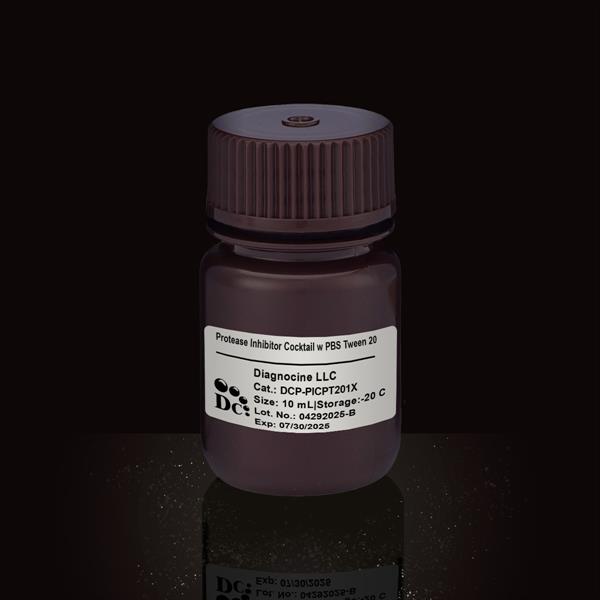
Most comprehensive buffers, reagents and detection agents are provided with each kit to optimize data output.
All-inclusive format covers everything from sample preparation to signal detection. Every step can be customized and optimized for your precision research.
DiagnoCine Precision buffers and reagents are Made in USA ISO 13485 Certified
Why waste time searching for your ELISA kit when you can get everything in one place? Diagnocine can provide you with all the ELISA needs you have (customized ELISAs also available) on the planet through a single, streamlined ordering process.
* all types of species
* HRP and AP detection
* Low target signal enhancement
* Inquire about a trial version or a customized version
4 core reagents below are included with every order, plus 1 of the 2 detection-specific reagents (matched automatically to your kit type) — 5 components, every time.
+ the 5th component, matched to your kit's detection method:
If you have any questions or need additional information, please call us at 551-245-1033 or email us at support@diagnocine.com. Our team will be happy to assist you.
Universal Compatibility
All buffers and detection reagents work seamlessly across target proteins, bridging the gap in assay consistency.
1-Stop Convenience
Consolidate your lab's purchasing. Source all ELISA needs and experience optimal buffers and reagents in a single shipment.
Enhanced Precision
Designed by scientists for scientists, all components are engineered to deliver sharper results and an optical signal.
Human CD59 glycoprotein(CD59) ELISA kit
Sandwich quantitative immunoassay for Human CD59 glycoprotein(CD59) ELISA kit in human serum, plasma, tissue homogenates. available in multiple catalog sizes:
Note: Please send inquiries regarding Trial 24T orders to support@diagnocine.com.
| Uniprot No. | P13987 |
| Species | Homo sapiens (Human) |
| Sample types | serum, plasma, tissue homogenates. |
| Detection range | 4 ng/ml-3000 ng/ml. |
| Sensitivity | 4 ng/ml. |
| Assay time | 1-5h |
| Sample loading volume | 50-100μL |
| Detection wavelength | 450 nm |
| Assay principle | Sandwich (Quantitative) |
| Data analysis | Standard curve + Curve Expert software |
| Research area | Immunology |
| Storage condition | 2-8°C (see protocol for full details) |
| Shipping condition | 4 °C |
| Shelf life | 6 months |
10 business days
Processing + 3-5 days shipping
In Stock : USA
Worldwide shipping available
Antibody capture
450 nm detection
Standard curve
Quantification
In this sandwich ELISA, Human CD59 glycoprotein(CD59) ELISA kit in the sample is captured between a pre-coated capture antibody and a detection antibody. Signal intensity is proportional to analyte concentration. Quantification uses a standard curve fitted with Curve Expert software, covering 4 ng/ml-3000 ng/ml. with a minimum detectable dose of 4 ng/ml..
- a novel, sensitive, and specific ELISA for measuring GCD59 in blood. The assay distinguished individuals with diabetes from those without, and showed strong correlation between GCD59 and HbA1c. PMID: 23670858
- CD59 was a type of membrane-bound protein, CD59 and Cbp played synergistic roles in cell activation and proliferation. PMID: 23746236
- Hematology and diabetes: from hemoglobin A1c to CD59 glycation. PMID: 23757192
- CD59 silencing in NSCLC cancer cells via retrovirus-mediated RNAi can enhance complement-mediated cell apoptosis, inhibiting the growth of NSCLC. CD59 may serve as a potential target for gene therapy in NSCLC PMID: 23835643
- Data suggest that CD59 gene might be a genetic locus for the therapy of atherosclerosis. PMID: 24084445
- Hemolytic uremic syndrome evolved independently from CD55 and CD59 expression on peripheral blood cells in enteroaggregative E.coli O104:H4 infected patients. PMID: 24086391
- Use of AAV2/8-sCD59 warrants further exploration as a potential therapy for advanced stages of diabetic retinopathy PMID: 24167638
- mutation of palmitoylation site of LAT-EGFP attenuated the signal transduction of CD59 in T cells PMID: 24200054
- Sp1 may regulate the expression of CD59, whereas CREB-binding protein (CBP)/p300 bridge NF-kappaB and CREB, which functions as an enhancer-binding protein to induce the up-regulation of CD59 during in lipopolysaccharide (LPS)-triggered complement activation. PMID: 24338025
- The presence of CD55- and/or CD59-deficient erythrocytic populations in patients with rheumatic diseases reflects an immune-mediated bone-marrow derived phenomenon. PMID: 24463881
- this study observed robust relationships between a single measurement of blood levels of GCD59 and both acute (2-hour OGTT) and chronic (HbA1c) measures of glucose handling. PMID: 24628556
- We found that CD46 and CD59 were decreased in retinal pigment epithelium cells in part, by their release in exosomes and apoptotic particles. PMID: 24664706
- Data indicate that down-regulation of CD59 expression could inhibit HeLa cells' proliferation and promote apoptosis, and the inhibitory effect of peptide seal was better than that of CD59 interference plasmid. PMID: 24909278
- Increased CD59 protein expression is associated with the outcome of patients with diffuse large B-cell lymphoma treated with R-CHOP antineoplastic protocol. PMID: 24924474
- The expression levels of CD46, CD55, and CD59 were significantly higher in colon cancer tissues compared with the normal adjacent colon tissues. PMID: 24978917
- Data suggest that microRNA-224 directly down-regulates CD59 antigen expression in diffuse large B-cell lymphoma by binding to CD59 3'-untranslated region. PMID: 25146331
- Provirus activation plus CD59 blockage triggers antibody-dependent complement-mediated lysis of latently HIV-1-infected cells. PMID: 25149467
- Expression of membrane complement regulators, CD46, CD55 and CD59, in mesothelial cells of patients on peritoneal dialysis therapy. PMID: 25725314
- A primary homozygous Cys89Tyr CD59 deficiency in humans resulted in the amino acid substitution p.Cys89Tyr with ensuing failure of proper localization of the CD59 protein to the cell surface. (Review) PMID: 25818314
- After blockage of CD59 function, the reactive Abs, regardless of their neutralizing activities, significantly enhanced specific ADCML of HIV-1 virions PMID: 26136568
- Genetic risk at the CFH-to-F13B locus was associated with higher levels of complement activation at the human macular RPE-choroid interface, as was cigarette smoking. Levels of CRP were substantially elevated in risk donors with smoking history. PMID: 26218915
- Data show that the palmitoylation mutation of linker for activation of T cells (LAT)attenuated the signal transduction induced by glycosylphosphatidylinositol-anchored CD59 antigen in T cells. PMID: 26271970
- Low urine CD59 expression is associated with clear cell renal cell carcinoma. PMID: 26420021
- A Promoter Polymorphism in the CD59 Gene in Donor Lungs Correlates With a Higher Risk for Chronic Rejection After Lung Transplantation. PMID: 26517734
- levels of CSF CD59 in neuromyelitis optica and multiple sclerosis PMID: 26686775
- Increased internalization of endothelial CD59 in intermittent hypoxia appeared to be cholesterol-dependent and was reversed by statins in a CD59-dependent manner. PMID: 26738794
- Urinary CD59 and alpha-1 antitrypsin are significantly altered in hypertensive patients developing albuminuria. PMID: 26772976
- Study revealed that CD59 is overexpressed in breast cancer tumors and correlates with poor survival. PMID: 26935178
- Decreased CD59 expression in threatened miscarriage at late gestational ages leads to additional activation of a maternal immune response and serves as a possible predictor for premature birth. PMID: 26978230
- Single-fluorescent-molecule imaging in the live-cell plasma membrane revealed the clear but transient colocalization and codiffusion of fluorescent ganglioside analogs with a fluorescently labeled glycosylphosphatidylinisotol (GPI)-anchored protein, human CD59, with lifetimes of 12 ms for CD59 monomers, 40 ms for CD59's transient homodimer rafts in quiescent cells. PMID: 27043189
- developed a model of conditional and targeted cell ablation by generating floxed STOP-CD59 knockin mice (ihCD59), in which expression of human CD59 only occurs after Cre-mediated recombination PMID: 27159394
- Our results revealed that SNPs CD59-rs831626 and CFH-rs1065489 were associated with the susceptibility of acute anterior uveitis. PMID: 27419833
- Structural basis for receptor recognition by the human CD59-responsive cholesterol-dependent cytolysins has been presented. PMID: 27499440
- Novel disorder caused by CD59 deficiency or nonfunctional CD59 at the cell membrane presenting with symptoms characteristic of classical GBS or CIDP. PMID: 27568864
- There is an altered pattern of CD55 and CD59 expression on RBCs of SCD Patients; however, it does not seem to play a causal role in the pathophysiology of anemia, and is unlikely to be influenced by the level of erythropoietin or other inflammatory mediators. PMID: 27667587
- Movement of Domain 2 with respect to Domain 3 of ILY is essential for forming a late prepore intermediate that releases CD59, while the role of cholesterol may be limited to insertion of the transmembrane segments. Together these data define a structural timeline for ILY pore formation and suggest a mechanism that is relevant to understanding other pore-forming toxins that also require CD59. PMID: 27910935
- we demonstrated that CD59 regulation by SOX2 is required for stem cell evasion of complement surveillance. This finding highlights the importance of complement surveillance in eliminating CSCs and may suggest CD59 as a potential target for cancer therapy. PMID: 28017655
- CD59 polymorphisms are associated with gene expression and different sexual susceptibility to pemphigus foliaceus in the Brazilian patients. PMID: 28534443
- Data show that following 4 patients with CD59 Cys89Tyr mutations who are treated with eculizumab, no strokes occurred and non-permanent neurological insults underwent resolution without any new neurological exacerbations. PMID: 28622911
- our results indicate that the Lys(41) /His(44) glycation motif in human CD59 may confer humans a higher risk of developing vascular disease in response to hyperglycemia. PMID: 28815695
- The results indicate that shear stress is an important mediator in endothelial progenitor cells expression of CD59 regulated by the extacellular matrix-integrin alphaVbeta3-F-actin pathway, which is a key factor in preventing membrane attack complex-mediated cell autolysis. PMID: 28943429
- This study demonstrated that Diffuse microvascular C5b-9 deposition is a common feature in muscle and nerve biopsies from diabetic patients. PMID: 29458425
- Therapeutic strategies that seek to modulate the functions of CD59 in the tumor microenvironment could be a promising direction for tumor immunotherapy. PMID: 29521526
- Parainfluenza Virus 5 (PIV5) containing CD59 antigens (PIV5-CD59) shows increased resistance to complement-mediated neutralization in vitro comparing to PIV5 lacking regulators. Infection of A549 cells with PIV5 upregulates CD59 expression. TGF-beta treatment of PIV5-infected cells also increases cell surface CD59 expression and progeny virions are more resistant to complement-mediated neutralization. PMID: 29693588
- Nonfunctioning CD59 is a major risk factor for stroke and hypercoagulability. PMID: 29929138
Human CD59 glycoprotein(CD59) ELISA kit | For research use only | Store 2-8°C | Diagnocine