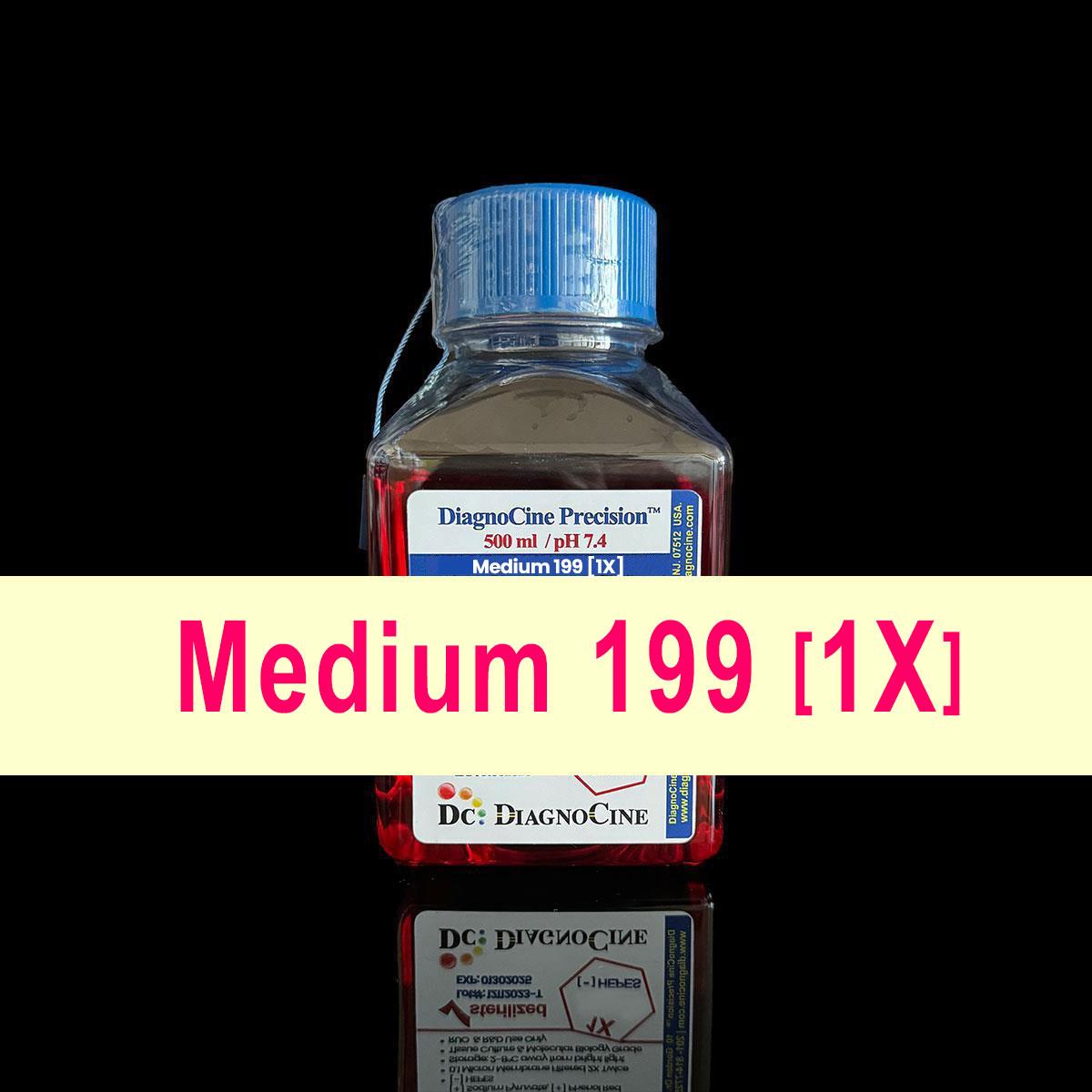
FluxMPS™ Medium 199 (M199)
Select Medium1991X
- see the table below
FluxMPS™ Medium 199 (M199)
Medium 199 is a cell culture medium developed in 1950 by J.F. Morgan, primarily for cultivating chick embryo fibroblasts and other mammalian cells. It features a balanced composition of salts, amino acids, vitamins, and glucose, but lacks proteins and growth factors. FluxMPS™ delivers this historic formulation through a 0.04 micron quadruple-stage filtration process engineered for microfluidic, Organ-on-Chip (OoC), and Lab-on-Chip (LoC) platforms.
- Four planned FluxMPS™ configurations: M199, M199 w/o Bicarbonate, M199 + HEPES, and M199 + HEPES w/o Bicarbonate — all currently listed as Coming Soon
- Often used in virology and vaccine production; requires a CO2-enriched environment to maintain its pH
- Standard glucose concentration of 1000 mg/L and standard HEPES buffer concentration of 25mM at 1X (see composition note below regarding the source's "Galactose" wording)
- Configurations vary by L-Glutamine, Sodium Bicarbonate, HEPES, and Phenol Red inclusion; all four configurations include L-Glutamine and Phenol Red
- Purified through FluxMPS™ quadruple-stage 0.04 micron filtration for microfluidic and Organ-on-Chip / Tissue-on-Chip / Lab-on-Chip compatibility
- Supports various cell types and is typically supplemented with serum or serum-free additives for optimal growth; its defined formulation makes it particularly valuable in large-scale vaccine manufacturing and biomedical research
- Available in 500 mL and 1000 mL sizes; stored at 2-8°C away from bright light; fully customizable via support@diagnocine.com
- Concentration1X
- Glucose (per source: "Galactose")1000 mg/L
- HEPES buffer25mM (standard, HEPES configurations)
- L-GlutamineIncluded (all four)
- Sodium BicarbonateVariant-dependent
- HEPESVariant-dependent
- Phenol RedIncluded (all four)
- Sizes500 mL / 1000 mL
- Storage2-8°C, protect from light
- AvailabilityComing Soon
At-a-Glance Supplement Matrix
Check the supplement(s) you require, press Search to confirm which configuration(s) include them. All four Medium 199 configurations below are currently listed as Coming Soon in Diagnocine's source materials; contact support@diagnocine.com for availability updates or early access.
| Name | Cat No. | L-Glutamine | Bicarbonate | HEPES | Phenol Red | Availability |
|---|---|---|---|---|---|---|
| M199 | DCP-M1991X | check | check | remove | check | scheduleComing Soon |
| M199 w/o Bicarbonate | DCP-M199-B1X | check | remove | remove | check | scheduleComing Soon |
| M199 + HEPES | DCP-M199H1X | check | check | check | check | scheduleComing Soon |
| M199 + HEPES w/o Bicarbonate | DCP-M199H-B1X | check | remove | check | check | scheduleComing Soon |
About Medium 199 (M199)
Medium 199 is a cell culture medium developed in 1950 by J.F. Morgan, primarily for cultivating chick embryo fibroblasts and other mammalian cells. It features a balanced composition of salts, amino acids, vitamins, and glucose, but lacks proteins and growth factors. Often used in virology and vaccine production, Medium 199 requires a CO2-enriched environment to maintain its pH. It supports various cell types and is typically supplemented with serum or serum-free additives for optimal growth. Its defined formulation makes it particularly valuable in large-scale vaccine manufacturing and biomedical research.
Origins & Development
Medium 199 (M199, also designated TCM 199 or Tissue Culture Medium 199) is the first completely defined, synthetic cell culture medium developed for the nutritional study of animal cells in vitro. Formulated in 1950 at the Connaught Medical Research Laboratories (CMRL) at the University of Toronto by Joseph F. Morgan, Helen J. Morton, and Raymond C. Parker, it represented an unprecedented attempt to replace all undefined biological supplements with a precisely characterized chemical mixture.
Unlike the Eagle-lineage media (BME, MEM, DMEM) that followed, built around the minimal nutrients needed to sustain proliferating cell lines, Medium 199 was engineered from a maximalist nutritional philosophy: every class of compound believed on theoretical grounds to be required by living cells was included, whether its individual necessity had been experimentally confirmed or not. This produced a uniquely complex formulation containing not only amino acids, water-soluble vitamins, and inorganic salts, but also fat-soluble vitamins (A, D2, E, K3), cholesterol, nucleic acid precursors (free purines, pyrimidines, nucleosides, nucleotides), and the surfactant polysorbate 80 (Tween 80) as a lipid dispersant, a nutritional scope not matched by any other classical medium.
Before 1950, all tissue culture media relied on undefined biological fluids, plasma clots, embryo extract, serum, and lymph as the principal nutritional components. These supplements were irreplaceable for cell maintenance, but their variable, unknown composition precluded controlled nutritional experiments. The CMRL group at the University of Toronto, under Raymond C. Parker, was at the forefront of replacing biological supplements with synthetic ones; the aim of the 1950 project was specifically to create a tool for the nutritional study of primary chick embryo fibroblasts under chemically defined conditions.
Morgan, Morton, and Parker published their foundational result in January 1950 as "Nutrition of animal cells in tissue culture; initial studies on a synthetic medium" in Proceedings of the Society for Experimental Biology and Medicine (73(1): 1-8). The paper described a fully synthetic feeding solution combining amino acids, vitamins, nucleic acid constituents, and accessory growth factors. The authors demonstrated that explanted chick embryo cells could survive in this mixture without serum for an average of four to five weeks, with measurable growth — results not achieved with any prior synthetic formulation. The investigators noted that while Medium 199 sustained cell life and permitted nutritional study, it was insufficient for long-term proliferation without serum, a limitation acknowledged in the original paper and all subsequent product documentation.
The number "199" reflects the sequential numbering of experimental formulations tested during development, not a count of components. Yao and Asayama (2017) describe the philosophy precisely: Medium 199 includes fat-soluble vitamins, cholesterol, and other components considered necessary on theoretical grounds, some of which proved physiologically inactive. This placed Medium 199 in deliberate contrast with the subsequent Eagle approach (1955-1959), which sought to define minimal requirements empirically; Eagle criticized Medium 199's complexity, noting that it included many components demonstrably unnecessary for HeLa and L-cell growth, and used this as the rationale for developing BME.
Tween 80 and the Delivery of Fat-Soluble Vitamins
The introduction of Tween 80 into the Medium 199 program is documented in Morton, Morgan & Parker (1950), "Nutrition of animal cells in tissue culture. II. Use of Tweens in synthetic feeding mixtures" (Proc. Soc. Exp. Biol. Med. 74: 22-26). Delivering fat-soluble vitamins was a practical problem, since vitamins A, D2, E, and K3 (menadione) are insoluble in aqueous media. Polysorbate 80 served as a nonionic surfactant vehicle that maintained these lipophilic compounds in stable suspension. Tween 80 also emulsifies cholesterol (0.2 mg/L), the only sterol present in any classical cell culture medium; this Tween 80 plus cholesterol pairing is absent from all subsequent Eagle-lineage media (BME, MEM, DMEM, IMDM, RPMI 1640).
Connaught Lineage: Medium 199 and CMRL 1066
Medium 199 and CMRL 1066 (Parker et al., 1957) both emerged from the same CMRL group and share a direct developmental relationship. CMRL 1066 was created by amending Medium 199 to culture mouse L cells under protein-free conditions: increasing the reducing substances cysteine, glutathione, and ascorbic acid; eliminating the fat-soluble vitamins (A, D, E, K3) and Tween 80; changing the nucleic acid precursors; and adding five preformed coenzymes (CoA, TPP, NAD, NADP, FAD). CMRL 1066 is thus a more metabolically sophisticated, serum-free-optimized descendant of Medium 199's complex basal framework.
Medium 199 and the 1955 Salk Polio Vaccine
The most historically consequential application of Medium 199 was as the growth medium for the poliovirus used to produce the first Salk inactivated polio vaccine. Following the Enders-Weller-Robbins discovery that poliovirus could be grown in non-nervous tissue cultures (Nobel Prize, 1954), Medium 199 was selected as the nutrient medium for growing poliovirus in monkey kidney cell monolayers. Contemporary accounts describe minced monkey kidney tissue placed in "Povitzky bottles" filled with Mixture 199, incubated at 36-37 degrees C for several days to form a kidney-cell monolayer, after which fresh Mixture 199 was added and poliovirus seed inoculated; the virus multiplied for several days before harvest. The April 12, 1955 announcement of vaccine efficacy and the subsequent mass inoculation of millions of children marked the first global public-health triumph in which a chemically defined synthetic medium played a central role in manufacturing.
The Medium 199 / CMRL Family Tree
- Medium 199 (1950) — Morgan, Morton & Parker, Connaught Medical Research Laboratories (CMRL), University of Toronto. The first completely defined, synthetic medium for chick embryo fibroblast nutritional study, built on a maximalist theoretical-provision philosophy.
- CMRL 1066 (1957) — Parker et al., a direct descendant created by amending Medium 199 to culture mouse L cells under protein-free conditions: increased cysteine, glutathione, and ascorbic acid; eliminated fat-soluble vitamins and Tween 80; changed nucleic acid precursors; added five preformed coenzymes.
- Eagle-lineage media (BME, MEM, DMEM) — a contrasting philosophy (1955-1959). Harry Eagle criticized Medium 199's complexity, noting many components were demonstrably unnecessary for HeLa and L-cell growth, and used this as rationale for developing BME on minimal empirical requirements rather than maximal theoretical provision.
- M199 salt variants — Earle's salts (closed CO2 system, higher phosphate) and Hanks' salts (open system, lower phosphate, higher NaCl) are functionally non-equivalent configurations of the same base formulation.
Composition
The tables below present the full source-verified composition of the standard Earle's Salts Medium 199 formulation (with L-Glutamine), the broadest nutritional profile of any classical cell culture medium, including fat-soluble vitamins, cholesterol, nucleic acid precursors, and Tween 80 — features absent from all Eagle-lineage media.
| Ingredient | mg/L |
|---|---|
| Calcium chloride dihydrate | 265.000 |
| Ferric nitrate nonahydrate [Fe(NO3)3.9H2O] | 0.720 |
| Magnesium sulfate (anhydrous) | 97.67 |
| Potassium chloride | 400.000 |
| Sodium acetate (anhydrous) | 50.000 |
| Sodium chloride | 6800.000 |
| Sodium dihydrogen phosphate (anhydrous) | 122.000 |
| Ingredient | mg/L |
|---|---|
| Glycine | 50.000 |
| L-Alanine | 25.000 |
| L-Arginine hydrochloride | 70.000 |
| L-Aspartic acid | 30.000 |
| L-Cysteine hydrochloride monohydrate | 0.100 |
| L-Cystine dihydrochloride | 26.000 |
| L-Glutamic acid | 67.000 |
| L-Glutamine | 100.000 |
| L-Histidine hydrochloride monohydrate | 21.880 |
| L-Hydroxyproline | 10.000 |
| L-Isoleucine | 20.000 |
| L-Leucine | 60.000 |
| L-Lysine hydrochloride | 70.000 |
| L-Methionine | 15.000 |
| L-Phenylalanine | 25.000 |
| L-Proline | 40.000 |
| L-Serine | 25.000 |
| L-Threonine | 30.000 |
| L-Tryptophan | 10.000 |
| L-Tyrosine disodium salt dihydrate | 57.660 |
| L-Valine | 25.000 |
| Ingredient | mg/L |
|---|---|
| Ascorbic acid (Vitamin C) | 0.050 |
| Calciferol (Ergocalciferol, Vitamin D2) | 0.100 |
| Choline chloride | 0.500 |
| D-Biotin | 0.010 |
| D-Calcium pantothenate | 0.010 |
| DL-alpha-Tocopherol phosphate disodium salt (Vitamin E) | 0.010 |
| Folic acid | 0.010 |
| Menadione (Vitamin K3) | 0.016 |
| myo-Inositol | 0.050 |
| Niacinamide (Nicotinamide) | 0.025 |
| Nicotinic acid (Niacin) | 0.025 |
| p-Aminobenzoic acid (PABA) | 0.050 |
| Pyridoxal hydrochloride | 0.025 |
| Pyridoxine hydrochloride | 0.025 |
| Retinol acetate (Vitamin A acetate) | 0.140 |
| Riboflavin | 0.010 |
| Thiamine hydrochloride | 0.010 |
| Ingredient | mg/L |
|---|---|
| Adenine sulfate | 10.000 |
| Adenosine 5'-triphosphate disodium (ATP) | 1.000 |
| Adenosine 5'-monophosphate sodium (5'-AMP) | 0.200 |
| Guanine hydrochloride | 0.300 |
| Hypoxanthine (sodium) | 0.300 |
| Thymine | 0.300 |
| Uracil | 0.300 |
| Xanthine sodium | 0.344 |
| 2-Deoxy-D-ribose | 0.500 |
| D-Ribose | 0.500 |
| Ingredient | mg/L |
|---|---|
| Cholesterol | 0.200 |
| Polysorbate 80 (Tween 80) | 4.900-20.000 |
| Ingredient | mg/L |
|---|---|
| D-Glucose | 1000.000 |
| Glutathione (reduced, GSH) | 0.050 |
| Sodium acetate (anhydrous) | 50.000 |
| HEPES buffer | 5958.000 |
| Phenol red sodium salt | ~10-20 |
Salt Variants: Earle's vs. Hanks' Salts
Medium 199 is documented in two salt configurations that affect buffering, CO2 dependence, and phosphate levels, making the variants functionally non-equivalent. Diagnocine's configurations are based on the Earle's salts variant described below.
| Feature | Earle's Salts Variant | Hanks' Salts Variant |
|---|---|---|
| NaHCO3 added by user | 2.2 g/L (closed CO2 system) | Not added (or low, ~0.35 g/L) |
| CO2 atmosphere required | 5-10% | Not required (open system, ambient air) |
| Phosphate content | Higher (NaH2PO4 122 mg/L anhydrous) | Lower phosphate |
| NaCl | 6800 mg/L | Higher (~8000 mg/L) to compensate osmotically |
| Principal application | Standard closed-incubator culture | Open systems, brief ex vivo work, non-CO2 transport |
| Buffering | Active bicarbonate/CO2 equilibrium | Relies more on phosphate buffering |
| Oocyte IVM use | Dominant (CO2 incubator) | Collection flushes/transport |
Medium 199 vs. Classical Media: Comprehensive Comparison
How Medium 199's maximalist nutritional philosophy compares to Eagle-lineage media (BME, MEM, DMEM) and its direct descendant, CMRL 1066.
| Feature | Medium 199 | BME | MEM | DMEM (high-glucose) | CMRL 1066 |
|---|---|---|---|---|---|
| Developer & year | Morgan, Morton, Parker — CMRL, 1950 | Eagle — NIH, 1955 | Eagle — NIH, 1959 | Dulbecco & Freeman, 1959 | Parker et al. — CMRL, 1957 |
| Amino acids | 19 proteinogenic (no Asn) + cystine + Hyp = 21 entries | 13 (essential set) | 13 (essential set) | 15 (+ Gly, Ser) | ~20 (incl. Hyp, non-essentials) |
| Fat-soluble vitamins | A, D2, E, K3 | None | None | None | None |
| Water-soluble vitamins | 13 (both B3, both B6, PABA, ascorbate, biotin, pantothenate, folate, riboflavin, thiamine, choline, inositol) | 9 (incl. biotin) | 8 (no biotin) | 8 (no biotin, no B12) | 15+ (adds CoA, TPP, NAD, NADP, FAD) |
| Glucose | 1000 mg/L (~5.5 mM) | 1000 mg/L | 1000 mg/L | 4500 mg/L (25 mM) | 1000 mg/L |
| Cholesterol | 0.200 mg/L | None | None | None | None |
| Tween 80 | 4.9-20 mg/L | None | None | None | None |
| ATP (exogenous) | 1.000 mg/L | None | None | None | 1.000 mg/L |
| Free purines | Adenine, guanine, hypoxanthine, xanthine | None | None | None | Modified set |
| Free pyrimidines | Thymine, uracil | None | None | None | Modified set |
| Reduced glutathione | 0.050 mg/L | None | None | None | 10.000 mg/L |
| Ascorbic acid | 0.050 mg/L | None | None | None | 0.050 mg/L |
| PABA | 0.050 mg/L | None | None | None | 0.050 mg/L |
| L-Hydroxyproline | 10.000 mg/L | None | None | None | 10.000 mg/L |
| Sodium pyruvate | None | None | None | 110 mg/L (variant) | None |
| Iron source | Fe(NO3)3.9H2O 0.720 mg/L | None | None | Fe(NO3)3.9H2O 0.1 mg/L | Absent |
| Selenium | None | None | None | None | None |
| HEPES | 25 mM (HEPES variant) | None | None | None | None |
| Sodium bicarbonate | 2.2 g/L; 5-10% CO2 | CO2-dependent | CO2-dependent | CO2-dependent | CO2-dependent |
| pH / osmolality | ~7.2 / 310-350 mOsm/kg (with NaHCO3) | ~7.2 / 290-300 | ~7.2 / ~290 | ~7.2 / ~335 | ~7.2 / ~280 |
| Serum requirement | Not self-sufficient; 5-15% FBS | 5-10% FBS | 5-10% FBS | 10% FBS | 5% for some lines |
| Primary application | Virology, vaccine production, vascular cells, oocyte IVM | General adherent lines | General adherent lines | High-density adherent lines, HEK293 | Mouse L cells, protein-free |
| Historical milestone | Salk polio vaccine production, 1955 | Defined minimal requirements | Doubled amino acids | Polyoma plaque assay | First serum-free mammalian line culture |
Distinctive Compositional Features vs. Classical Media
Features of Medium 199 documented as absent from all Eagle-lineage media (BME, MEM, DMEM, IMDM, alpha-MEM, RPMI 1640) and MCDB media:
- Fat-soluble vitamins (A, D2, E, K3) — the only classical medium to include all four (D2 formulation-dependent)
- Polysorbate 80 (Tween 80) — nonionic surfactant for lipid dispersal
- Cholesterol (0.2 mg/L) — the only exogenous sterol in any classical medium's base
- ATP (1.0 mg/L) — exogenous energy currency (also in CMRL 1066)
- Free purines (guanine, hypoxanthine, xanthine) and pyrimidines (thymine, uracil) — salvage substrates (present in CMRL 1066)
- Both ribose and deoxyribose as RNA and DNA sugar precursors
- L-Hydroxyproline (10 mg/L) — non-standard amino acid (also in CMRL 1066)
- Both vitamin B6 forms (pyridoxal + pyridoxine) and both B3 forms (nicotinamide + nicotinic acid)
- PABA (0.050 mg/L) — present in M199 and CMRL 1066
- Reduced glutathione (0.050 mg/L) — approximately 200 times lower than CMRL 1066
- Ascorbic acid (0.050 mg/L) — present in alpha-MEM and L-15; absent from DMEM/MEM/BME
- Sodium acetate (50 mg/L) — absent from DMEM and MEM
Why FluxMPS™
Quadruple-Stage 0.04 Micron Filtration
Purified finer than any ready-to-use cell culture media currently available, removing particulates and protein aggregates before they reach the chip.
Engineered for Microfluidic Flow
Formulated for Organ-on-Chip (OoC), Tissue-on-Chip (ToC), and Lab-on-Chip (LoC) platforms, where the medium is itself part of the instrument.
Optical Clarity
Supports real-time imaging and integrated biosensing across long-duration culture and perfusion studies.
Historic Vaccine-Production Heritage
Rooted in the medium used to grow the poliovirus for the first Salk inactivated polio vaccine in 1955.
Fully Customizable
Standard 1X concentration, glucose, and HEPES levels can be adjusted, along with chemical additions, proteins, supplements, and pH, on request.
Regulatory-Aligned Foundation
Formulated to support FDA-recognized physiological modeling standards for drug discovery, toxicology screening, and translational research.
Quadruple-Stage Filtration
Every FluxMPS™ formulation, including Medium 199, passes through a four-stage filtration architecture before reaching your platform.
-
1
0.1µmPre-filtration Stage One
Removes larger particulates and aggregates from the formulated medium.
-
2
0.1µmPre-filtration Stage Two
A second 0.1 micron pass further reduces particulate and aggregate load ahead of sterile filtration.
-
3
0.04µmSterile Filtration Stage One
Fine sterile filtration engineered for microfluidic channel compatibility.
-
4
0.04µmSterile Filtration Stage Two
A second 0.04 micron pass for the optical clarity and particulate control that OoC/ToC/LoC platforms require.
Filtration Performance

Validated Cell Lines & Applications
Chick Embryo Fibroblasts
The primary validated cell type; the 1950 paper demonstrated maintenance for four to five weeks without serum.
Monkey Kidney / Vero Cells
Used for rabies, Japanese encephalitis, and other viral vaccine production (M199 + 10% FBS); the original Salk vaccine substrate.
BHK-21 Cells
Used for foot-and-mouth disease and rabies vaccine production.
Vascular Smooth Muscle & Endothelial Cells
Rat, rabbit, and human aortic cells (M199 + 10% FBS under 5% CO2), with good growth and minimal fibroblast contamination.
Cardiomyocyte Isolation
Used in neonatal rat ventricular cardiomyocyte isolation and enzymatic digestion, and for short-term chick cardiomyocyte culture maintaining spontaneous beating.
Oocyte In Vitro Maturation (IVM)
TCM 199 is the universal standard basal medium for bovine, porcine, equine, and ovine oocyte IVM — its single largest contemporary application volume.
Scientific Applications
Virology & Vaccine Production
General-purpose virology, where serum-supplemented M199 provides the broad nutritional base for primary lines, including the historic 1955 Salk polio vaccine manufacturing process.
Reproductive Biology & IVF/IVM
Bovine IVM (with serum, gonadotropins FSH/LH, and estradiol) is the worldwide standard maturation medium; porcine IVM uses TCM 199 (Earle's) with follicular fluid, eCG, and hCG at 38.5 degrees C, 5% CO2 for approximately 44-46 hours.
Primary Explant & Organ Culture
Used for mouse pancreatic epithelial explants, rat lens epithelial tissue, and organ culture generally, reflecting its broad nutritional base.
Arthropod Cell Culture
Used as a component in some arthropod (tick, mosquito) cell systems, occasionally useful in custom tick-borne pathogen culture systems.
Practical Considerations & Limitations
Cholesterol / Tween 80 compatibility. Polysorbate 80 can interact with lipophilic membrane components and certain cell types above the recommended range, and with some plastics, protein-binding surfaces, and filtration membranes; verify the concentration (4.9-20 mg/L) when changing suppliers.
Glutamine instability. L-glutamine (100 mg/L) is subject to spontaneous cyclization to pyroglutamate; store at 2-8°C and use within shelf life, or use a stable dipeptide (L-alanyl-L-glutamine).
Fat-soluble vitamin photodegradation. Vitamins A, D2, E, and K3 are photosensitive; store in a light-protected manner at 2-8°C and use freshly prepared medium promptly.
Serum dependency. Despite its complexity, Medium 199 does not support continuous proliferation without serum for most cell types — it is a complex basal medium, not a serum-free system.
Nucleotide precursor redundancy. Many nucleic acid precursors are physiologically redundant in proliferating lines with intact biosynthetic pathways; their benefit is greatest in cells with impaired de novo synthesis (primary explants, low density, metabolic stress).
Frequently Asked Questions
Verified References
- Morgan, J.F., Morton, H.J. & Parker, R.C. (1950). Nutrition of animal cells in tissue culture. I. Initial studies on a synthetic medium. Proc. Soc. Exp. Biol. Med., 73(1): 1-8. PMID 15402504. DOI 10.3181/00379727-73-17557.
- Morton, H.J., Morgan, J.F. & Parker, R.C. (1950). Nutrition of animal cells in tissue culture. II. Use of Tweens in synthetic feeding mixtures. Proc. Soc. Exp. Biol. Med., 74: 22-26.
- Morgan, J.F., Campbell, M.E. & Morton, H.J. (1955). The nutrition of animal tissues cultivated in vitro. I. A survey of natural materials as supplements to synthetic Medium 199. J. Natl. Cancer Inst., 16: 557-567.
- Hagen, D.R., Prather, R.S., Minhas, B.S. & First, N.L. (1986). Effects of incubation temperature and bicarbonate on maturation of pig oocytes in vitro. Biol. Reprod., 35(3): 658-661. PMID 3701704.
- Yao, T. & Asayama, Y. (2017). Animal-cell culture media: History, characteristics, and current issues. Reprod. Med. Biol., 16(2): 99-117. PMC5661806.
- Schwerdt, C.E. & Fogh, J. (1957). The ratio of physical particles per infectious unit observed for poliomyelitis viruses. Virology, 4: 41-52.
FluxMPS™ — Precision Cell Culture Media for Microphysiological Systems
Built for the architecture of the future. Not the flask of the past.
Traditional cell culture media were formulated for static well plates and flasks — environments that tolerate impurities, precipitates, and particle loads that would immediately compromise a microfluidic system. FluxMPS™ was designed from the ground up for Organ-on-Chip (OoC), Tissue-on-Chip (ToC), and Lab-on-Chip (LoC) platforms, where the medium itself is part of the instrument.
Purity That Protects Your Platform
FluxMPS™ is purified to 0.04 microns — finer than any ready-to-use cell culture media currently available. At this level, the microscopic particulates and protein aggregates that silently block micro-channels, disrupt laminar flow, and generate false biological signals are eliminated before the media ever reaches your chip.
The result: your platform stays operational, your data stays clean, and your biology drives the result — not your media.
Engineered for Flow, Not Just Growth
The name FluxMPS™ reflects its core design principle. Every component is optimized for consistent, laminar flow performance across:
- Complex micro-channel geometries
- Capillary-bed and vascular simulations
- Long-term automated perfusion studies running continuously for weeks
Zero-clogging performance is not a feature — it is the baseline specification.
Applications & Performance
| Application | What FluxMPS™ Delivers |
|---|---|
| Microfluidics | Stable shear stress; no channel blockage |
| Metabolic Tracing | Ultra-pure matrix with no contaminant interference |
| Long-term Perfusion | Consistent formulation stability over weeks of continuous flow |
| Organ-on-Chip | Optical clarity for real-time imaging and integrated biosensing |
Regulatory Foundation
FluxMPS™ is formulated to support FDA-recognized physiological modeling standards, providing a validated, reproducible media foundation for drug discovery, toxicology screening, and translational research. When your downstream data needs to stand up to regulatory scrutiny, your upstream media cannot be an afterthought.
The Bottom Line
Microfluidic platforms are precision instruments. They require precision inputs.
FluxMPS™ is the only ready-to-use cell culture medium engineered specifically to meet that standard — protecting your chip, your cells, and your science.