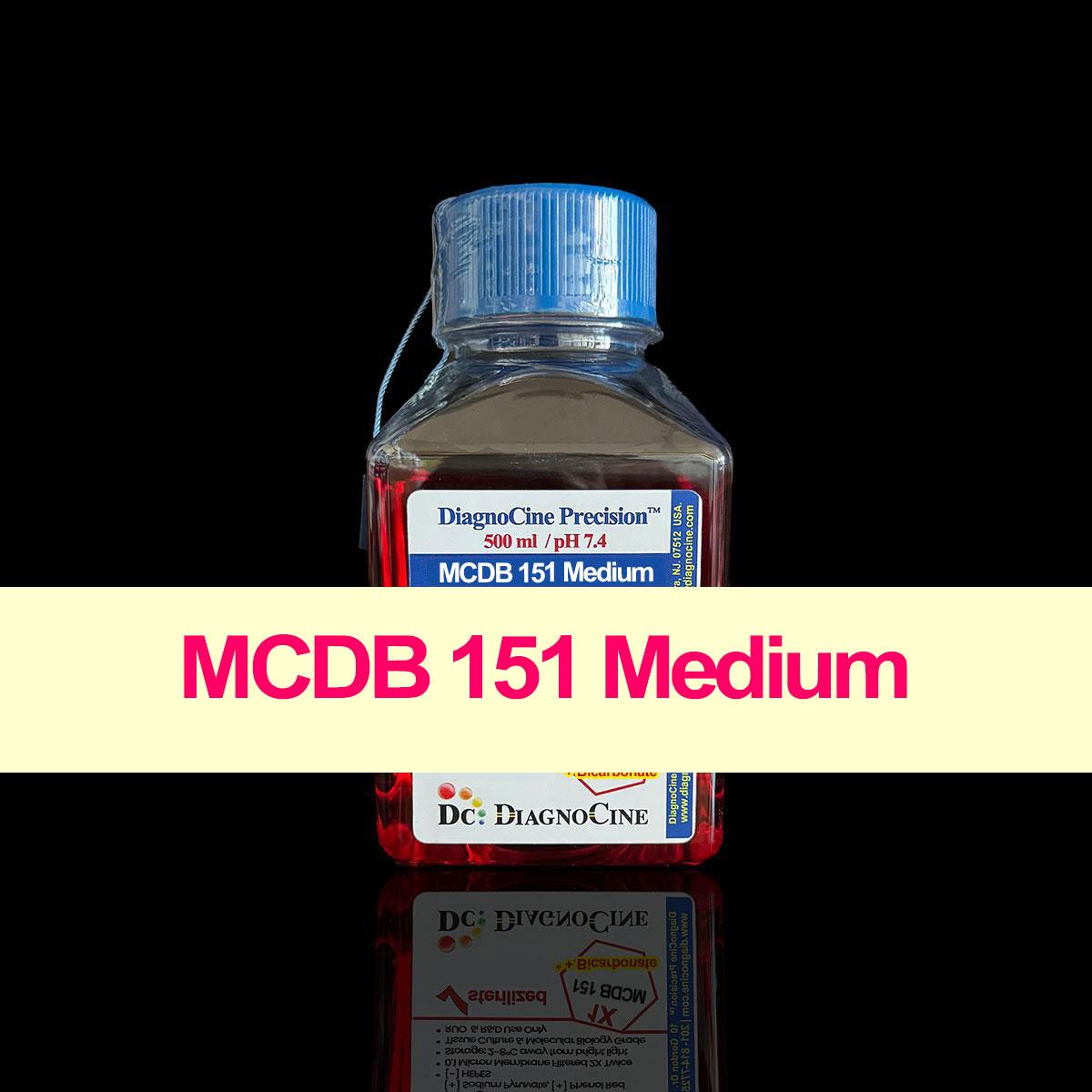
FluxMPS™ MCDB 151 Medium
Select See the table below
- See the table below
FluxMPS™ MCDB 151 Medium
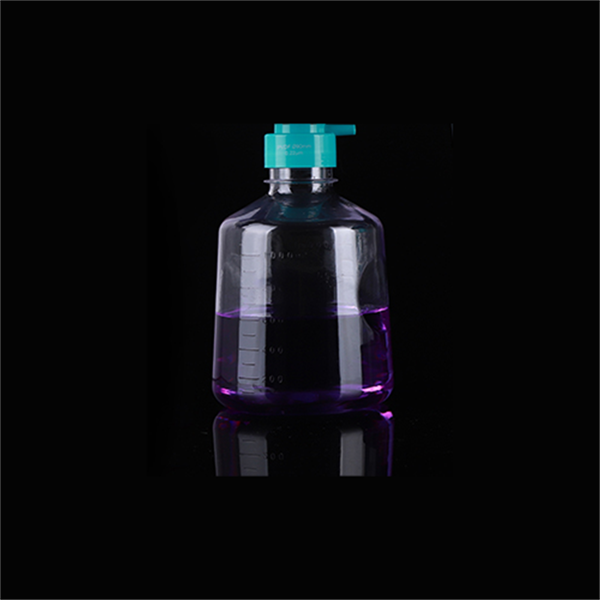
MCDB 151 is a chemically defined, F-12-derived medium originally developed by Peehl and Ham in 1980 to support the clonal growth of human epidermal keratinocytes with minimal dialyzed serum protein. FluxMPS™ delivers this formulation through a 0.04 micron quadruple-stage filtration process engineered for microfluidic, Organ-on-Chip (OoC), and Lab-on-Chip (LoC) platforms.
- Two ready-to-use FluxMPS™ configurations: MCDB 151 (with sodium bicarbonate) and MCDB 151 w/o Bicarbonate
- Originally developed for the growth of human keratinocytes; part of the MCDB series designed to support low-protein or serum-free growth of specific cell types
- Standard glucose concentration of 1.0 g/L and standard HEPES concentration of 25mM at 1X
- Both configurations include L-Glutamine, Sodium Pyruvate, HEPES, and Phenol Red as standard, plus a trace-element supplement; Sodium Bicarbonate is included in the standard configuration and omitted in the w/o Bicarbonate configuration
- Purified through FluxMPS™ quadruple-stage 0.04 micron filtration for microfluidic and Organ-on-Chip / Tissue-on-Chip / Lab-on-Chip compatibility
- Frequently used by researchers studying skin biology, wound healing, and in vitro skin models, supplemented with growth factors, hormones, or low levels of dialyzed FBS protein
- Available in 500 mL and 1000 mL sizes; stored at 2-8°C away from bright light; fully customizable via support@diagnocine.com
- Concentration1X
- Glucose1.0 g/L
- HEPES concentration25mM (standard)
- L-GlutamineIncluded (both)
- Sodium PyruvateIncluded (both)
- Sodium BicarbonateVariant-dependent
- Phenol RedIncluded (both)
- SpecialWith Trace Elements
- Sizes500 mL / 1000 mL
- Storage2-8°C, protect from light
At-a-Glance Supplement Matrix
Check the supplement(s) you require, press Search to confirm which configuration(s) include them, then click straight through to the product page via the catalog-number link or the View button.
| Name | Cat No. | L-Glutamine | Pyruvate | Bicarbonate | HEPES | Phenol Red | Special | Product Page |
|---|---|---|---|---|---|---|---|---|
| MCDB 151 | DCP-M151H1X | check | check | check | check | check | With Trace Elements | Viewarrow_forward |
| MCDB 151 w/o Bicarbonate | DCP-M151H-B1X | check | check | remove | check | check | With Trace Elements | Viewarrow_forward |
About MCDB 151 Medium
MCDB media were developed for the culture of specific cell types without a serum supplement. The media were supplemented with growth factors, hormones, trace elements, or low levels of dialyzed fetal bovine serum protein (FBSP), and each MCDB medium was formulated for a specific cell type: MCDB 105 and 110 for rapid clonal growth of normal human diploid cells, MCDB 131 originally for human micro-vascular endothelial cells (HMVEC), and MCDB 151, 201, and 302 originally for human keratinocytes, clonal growth of chick embryo fibroblasts, and CHO cells respectively.
MCDB 151 Medium is a specialized cell culture medium originally developed for the growth of human keratinocytes. It belongs to the MCDB series of media, which were designed to support the low-protein or serum-free growth of specific cell types. Like other MCDB formulations, MCDB 151 provides a defined and optimally balanced nutritional environment tailored to promote the growth of its target cell type, typically containing a carefully selected blend of inorganic salts, amino acids, vitamins, and other nutrients essential for keratinocyte growth and proliferation.
MCDB 151 is often used in conjunction with growth factors, hormones, or low levels of dialyzed fetal bovine serum protein to achieve optimal results. Researchers studying skin biology, wound healing, or developing in vitro skin models frequently utilize MCDB 151 as a base medium, which can be further supplemented to meet specific experimental requirements. Its formulation allows for the maintenance of keratinocyte characteristics and supports their proliferation in culture, making it a valuable tool in dermatological research and regenerative medicine applications.
Origins & Development
MCDB media are a family of chemically defined, cell-type-specific basal formulations developed at the Department of Molecular, Cellular and Developmental Biology (MCDB) at the University of Colorado, Boulder, primarily by Richard G. Ham and Wallace L. McKeehan during the 1970s and 1980s. The department acronym gives the series its name; the department itself was founded in 1968 by pioneering cell biologist Keith Porter, its first chair. Unlike the classical Eagle-lineage media (BME, MEM, DMEM), which were designed as general-purpose basal formulations to be supplemented with serum, each MCDB medium was engineered from the ground up, qualitatively and quantitatively, to support the clonal growth and long-term maintenance of one specific, defined cell type.
The MCDB program was catalyzed by a 1976 discovery: McKeehan, Hamilton, and Ham reported in PNAS that selenium is an essential trace nutrient for clonal growth of WI-38 diploid human fibroblasts at minimal serum-protein concentrations, and that higher serum levels had simply been masking the requirement by supplying selenium as a contaminant. This finding showed that systematic trace-element supplementation could substantially reduce serum dependence and directly stimulated the formal MCDB series, beginning with MCDB 104 in 1977.
MCDB 151 was developed by Peehl and Ham and published in In Vitro (16(6): 526-540, 1980; PMID 6156122). Starting from Ham's F-12 as the superior basal medium in a commercial-media survey, Peehl and Ham adjusted the formulation to support clonal growth of human epidermal keratinocytes with as little as 1 mg/mL dialyzed FBS protein (approximately 2% serum) and 10 µg/mL hydrocortisone. MCDB 151 and MCDB 105 proved mutually selective — MCDB 151 favoring keratinocytes, MCDB 105 favoring fibroblasts from mixed foreskin inocula — with calcium and adenine among the most influential discriminating factors between the two media. MCDB 151 was subsequently refined into MCDB 152 (Tsao, Walthall & Ham, 1982) and MCDB 153 (Boyce & Ham, 1983), the standard keratinocyte medium still in widespread use today, which eliminated the need for feeder layers, conditioned medium, serum, and specialized surfaces.
In 1979, Ham and McKeehan codified the principles, nomenclature, and nutritional basis of the entire MCDB program in "Media and growth requirements," Chapter 5 of Methods in Enzymology (58: 44-93), which remains a key primary reference for the series.
The MCDB Series Family Tree
MCDB 151 is one of several cell-type-specific media that Ham, McKeehan, and colleagues derived from Ham's F-12 during the systematic MCDB nutritional-optimization program, and is the direct parent of the widely used MCDB 152 and MCDB 153 keratinocyte media.
| Medium | Year | Primary Developers | Primary Target Cell | Parent Medium |
|---|---|---|---|---|
| MCDB 104 | 1977 | McKeehan, McKeehan, Hammond, Ham | WI-38 human lung fibroblasts | Ham's F-12 |
| MCDB 105 | ~1978-1980 | Ham, McKeehan | WI-38, MRC-5, IMR-90 fibroblasts | MCDB 104 |
| MCDB 110 | ~1980-1981 | Bettger, Boyce, Walthall, Ham | Human diploid fibroblasts (serum-free) | MCDB 105 |
| MCDB 131 | 1987 | Knedler, Ham | Human microvascular endothelial cells | MCDB 402 |
| MCDB 151 | 1980 | Peehl, Ham | Human epidermal keratinocytes (low-serum) | Ham's F-12 |
| MCDB 152 | 1982 | Tsao, Walthall, Ham | Human keratinocytes (defined) | MCDB 151 |
| MCDB 153 | 1983 | Boyce, Ham | Human epidermal keratinocytes (serum-free) | MCDB 151/152 |
| MCDB 201 | 1977 | McKeehan, Ham | Chick embryo fibroblasts | Ham's F-12 |
| MCDB 301/302 | 1977 | Hamilton, Ham | CHO cells (protein-free) | Ham's F-12 |
| MCDB 120 | 1988 | Ham et al. | Human muscle satellite cells | Ham's F-12 |
Composition
MCDB 151 provides a defined and optimally balanced blend of inorganic salts, amino acids, vitamins, and other nutrients tailored to human keratinocyte growth, supplied with a trace-element supplement ("Special: with Trace Elements") and, in the standard configuration, sodium bicarbonate.
| Standard concentration | 1X |
| Standard glucose concentration | 1.0 g/L |
| Standard HEPES concentration | 25mM |
| L-Glutamine | Included (both configurations) |
| Sodium Pyruvate | Included (both configurations) |
| Sodium Bicarbonate | Included in MCDB 151 (DCP-M151H1X); omitted in MCDB 151 w/o Bicarbonate (DCP-M151H-B1X) |
| Phenol Red | Included (both configurations) |
| Special | With Trace Elements (both configurations) |
| Sizes | 500 mL, 1000 mL |
| Storage | 2-8°C, away from bright light |
Reference: Related MCDB-Series Composition (for context only — not MCDB 151)
MCDB 151 is the direct parent of MCDB 152 and MCDB 153; the following source-verified tables describe MCDB 153, the descendant keratinocyte medium, and MCDB 105, the mutually selective fibroblast medium, provided here for lineage context.
| Ingredient | mg/L |
|---|---|
| Ammonium metavanadate | 0.000585 |
| Calcium chloride dihydrate | 4.411 |
| Cupric sulfate pentahydrate | 0.00275 |
| Disodium hydrogen phosphate (anhydrous) | 284.088 |
| Ferrous sulfate heptahydrate | 1.390 |
| Magnesium chloride hexahydrate | 122.000 |
| Manganese sulfate | 0.000151 |
| Molybdic acid ammonium tetrahydrate | 0.00124 |
| Nickel chloride | 0.00012 |
| Potassium chloride | 111.830 |
| Sodium acetate (anhydrous) | 301.530 |
| Sodium chloride | 7599.000 |
| Sodium metasilicate nonahydrate | 0.1421 |
| Sodium selenite | 0.0038 |
| Stannous chloride monohydrate | 0.000113 |
| Zinc sulfate heptahydrate | 0.144 |
| Ingredient | mg/L |
|---|---|
| Glycine | 7.510 |
| L-Alanine | 8.910 |
| L-Arginine hydrochloride | 210.700 |
| L-Asparagine monohydrate | 15.000 |
| L-Aspartic acid | 3.990 |
| L-Cysteine hydrochloride monohydrate | 42.040 |
| L-Glutamic acid | 14.710 |
| L-Glutamine | 877.200 |
| L-Histidine hydrochloride monohydrate | 16.770 |
| L-Isoleucine | 1.968 |
| L-Leucine | 65.600 |
| L-Lysine hydrochloride | 18.270 |
| L-Methionine | 4.480 |
| L-Phenylalanine | 4.960 |
| L-Proline | 34.530 |
| L-Serine | 63.060 |
| L-Threonine | 11.910 |
| L-Tryptophan | 3.060 |
| L-Tyrosine disodium salt dihydrate | 3.410 |
| L-Valine | 35.130 |
| Ingredient | mg/L |
|---|---|
| Choline chloride | 13.960 |
| D-Biotin | 0.0146 |
| D-Pantothenic acid (hemicalcium) | 0.238 |
| Folic acid | 0.790 |
| Niacinamide | 0.03663 |
| Pyridoxine hydrochloride | 0.06171 |
| Riboflavin | 0.0376 |
| Thiamine hydrochloride | 0.337 |
| Vitamin B12 | 0.407 |
| myo-Inositol | 18.020 |
| Ingredient | mg/L |
|---|---|
| Adenine hydrochloride | 30.880 |
| D-Glucose | 1081.000 |
| HEPES buffer | 6600.000 |
| Phenol red sodium salt | 1.242 |
| Putrescine dihydrochloride | 0.161 |
| Sodium pyruvate | 55.000 |
| Thioctic acid (alpha-lipoic acid) | 0.206 |
| Thymidine | 0.727 |
| Ingredient | mg/L |
|---|---|
| Ammonium metavanadate | 0.000585 |
| Calcium chloride dihydrate | 147.000 |
| Cupric sulfate pentahydrate | 0.00025 |
| Ferrous sulfate heptahydrate | 1.390 |
| Magnesium sulfate (anhydrous) | 120.380 |
| Manganese sulfate | 0.000151 |
| Molybdic acid ammonium tetrahydrate | 0.00124 |
| Nickel chloride | 0.00012 |
| Potassium dihydrogen phosphate | 408.270 |
| Sodium chloride | 6546.000 |
| Sodium metasilicate nonahydrate | 0.1421 |
| Sodium selenite | 0.0052 |
| Stannous chloride monohydrate | 0.000113 |
| Zinc sulfate heptahydrate | 0.144 |
| Ingredient | mg/L |
|---|---|
| Glycine | 7.510 |
| L-Alanine | 8.910 |
| L-Arginine hydrochloride | 210.700 |
| L-Asparagine monohydrate | 15.000 |
| L-Aspartic acid | 13.310 |
| L-Cysteine hydrochloride monohydrate | 8.780 |
| L-Glutamic acid | 14.710 |
| L-Glutamine | 365.300 |
| L-Histidine hydrochloride monohydrate | 20.970 |
| L-Isoleucine | 3.940 |
| L-Leucine | 13.120 |
| L-Lysine hydrochloride | 36.540 |
| L-Methionine | 4.480 |
| L-Phenylalanine | 4.960 |
| L-Proline | 34.530 |
| L-Serine | 10.510 |
| L-Threonine | 11.910 |
| L-Tryptophan | 2.040 |
| L-Tyrosine disodium salt dihydrate | 7.840 |
| L-Valine | 11.720 |
| Ingredient | mg/L |
|---|---|
| Choline chloride | 13.960 |
| D-Biotin | 0.007339 |
| D-Calcium pantothenate | 0.238 |
| Folinic acid (calcium salt) | 0.000512 |
| Niacinamide | 6.110 |
| Pyridoxine hydrochloride | 0.0617 |
| Riboflavin | 0.113 |
| Thiamine hydrochloride | 0.337 |
| Vitamin B12 | 0.136 |
| myo-Inositol | 18.020 |
| Ingredient | mg/L |
|---|---|
| Adenine hydrochloride | 1.720 |
| D-Glucose | 720.640 |
| HEPES buffer | 5958.000 |
| Linoleic acid | 0.0028 |
| Phenol red sodium salt | 1.242 |
| Putrescine dihydrochloride | 0.000161 |
| Sodium pyruvate | 110.000 |
| Thioctic acid (alpha-lipoic acid) | 0.00206 |
| Thymidine | 0.0727 |
Media Lineage Comparison
Context on how other F-12-derived MCDB-series media compare to one another, and how the series as a whole differs from classical Eagle-lineage basal media.
| Feature | MCDB 105 | MCDB 153 (MCDB 151 descendant) | MCDB 131 |
|---|---|---|---|
| Primary developer & year | McKeehan, Ham (~1978-1980) | Boyce & Ham (1983) | Knedler & Ham (1987) |
| Target cell type | Human diploid fibroblasts | Human epidermal keratinocytes | Human microvascular endothelial cells |
| Parent formulation | MCDB 104 → Ham's F-12 | MCDB 151/152 → Ham's F-12 | MCDB 402 → Ham's F-12 |
| Glucose | 720.64 mg/L (~4.0 mM) | 1081.0 mg/L (~6.0 mM) | 1000 mg/L (~5.5 mM) |
| Calcium (CaCl2.2H2O) | 147.0 mg/L | 4.411 mg/L (very low) | 235.2 mg/L |
| Magnesium | MgSO4 120.38 mg/L (~1 mM) | MgCl2.6H2O 122.0 mg/L | MgSO4 1204.0 mg/L (10 mM) |
| Selenium (Na2SeO3) | 0.0052 mg/L | 0.0038 mg/L | 0.0038 mg/L |
| Glutamine | 365.3 mg/L | 877.2 mg/L | Listed separately; not in base |
| Folinic acid | Yes (calcium salt) | No (folic acid 0.790 mg/L) | Yes (calcium salt) |
| HEPES | 5958 mg/L (25 mM) | 6600 mg/L (28 mM) | None; bicarbonate only |
| Sodium bicarbonate | Without (HEPES-buffered) | Without (add 1.176 g/L for CO2 system) | 1.176 g/L (requires 5-10% CO2) |
| Serum requirement | Low-serum (dFBS ~25 µg/mL) or serum-free | Serum-free with EGF, insulin, hydrocortisone, BPE | 0.7% dFBS + EGF + hydrocortisone |
| Osmolality | 240-280 mOsm/kg (without NaHCO3) | 320-360 mOsm/kg (with NaHCO3) | 280 ± 20 mOsm/kg |
Distinguishing Features Documented Across the MCDB Series
The following features are documented across the characterized MCDB-series media in Diagnocine's source materials (chiefly MCDB 104, 105, 110, 131, 151, 152, 153, 201); MCDB 151-specific per-component values beyond glucose, HEPES, and the supplement matrix above were not published in these sources.
- Comprehensive trace-element panel covering selenium, zinc, copper, iron, manganese, molybdenum, vanadium, nickel, tin, and silicon — elements absent from DMEM, MEM, BME, and RPMI 1640
- Folinic acid (leucovorin) used in place of folic acid in MCDB 105 and MCDB 131, bypassing the dihydrofolate reductase activation step
- Adenine supplementation as a free purine source (1.7 mg/L in MCDB 105 to 30.9 mg/L in MCDB 153), absent from classical Eagle media (DMEM, MEM)
- Thymidine inclusion as a preformed pyrimidine nucleoside, allowing cells to bypass de novo synthesis
- Putrescine dihydrochloride, a polyamine growth factor and precursor to spermidine and spermine, absent from DMEM, MEM, BME, RPMI 1640, and IMDM
- Low or ultra-low calcium in keratinocyte formulations (MCDB 153: 4.411 mg/L CaCl2.2H2O, ~0.03 mM), a defining design feature inherited from the MCDB 151 lineage — Boyce and Ham showed optimal keratinocyte clonal growth at 0.3 mM Ca2+, with calcium above 1.0 mM inducing stratification and terminal differentiation
- Calcium and adenine as the primary discriminating factors between MCDB 151 (keratinocyte-selective) and MCDB 105 (fibroblast-selective) when culturing mixed foreskin inocula
- HEPES as a flexible buffering strategy in MCDB 105 and 153 (supplied without sodium bicarbonate; bicarbonate/CO2 added by the user when desired), consistent with MCDB 151's own standard 25mM HEPES concentration
MCDB Composition vs. Classical Media: Key Distinctions
| Feature | DMEM (high-glucose) | MEM | MCDB 105 | MCDB 153 | MCDB 131 |
|---|---|---|---|---|---|
| Amino acids | 15 (no Asn, Asp, Glu, Pro, Ala) | 13 | 20 (all proteinogenic) | 20 | 19 |
| Selenium | Absent | Absent | 0.0052 mg/L | 0.0038 mg/L | 0.0038 mg/L |
| Folinic acid | Absent | Absent | Present | Absent (folic acid) | Present |
| Adenine | Absent | Absent | 1.72 mg/L | 30.88 mg/L | 0.135 mg/L |
| Thymidine | Absent | Absent | 0.0727 mg/L | 0.727 mg/L | Present |
| Putrescine | Absent | Absent | Present | 0.161 mg/L | Present |
| Multi-trace elements | Absent (Fe(NO3)3 only) | Absent | Multi-element | Multi-element | Multi-element |
| HEPES | Absent | Absent | 25 mM | 28 mM | Absent |
| Glucose | 4500 mg/L | 1000 mg/L | 720.64 mg/L (~4 mM) | 1081 mg/L (~6 mM) | 1000 mg/L |
| Calcium | 265 mg/L | 200 mg/L | 147 mg/L | 4.411 mg/L | 235.2 mg/L |
| Serum requirement | 10% FBS typical | 5-10% FBS | Low-serum or serum-free | Serum-free with supplements | 0.7-2% dFBS or defined |
Why FluxMPS™
Quadruple-Stage 0.04 Micron Filtration
Purified finer than any ready-to-use cell culture media currently available, removing particulates and protein aggregates before they reach the chip.
Engineered for Microfluidic Flow
Formulated for Organ-on-Chip (OoC), Tissue-on-Chip (ToC), and Lab-on-Chip (LoC) platforms, where the medium is itself part of the instrument.
Optical Clarity
Supports real-time imaging and integrated biosensing across long-duration culture and perfusion studies.
Keratinocyte-Optimized Heritage
Rooted in Peehl and Ham's foundational low-serum keratinocyte clonal-growth formulation, valuable for dermatological research and regenerative medicine.
Fully Customizable
Standard 1X concentration, 1.0 g/L glucose, and 25mM HEPES can be adjusted, along with chemical additions, proteins, supplements, and pH, on request.
Regulatory-Aligned Foundation
Formulated to support FDA-recognized physiological modeling standards for drug discovery, toxicology screening, and translational research.
Quadruple-Stage Filtration
Every FluxMPS™ formulation, including MCDB 151 Medium, passes through a four-stage filtration architecture before reaching your platform.
-
1
0.1µmPre-filtration Stage One
Removes larger particulates and aggregates from the formulated medium.
-
2
0.1µmPre-filtration Stage Two
A second 0.1 micron pass further reduces particulate and aggregate load ahead of sterile filtration.
-
3
0.04µmSterile Filtration Stage One
Fine sterile filtration engineered for microfluidic channel compatibility.
-
4
0.04µmSterile Filtration Stage Two
A second 0.04 micron pass for the optical clarity and particulate control that OoC/ToC/LoC platforms require.
Filtration Performance

Validated Cell Lines & Applications
Human Epidermal Keratinocytes
MCDB 151's founding and primary application, supporting clonal growth with minimal dialyzed serum protein.
Skin Biology & Wound Healing Research
Frequently used as a base medium by researchers studying skin biology and wound-healing processes.
In Vitro Skin Models
Supports development of in vitro skin models for dermatological research applications.
Regenerative Medicine
Its formulation maintains keratinocyte characteristics, valuable for regenerative medicine applications.
Growth-Factor / Hormone Supplementation Studies
Commonly paired with growth factors, hormones, or low levels of dialyzed FBS protein to achieve optimal results.
Broader MCDB / F-12 Lineage Applications
Direct parent of MCDB 152 and MCDB 153, and part of the F-12-derived MCDB series supporting fibroblasts, endothelial cells, and CHO cells in related family members.
Scientific Applications
Low-Serum Keratinocyte Clonal Growth
Supports clonal growth of human epidermal keratinocytes with as little as 1 mg/mL dialyzed FBS protein (approximately 2% serum) plus hydrocortisone.
Selective Culture From Mixed Populations
MCDB 151 is selective for keratinocytes over fibroblasts in mixed foreskin inocula, a selectivity driven primarily by calcium and adenine differences relative to MCDB 105.
Bicarbonate / HEPES-Buffered Culture Options
The standard MCDB 151 configuration includes sodium bicarbonate; the w/o Bicarbonate configuration is available for workflows relying on its standard 25mM HEPES buffering.
Custom Formulation Studies
Standard glucose, HEPES, concentration, and supplement levels can be customized, with additions of chemicals, compounds, proteins, or a different pH available on request.
Frequently Asked Questions
Verified References
- McKeehan, W.L., McKeehan, K.A., Hammond, S.L. & Ham, R.G. (1977). Improved medium for clonal growth of human diploid fibroblasts at low concentrations of serum protein. In Vitro, 13(7): 399-416. PMID 301851. DOI 10.1007/BF02615100.
- McKeehan, W.L., Hamilton, W.G. & Ham, R.G. (1976). Selenium is an essential trace nutrient for the growth of WI-38 diploid human fibroblasts. Proc. Natl. Acad. Sci. USA, 73(6): 2023-2027. DOI 10.1073/pnas.73.6.2023.
- Hamilton, W.G. & Ham, R.G. (1977). Clonal growth of Chinese hamster cell lines in protein-free media. In Vitro, 13(9): 537-547.
- McKeehan, W.L. & Ham, R.G. (1977). [MCDB 201 reference] Dev. Biol. Stand., 37: 97-98.
- Ham, R.G. & McKeehan, W.L. (1979). Media and growth requirements. Methods in Enzymology, 58: 44-93.
- Peehl, D.M. & Ham, R.G. (1980). Clonal growth of human keratinocytes with small amounts of dialyzed serum. In Vitro, 16(6): 526-540. PMID 6156122. DOI 10.1007/BF02626466.
- Bettger, W.J., Boyce, S.T., Walthall, B.J. & Ham, R.G. (1981). Rapid clonal growth and serial passage of human diploid fibroblasts in a lipid-enriched synthetic medium supplemented with EGF, insulin, and dexamethasone. Proc. Natl. Acad. Sci. USA, 78(9): 5588-5592. PMID 7029539. DOI 10.1073/pnas.78.9.5588.
- Tsao, M.C., Walthall, B.J. & Ham, R.G. (1982). Clonal growth of normal human epidermal keratinocytes in a defined medium. J. Cell Physiol., 110(2): 219-229. PMID 7040427. DOI 10.1002/jcp.1041100217.
- Boyce, S.T. & Ham, R.G. (1983). Calcium-regulated differentiation of normal human epidermal keratinocytes in chemically defined clonal culture and serum-free serial culture. J. Invest. Dermatol., 81(1 Suppl): 33s-40s. PMID 6345690. DOI 10.1111/1523-1747.ep12540422.
- Knedler, A. & Ham, R.G. (1987). Optimized medium for clonal growth of human microvascular endothelial cells with minimal serum. In Vitro Cell. Dev. Biol., 23(7): 481-491. PMID 3301790. DOI 10.1007/BF02628418.
- Ham, R.G. et al. (1988). Improved media for normal human muscle satellite cells. In Vitro Cell. Dev. Biol., 24(8): 833-844. PMID 3045074. (MCDB 120.)
- McKeehan, W.L. & Ham, R.G. (1976). Stimulation of clonal growth of normal fibroblasts with substrata coated with basic polymers. J. Cell Biol., 71: 727-734.
FluxMPS™ — Precision Cell Culture Media for Microphysiological Systems
Built for the architecture of the future. Not the flask of the past.
Traditional cell culture media were formulated for static well plates and flasks — environments that tolerate impurities, precipitates, and particle loads that would immediately compromise a microfluidic system. FluxMPS™ was designed from the ground up for Organ-on-Chip (OoC), Tissue-on-Chip (ToC), and Lab-on-Chip (LoC) platforms, where the medium itself is part of the instrument.
Purity That Protects Your Platform
FluxMPS™ is purified to 0.04 microns — finer than any ready-to-use cell culture media currently available. At this level, the microscopic particulates and protein aggregates that silently block micro-channels, disrupt laminar flow, and generate false biological signals are eliminated before the media ever reaches your chip.
The result: your platform stays operational, your data stays clean, and your biology drives the result — not your media.
Engineered for Flow, Not Just Growth
The name FluxMPS™ reflects its core design principle. Every component is optimized for consistent, laminar flow performance across:
- Complex micro-channel geometries
- Capillary-bed and vascular simulations
- Long-term automated perfusion studies running continuously for weeks
Zero-clogging performance is not a feature — it is the baseline specification.
Applications & Performance
| Application | What FluxMPS™ Delivers |
|---|---|
| Microfluidics | Stable shear stress; no channel blockage |
| Metabolic Tracing | Ultra-pure matrix with no contaminant interference |
| Long-term Perfusion | Consistent formulation stability over weeks of continuous flow |
| Organ-on-Chip | Optical clarity for real-time imaging and integrated biosensing |
Regulatory Foundation
FluxMPS™ is formulated to support FDA-recognized physiological modeling standards, providing a validated, reproducible media foundation for drug discovery, toxicology screening, and translational research. When your downstream data needs to stand up to regulatory scrutiny, your upstream media cannot be an afterthought.
The Bottom Line
Microfluidic platforms are precision instruments. They require precision inputs.
FluxMPS™ is the only ready-to-use cell culture medium engineered specifically to meet that standard — protecting your chip, your cells, and your science.