
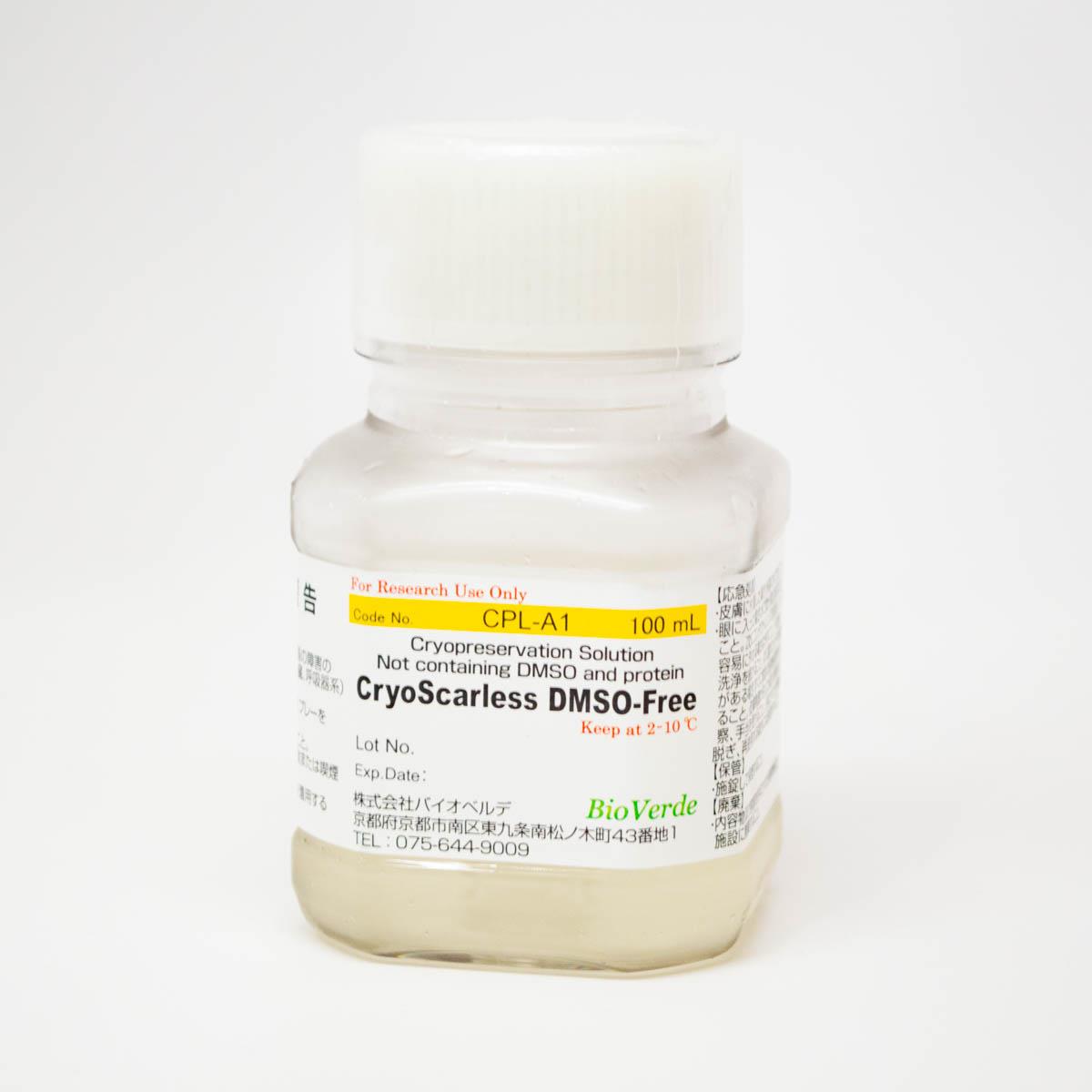
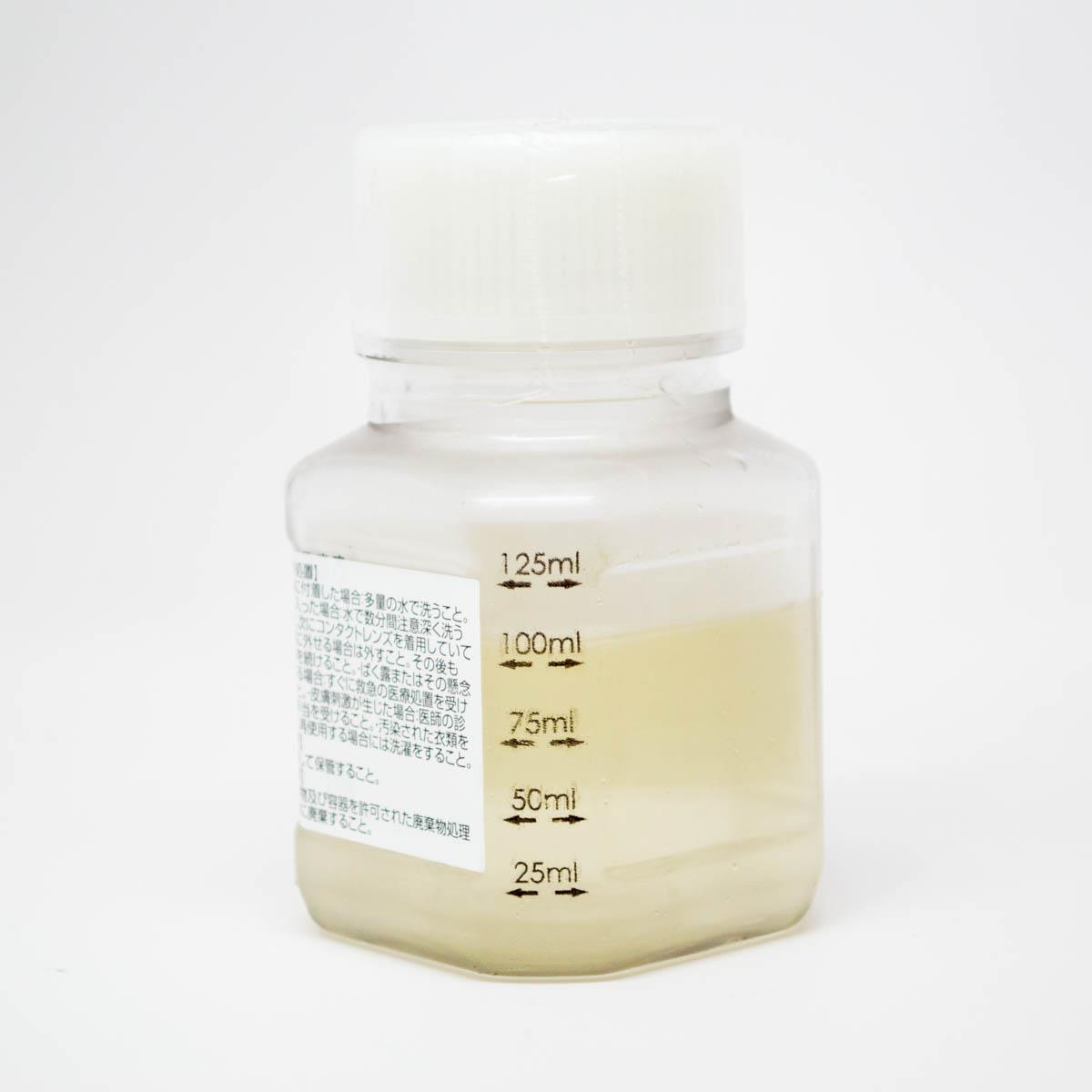
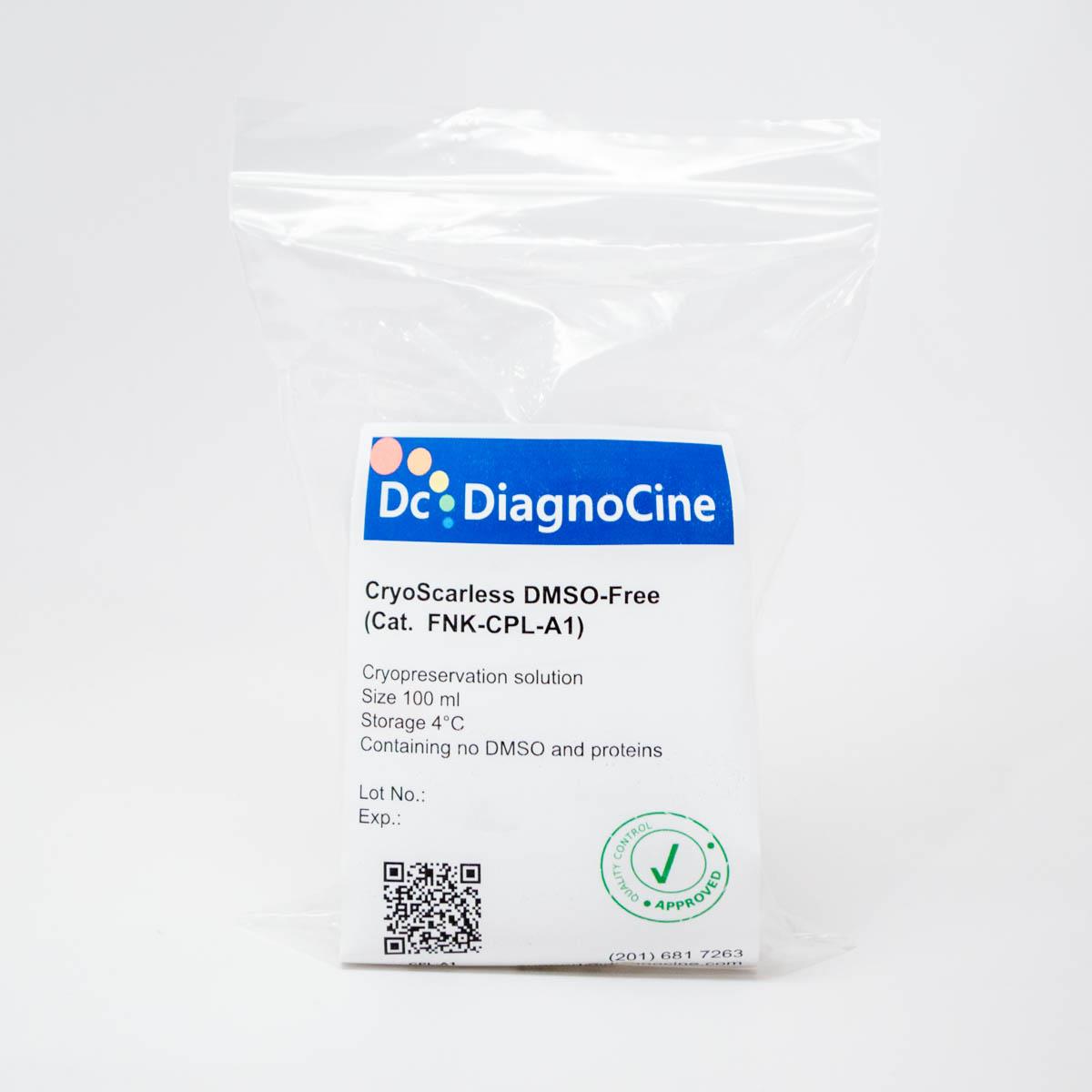
CryoScarless DMSO-Free (100 mL)
CryoScarless DMSO-Free
Cat. No. FNK-CPL-A1
Size 100 ml
Storage 4°C
NIH NSN# 655000L129025
Note Containing no DMSO and proteins
Product ID and Size
| Cat No. | Size | Link |
| FNK-CPL-A1 | 100ml |  |
| FNK-CPL-A1-Trial | Trial | |
Description
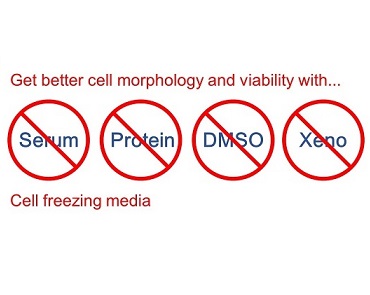
Let’s preserve your cells in a “no DMSO and Serum" condition!

[ For cryopreservation of Stem Cells = the "StemCell Keep" ]
Usage
- Centrifuge suspended media of cultured cells and pellet them by elimination of supernatant at 4 ~ 10 °C.
- Resuspend the cell pellet with CryoScarless DMSO-Free at a preferred concentration of 5 × 10⁵ ~ 5 × 10⁶ cell/mL.
- Pipette the cell suspension into a cryotube at 1mL/vial and freeze them at –80 °C.
- For longer preservation, transfer the cryotube into a liquid nitrogen chamber (-196 °C) on the following day
- Warm the cryotube containing the preserved cells in a water bath at 37 °C by gently shaking the tube and thaw the contents.
- Centrifuge the cells and wash in cold PBS before transferring the cells to an experimental medium. When the live cells are used for experiments or cultured, place them under proper physiological conditions as soon as possible (e.g. 37 °C).
Quality Control:
contamination is all negative.
Chemical tests:
(2) Endotoxin < 0.5 EU/mL
Very old method of cryopreservation was “Slow Programmed Freezing” using by 10% DMSO contained solution. However, big ice crystal is formed by this method and this crystal causes very poor cell viability (0.1-1%) for primate ES and iPS cells. Improved method is “vitrification” using by DAP213 (DMSO 2M, Acetamide 1M, Propylene glycol 3M).
Vitrification is the new method for preventing ice crystal formation by rapid freezing (<15 sec) in LN2. However, this method requires rapid thawing to prevent recrystallization and experienced operators. It is known that DMSO has influence on OCT-4 expression and differentiation, Acetamide is identified as carcinogens. Moreover, DAP213 is high osmolarity solution – it means this solution has high toxicity. Therefore, development of low Toxicity, easy to use vitrification solution had been expected.StemCell Keep is the solution that overcomes these disadvantages of DAP213!
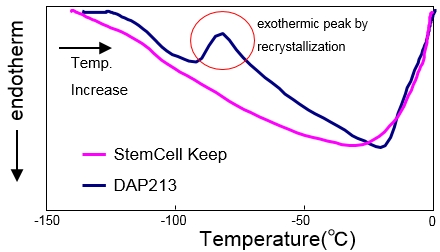
Solution freezed by Liquid Nitrogen is heated by 50℃/min.
StemCell Keep does not have recrystallization during temperature rising.
Features
- Animal-derived Protein-free, Serum-free and DMSO-free formulation. No risk of differentiation effect by DMSO.
- Xeno-freee.
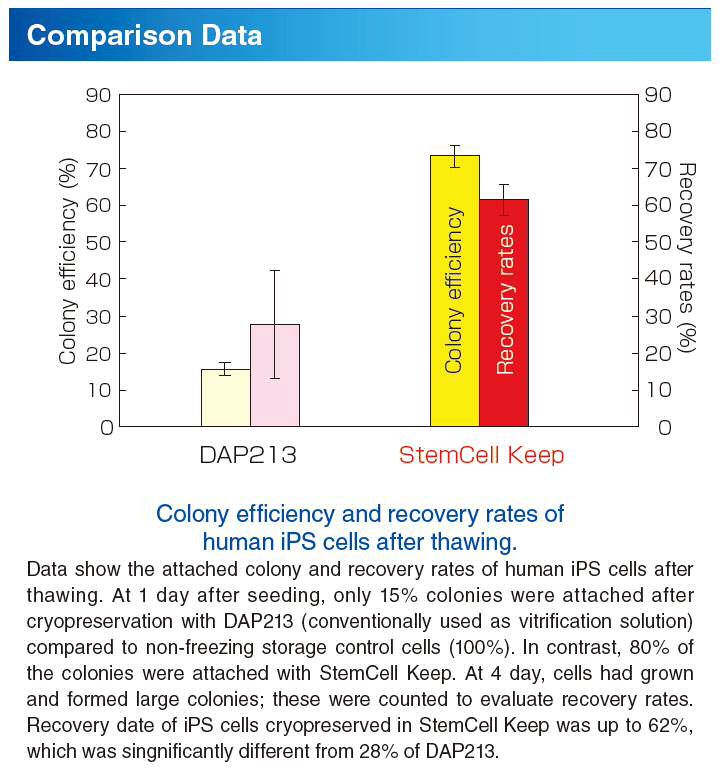
- Maintain ES and iPS cells with colony formation by vitrification.
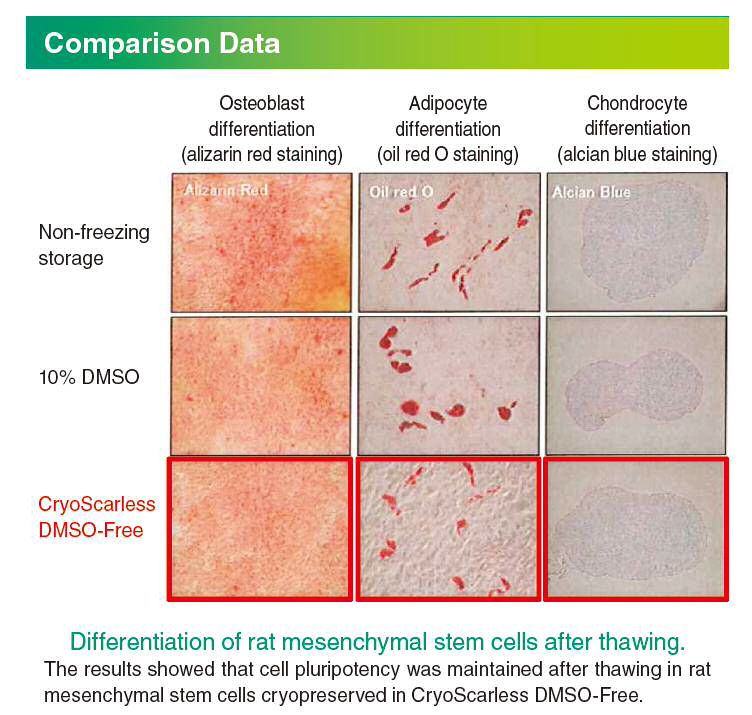
- Maintain stem cell pluripotency after thawing.
- High cytoprotection effect and vitrification technology by new original cryoprotectant material is allowed to cryopreserve ES and iPS cell colonies.
- Sufficient for 100 vials.
- Free of bacteria, fungi and mycoplasma contamination.
- Long shelf life. The product is stable for 2 years at 4C after the date of manufacture.
- Free Trial Sample is available! (Please contact us)
Comparison Data
Outline Video
Handling Video
- Morton, L., Arulchelvam, I., McGregor, C., Ghannouchi, L., & Pineault, N. (2026). Cryopreservation and Thawing of Ex Vivo Expanded Cord Blood Hematopoietic Stem Cells. Journal of Hematology, 15(1), 23–33. https://doi.org/10.14740/jh2167
- Newton, Hannah S., et al. "Nanoparticles May Influence Mast Cells Gene Expression Profiles without Affecting Their Degranulation Function." Nanomedicine, vol. 66, 2025, p. 102818, https://doi.org/10.1016/j.nano.2025.102818.
- Shirozu, Takahiro, Akira Soga, and Shinya Fukumoto. "Identification and Validation of a Commercial Cryopreservation Medium for the Practical Preservation of Dirofilaria immitis Microfilaria." Parasites & Vectors, vol. 13, 2020, p. 383, https://doi.org/10.1186/s13071-020-04257-1.
- Peh, Gary S. L., et al. "Regulatory Compliant Tissue-Engineered Human Corneal Endothelial Grafts Restore Corneal Function of Rabbits with Bullous Keratopathy." Scientific Reports, vol. 7, 2017, p. 14149, https://doi.org/10.1038/s41598-017-14723-z.
- Lin, Molly Tzu-Yu, et al. "Culture of Primary Neurons from Dissociated and Cryopreserved Mouse Trigeminal Ganglion." Tissue Engineering. Part C, Methods, vol. 29, no. 8, 2023, pp. 381–393, https://doi.org/10.1089/ten.tec.2023.0054.
- Ekpo, Marlene Davis, et al. "Strategies in Developing Dimethyl Sulfoxide (DMSO)-Free Cryopreservation Protocols for Biotherapeutics." Frontiers in Immunology, vol. 13, 2022, p. 1030965, https://doi.org/10.3389/fimmu.2022.1030965.
- Mochizuki, Mai, and Taka Nakahara. "Establishment of Xenogeneic Serum-Free Culture Methods for Handling Human Dental Pulp Stem Cells Using Clinically Oriented In-Vitro and In-Vivo Conditions." Stem Cell Research & Therapy, vol. 9, 2018, p. 25, https://doi.org/10.1186/s13287-017-0761-5.
- Kadi?, Elma, et al. "Effect of Cryopreservation on Delineation of Immune Cell Subpopulations in Tumor Specimens as Determinated by Multiparametric Single Cell Mass Cytometry Analysis." BMC Immunology, vol. 18, 2017, p. 6, https://doi.org/10.1186/s12865-017-0192-1.
- Higuchi, Masaya, et al. "USP10 Is an Essential Deubiquitinase for Hematopoiesis and Inhibits Apoptosis of Long-Term Hematopoietic Stem Cells." Stem Cell Reports, vol. 7, no. 6, 2016, pp. 1116–1129, https://doi.org/10.1016/j.stemcr.2016.11.003.
- Nakagawa, Shunsaku, et al. "An Organoid Library of Human Esophageal Squamous Cell Carcinomas (ESCCs) Uncovers the Chemotherapy-Resistant ESCC Features." Communications Biology, vol. 8, 2025, p. 507, https://doi.org/10.1038/s42003-025-07869-4.