Anti-HHV6 gQ1 Antibody, mouse monoclonal (119)
Product#: FNK-65-200
$346.79
Availability:
Ships in 1-2 Weeks
Anti-HHV6 gQ1 Antibody, mouse monoclonal (119)
General information
| Cat. No. | :FNK-65-200 |
| Size | :100 µg |
| Host Species | :Mouse |
| Label | :Unlabeled |
| Reactivity | :Reacts with gQ1 of HHV6A and HHV6B. However, this antibody is not recommended for IP of HHV-6B due to conformation specificity. |
| Immunogen | :His6-tagged recombinant gQ1 of HHV-6A encoding 3-422 amino acids expressed in E. coli. |
| Isotype | :mouse IgG1 kappa |
| Application |
|
| Shipment andStorage | :Ship at 4℃ and store at -20℃. Do not freeze below -20℃ |
| Form | :1 mg/ml in PBS, 50% glycerol, filter sterilized. Azide- and carrier-free. |
| Data Link | :UniProtKB Q69572 (GQ1_HHV6U |
Description
Human herpesvirus 6 (HHV-6) is the common collective name for Human herpesvirus 6A (HHV-6A) and Human herpesvirus 6B (HHV-6B). These closely related viruses are two of the nine herpesviruses known to have humans as their primary host. HHV-6A and HHV-6B are double stranded DNA viruses within the betaherpesvirinae subfamily and of the genus Roseolovirus. HHV-6A and HHV-6B infects almost all of the human populations tested. The overall nucleotide sequence identity between HHV-6A and HHV-6B is 90% and they are now classified as distinct species.
HHV-6A has been described as more neurovirulent, and as such is more frequently found in patients with neuroinflammatory diseases such as multiple sclerosis.
HHV-6B primary infection is the cause of the common childhood illness exanthem subitum (also known as roseola infantum or sixth disease). Additionally, HHV-6B reactivation is common in transplant recipients, which can cause several clinical manifestations such as encephalitis, bone marrow suppression and pneumonitis.
gQ1 encoded by the U100 gene of HHV6 is glycoprotein, complexes with gH, gL and gQ2 to form HHV6A ligand to CD46 receptor and HHV6B ligand to CD134 receptor. It is expressed in two different forms: an 80-kDa form (gQ1-80K) and a 74-kDa form (gQ1-74K) - only gQ1-80K, but not gQ1-74K, forms the ligand complex with gQ2, gH, and gL. It associates with lipid rafts.Molecular Mass calculated from the gene is 59.9 kDa, 524 amino acids.
 |
 |
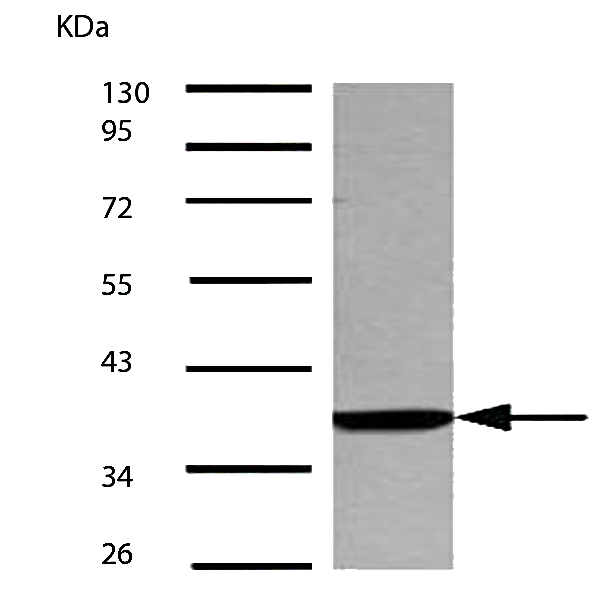
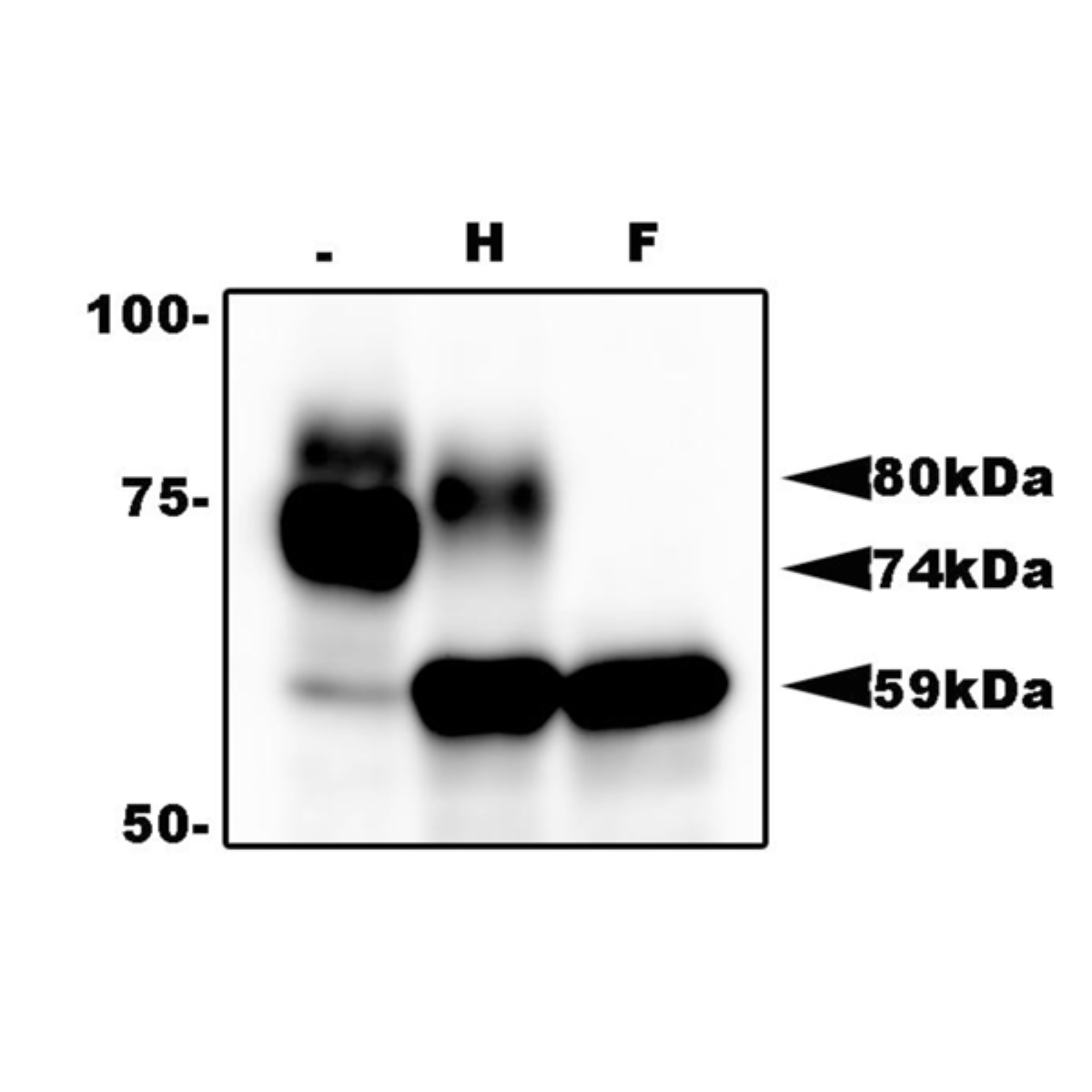
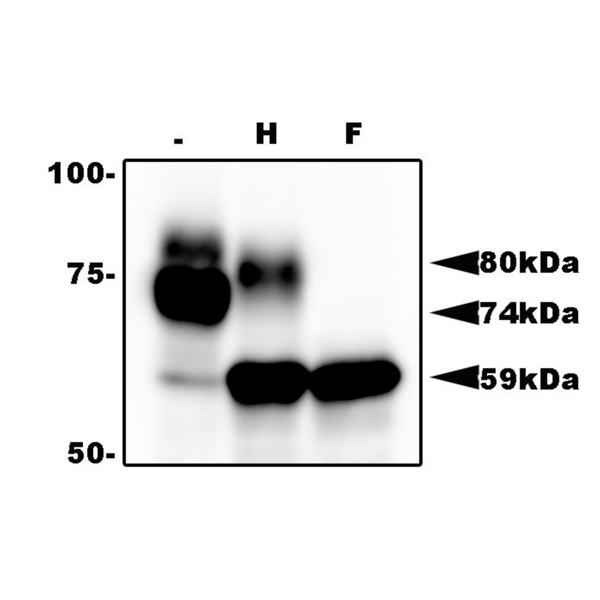
| Fig.1. Identification of gQ1 in HHV-6A infected cells by western blotting using anti-gQ antibody (119). T-cell line HSB-2 cells were infected with HHV-6A at m.o.i of 0.1 and the cells were harvested at 72 h postinfection for lysate preparation for WB. gQ1 is detected as two glycoproteins with 80 kDa and 74 kDa molecular masses.. Sample lysates: (-) Non-treated. (H) Treated with end-glycosilase H. (F) Treated with peptide N-glycosidase F. |
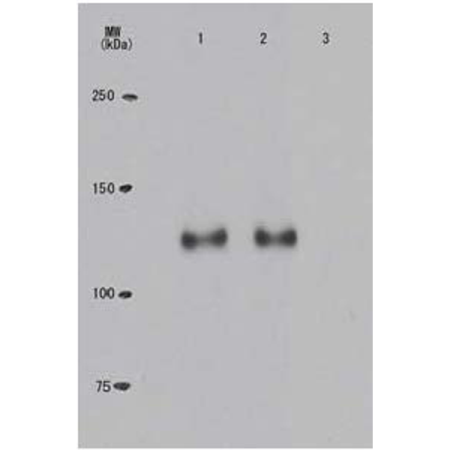
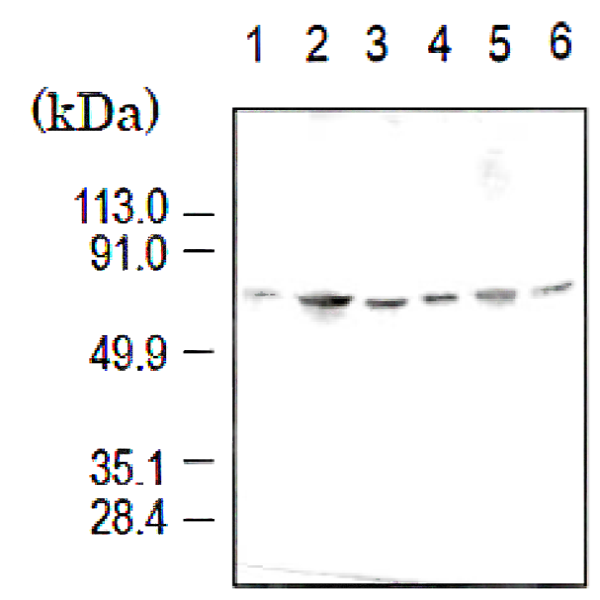
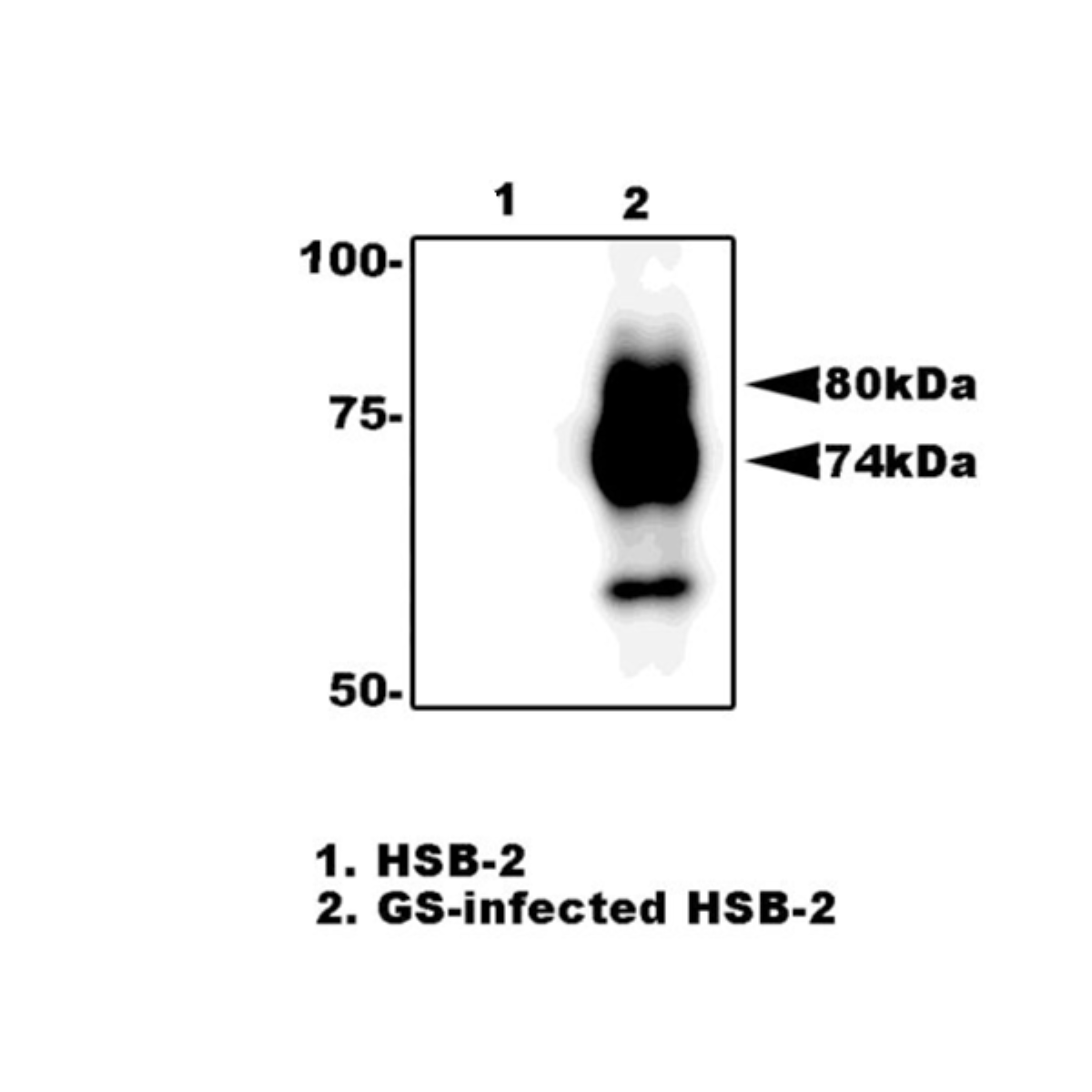
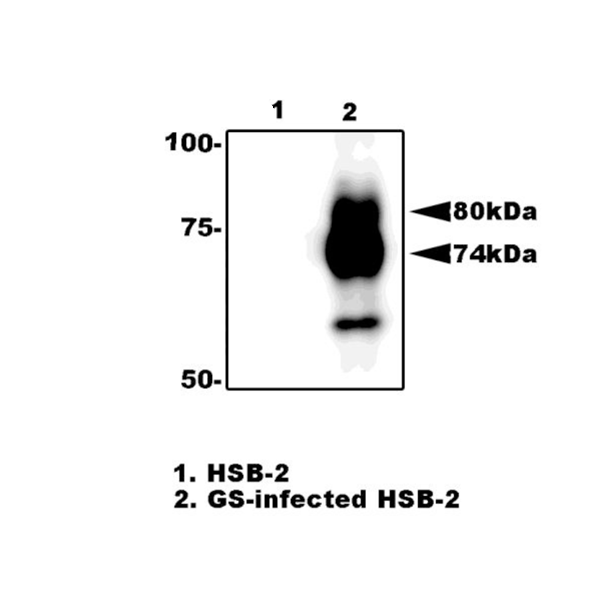
Fig.2. Immunoprecipitation of gQ1 from HHV-6A infected cell lysate with anti-gQ1 antibody (119).
gQ1 protein was precipitated from the lysate of infected HSB-2 cells by using agarose beads-conjugated anti-gQ1 antibody (119), and processed for western blotting by using anti-gQ1 antibody (119). Lane 1; HSB-2 cells. Lane 2; |
 |
 |
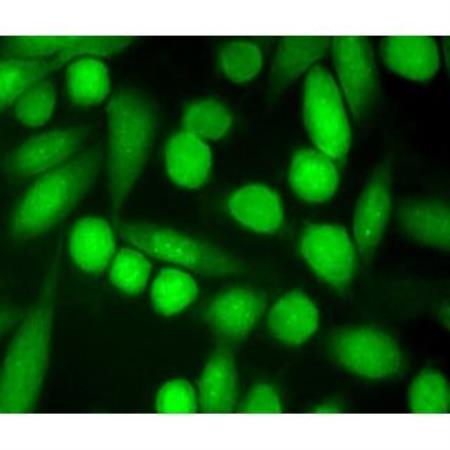
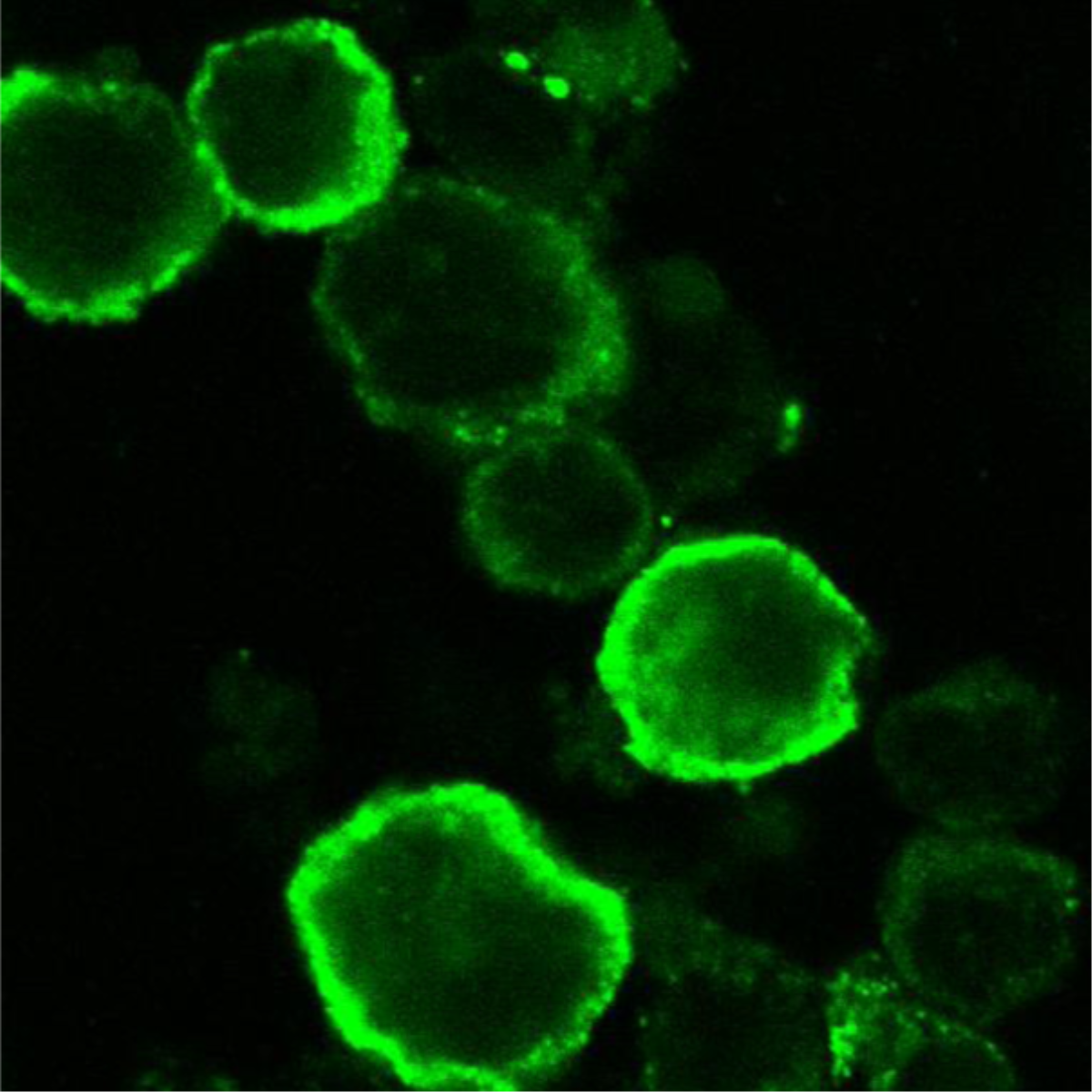
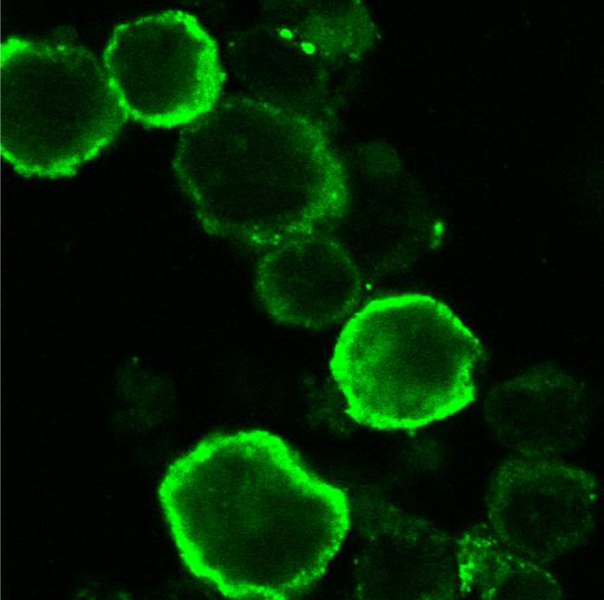
| Fig3. Immuno-Staining of gQ1 in HHV6A infected HSB-2 cells by using anti-gQ1 antibody. The infected cells were harvested 3 days postinfection, fixed in cold acetone and immunostained with FITC- conjugated anti-gQ1 antibody (119). Specific immunofluorescence was observed with a confocal laser scanning. |
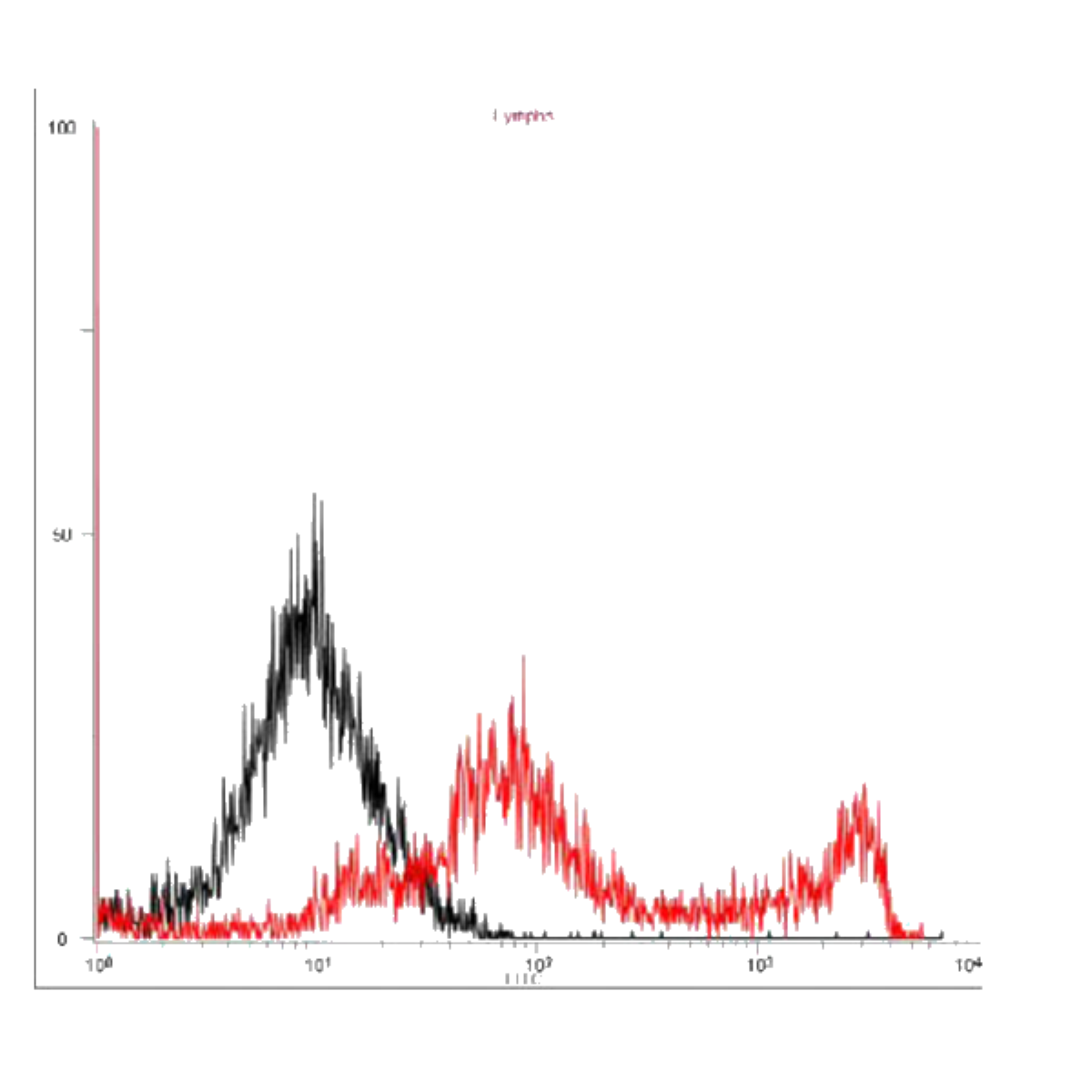
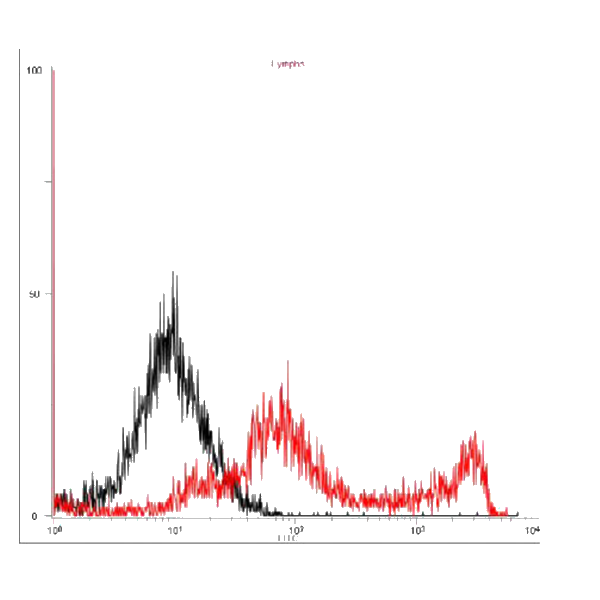
Fig.4. Flow cytometry analysis of gQ1 expression on the cell surface in a transient expression system.
293T cells were transfected with gQ1 expression plasmid. The cells were harvested on second day postinfection, fixed with 4% PFA, permeabilized with 0.1% Triton-X100, incubated with anti-gQ1 antibody (119) and then with FITC-conjugated anti-mouse IgG antibody. Histograms show fluorescence intensities measured in arbitrary units on a log scale (x axis) and relative cell numbers on a linear scale (y axis). Black line is control and red line is gQ1 introduced cells. |
Product
Produced in serum-free medium and purified by proprietary chromatography procedure under mild conditions. 90~95% pure by SDS-PAGE.
Key Words
Human Herpesvirus 6, U100 gene, Glycoprotein, CD46, CD134, Betaherpesvirinae,Roseolovirus, Exanthem subitum, Immunocompromised
References
This antibody has been described in Ref. 1 and used in Ref.1-7.
-
Mori Y. et al. (2003) The Human Herpesvirus 6 U100 Gene Product Is the Third Component of the gH-gL Glycoprotein Complex on the Viral Envelope. J. Virol. 77: 2452-2458. PubMed 12551983 Free Article. WB, IP
-
Mori Y. et al (2003) Human Herpesvirus 6 Variant A Glycoprotein H-Glycoprotein L-Glycoprotein Q Complex Associates with Human CD46. J. Virol. 77: 4992-4999. PubMed 12663806 Free Article. WB, IP
-
Mori Y. et al. (2004) Discovery of a second form of tripartite complex containing gH-gL of human herpesvirus 6 and observations on CD46. J Virol. 78:4609-16. PubMed 15078943. Free Article. WB, IP
-
Akkapaiboon P. et al. (2004) Intracellular processing of human herpesvirus 6 glycoproteins Q1 and Q2 into tetrameric complexes expressed on the viral envelope. J Virol. 78:7969-83. PubMed 15254169 Free Article. WB, IP, IF
-
Huang H. et al (2006) Human herpesvirus 6 envelope cholesterol is required for virus entry. J Gen Virol. 87: 277-285. PubMed 16432012 Free Article. WB, Flow Cyt.
-
Tang H. et al. (2010) Human herpesvirus 6 encoded glycoprotein Q1 gene is essential for virus growth. Virology. 407:360-7. PubMed 20863544 Free Article. WB
-
Tang H. et al (2011) Human herpesvirus 6 glycoprotein complex formation is required for folding and trafficking of the gH/gL/gQ1/gQ2 complex and its cellular receptor binding. J Virol. 85:11121-30. PubMed 21849437 Free Article. WB, IP, Flow Cyt.