Anti-Cardiac Troponin I Rabbit Polyclonal Antibody
Product#: SB-GB112408
$560.00
Availability:
Ships in 1-2 Weeks
Anti-Cardiac Troponin I Rabbit Polyclonal Antibody
General information
| Cat. No. | :SB-GB112398 |
| Size | :100 uL |
| Protein full name | :Cardiac Troponin I |
| Synonym | :Cardiac troponin I, TNNI3, TNNC1,cTnI, CMH7, cardiac muscle, TNNI3,Troponin I type 3 cardiac, cardiac type,CTnI |
| Immunogen | :KLH conjugated Synthetic peptide corresponding to Mouse Cardiac Troponin I |
| Isotype | :IgG |
| Purity | :Affinity purification |
| Subcellular location | :Cytoplasm, Cytoskeleton |
| Predicted MW. | :24 kDa |
| Observed MW. | :28 kDa |
| Uniprot ID | :P19429, P48787, P23693 |
| Storage | :Store at -20 ℃ for one year. Avoid repeated freeze/thaw cycles. |
| Shipping Condition | :Dry Ice |
| Storage Buffer | :PBS with 0.02% sodium azide,100 μg/ml BSA and 50% glycerol. |
Application
| Applications | Species | Dilution | Positive Tissue |
| WB | Mouse, Rat | 1: 250-1: 500 | heart |
| IHC | Mouse, Rat | 1: 100-1: 200 | heart |
| IF | Mouse, Rat | 1: 100-1: 200 | heart |
Description
Troponin I is a cardiac and skeletal muscle protein useful in the laboratory diagnosis of heart attack. Troponin I is a part of the troponin protein complex, where it binds to actin in thin myofilaments to hold the actin-tropomyosin complex in place. Because of it, myosin cannot bind actin in relaxed muscle. When calcium binds to the troponin C it causes conformational changes which lead to dislocation of troponin I and finally tropomyosin leaves the binding site for myosin on actin leading to contraction of muscle.
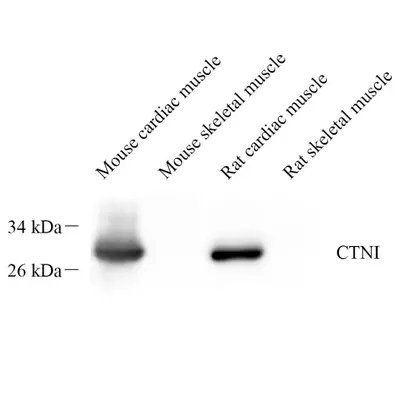 |
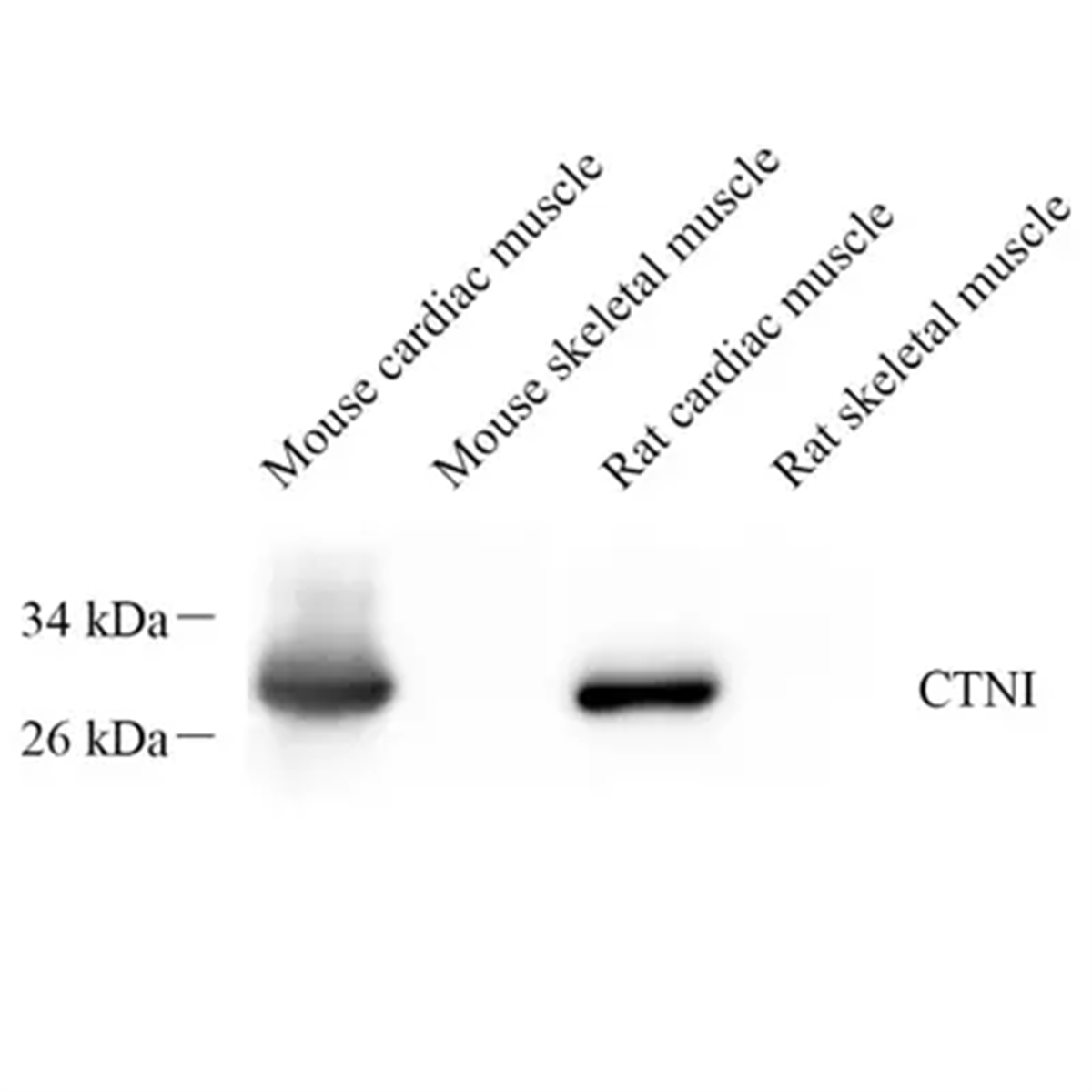
Western blot analysis of cTnI (GB112408) at dilution of 1: 500 Lane 1: Mouse heart tissue lysate Lane 2: Mouse skeletal muscle tissue lysate Lane 3: Rat heart tissue lysate Lane 4: Rat skeletal muscle tissue lysate |
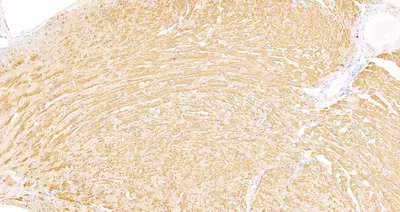 |
Immunohistochemistry analysis of paraffin-embedded mouse heart using cTnI (GB112408) at dilution of 1: 200 |
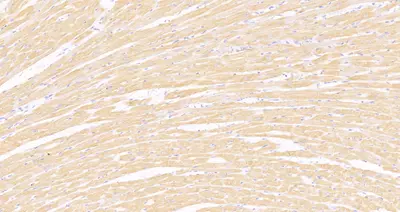 |
Immunohistochemistry analysis of paraffin-embedded rat heart using cTnI (GB112408) at dilution of 1: 200 |
 |
 |
 |
| A | B | C |
|
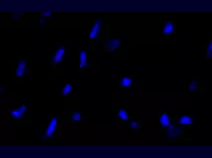
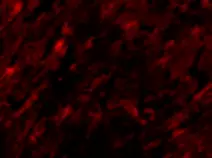
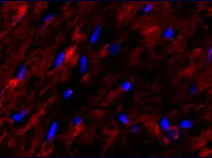
Immunofluorescent analysis of paraformaldehyde-fixed mouse heart using cTnI (GB112408) at dilution of 1: 200 A: DAPI nuclear stain (blue) B: Mouse heart lysate labeling cTNl with GB112408, followed by Goat anti-rabbit IgG (red) C: Merged |
||
Human Diseases
- Myocardial Infarction (MI): Elevated levels indicate myocardial damage.
- Dilated Cardiomyopathy (DCM): Associated with anti-cardiac troponin I autoantibodies; prevalence ranges from 7.0% to 22.2%.
- Ischemic Cardiomyopathy (ICM): Elevated cTnI levels observed in patients.
- Peripartum Cardiomyopathy (PPCM): Increased troponin levels noted.
- Chagas Disease: cTnI levels can be elevated.
- Emery-Dreifuss Muscular Dystrophy (EDMD): Presence of autoantibodies against cTnI reported.
Cellular Signaling Pathways
- Calcium Signaling: cTnI plays a role in calcium-mediated muscle contraction by regulating the interaction between actin and myosin.
- PKA-mediated Phosphorylation: Phosphorylation of cTnI by Protein Kinase A affects cardiac contractility and relaxation.
- Inflammatory Responses: Involvement in immune responses, particularly in conditions like DCM where interleukin-10 responses are noted.
Aliases for TNNI3 Gene
- GeneCards Symbol: TNNI3 2
- Troponin I3, Cardiac Type 2 3 5
- TNNC1 2 3 4 5
- CMH7 2 3 5
- Cardiomyopathy, Dilated 2A (Autosomal Recessive) 2 3
- Troponin I Type 3 (Cardiac) 2 3
- Troponin I, Cardiac Muscle 3 4
- CMD2A 3 5
- Cardiac Troponin I 4
- Troponin I Type 3 2
- CMD1FF 3
- RCM1 3
- CTnI 3
References
- Cheng, Yuanhua, and Michael Regnier. “Cardiac Troponin Structure-Function and the Influence of Hypertrophic Cardiomyopathy Associated Mutations on Modulation of Contractility.” Archives of Biochemistry and Biophysics, U.S. National Library of Medicine, 1 July 2016, www.ncbi.nlm.nih.gov/pmc/articles/PMC4899195/.
- Cardiac Troponin Test: A Test That Detects a Heart Attack.” WebMD, WebMD, www.webmd.com/heart-disease/what-is-cardiac-troponin-test.
- Sharma, S, et al. “Cardiac Troponins.” Journal of Clinical Pathology, U.S. National Library of Medicine, Oct. 2004, www.ncbi.nlm.nih.gov/pmc/articles/PMC1770452/.