Anti-Aconitase 2 Rabbit Polyclonal Antibody
Anti-Aconitase 2 Rabbit Polyclonal Antibody
General information
| Cat. No. | :SB-GB113832 |
| Size | :100 uL |
| Protein full name | :Aconitate hydratase, mitochondrial |
| Synonym | :ACO2, Aconitase, aconitase 2, ACONM, Citrate hydro lyase |
| Immunogen | :KLH conjugated Synthetic peptide corresponding to Mouse Aconitase 2 |
| Isotype | :IgG |
| Purity | :Affinity purification |
| Subcellular location | :Mitochondrion |
| Predicted MW. | :85 kDa |
| Observed MW. | :95 kDa |
| Uniprot ID | :Q99798, Q99KI0, Q9ER34 |
| Storage | :Store at -20 ℃ for one year. Avoid repeated freeze/thaw cycles. |
| Storage Buffer | :PBS with 0.02% sodium azide,100 μg/ml BSA and 50% glycerol. |
Application
| Applications | Species | Dilution | Positive Tissue |
| WB | Human, Mouse, Rat | 1: 1000-1: 3000 |
kidney, brain, lung |
| IHC/IF | Mouse, Rat | 1: 300-1: 1000 | brain, heart, kidney, testis, thyroid gland |
Description
ACO2(aconitate hydratase, mitochondrial) is also named as citrate hydro-lyase and belongs to the aconitase/IPM isomerase family. It plays a key function in cellular energy production, and loss of its activity has a major impact on cellular and organismal survival. Western blot shows two bands of 83 kDa and 40 kDa. The 40 kDa fragment decreases with age and oxidative stress, whereas other fragmentation products with molecular weights between 40 and 83 kDa increased with age and MnSOD(mitochondrial manganese superoxide dismutase) deficiency. Defects in ACO2 are the cause of infantile cerebellar-retinal degeneration (ICRD).
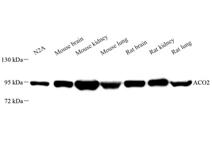 |
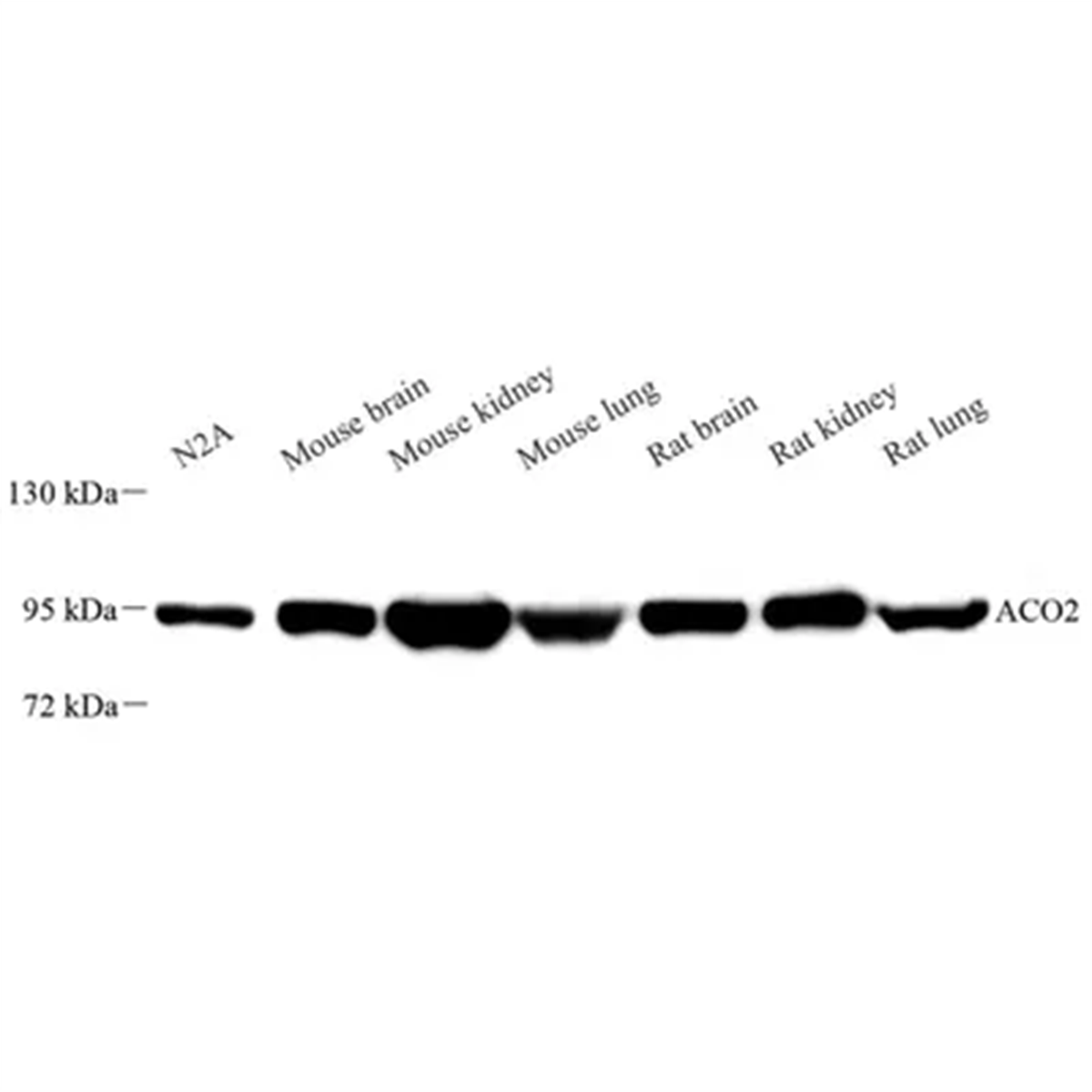
Western blot analysis of ACO2 (GB113832) at dilution of 1: 3000 |
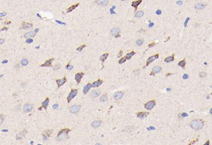 |
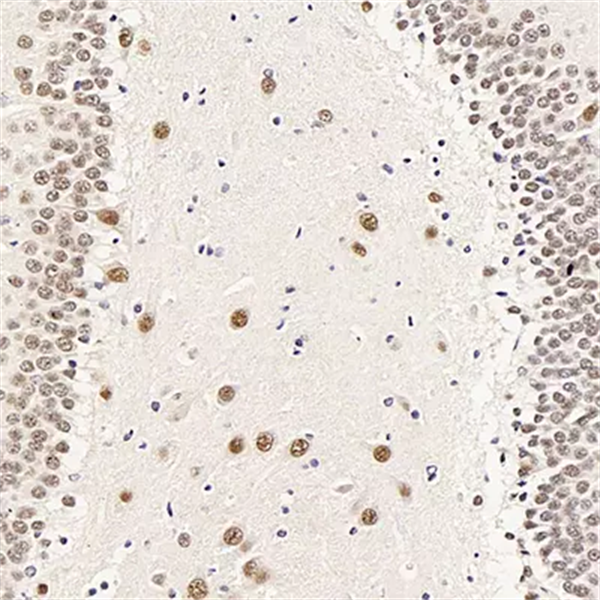
Immunohistochemistry analysis of paraffin-embedded rat brain using ACO2 (GB113832) at dilution of 1: 1000 |
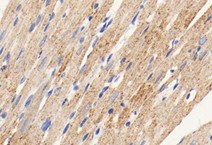 |
Immunofluorescent analysis of paraformaldehyde-fixed rat heart using ACO2 (GB113832) at dilution of 1: 1000 |
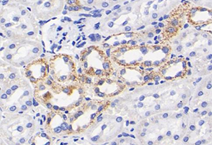 |
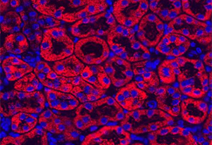
Immunofluorescent analysis of paraformaldehyde-fixed rat kidney using ACO2 (GB113832) at dilution of 1: 1000
|
 |
Immunofluorescent analysis of paraformaldehyde-fixed mouse kidney using ACO2 (GB113832) at dilution of 1: 1000
|
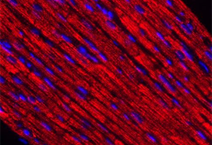 |
Immunofluorescent analysis of paraformaldehyde-fixed rat heart using ACO2 (GB113832) at dilution of 1: 1000
|
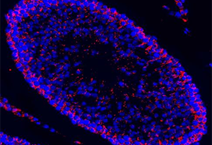 |
Immunofluorescent analysis of paraformaldehyde-fixed rat testis using ACO2 (GB113832) at dilution of 1: 1000
|
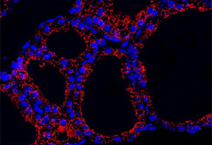 |
Immunofluorescent analysis of paraformaldehyde-fixed rat thyroid gland using ACO2 (GB113832) at dilution of 1: 1000
|
Aliases for ACO2 Gene
- GeneCards Symbol: ACO2 2
- Aconitase 2 2 3 5
- Aconitate Hydratase, Mitochondrial 2 3 4
- ACONM 2 3 5
- Aconitase 2, Mitochondrial 2 3
- Mitochondrial Aconitase 2 3
- Citrate Hydro-Lyase 3 4
- EC 4.2.1.3 4 48
- Epididymis Secretory Sperm Binding Protein Li 284 3
- HEL-S-284 3
- Aconitase 4
- EC 4.2.1 48
- ICRD 3
- OCA8 3
- OPA9 3