AGPC RNA Lysis Buffer
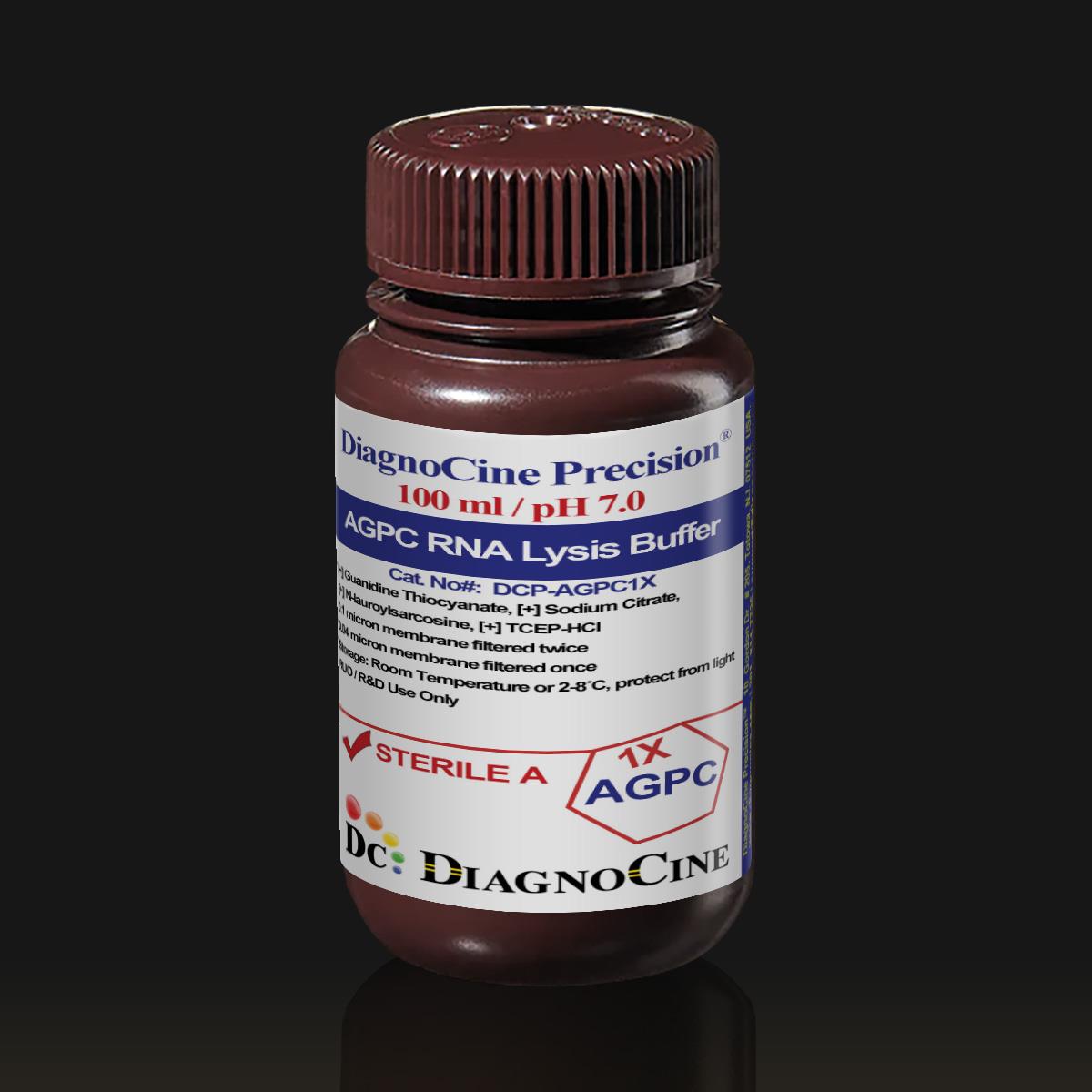
AGPC RNA Lysis Buffer
A high-performance, guanidinium thiocyanate–based lysis buffer engineered for single-step RNA isolation via the acid guanidinium–phenol–chloroform (AGPC) method. Formulated with TCEP-HCl for superior RNase inactivation and enhanced RNA yield from cells, tissues, and viral samples.
- Powerful 4 M guanidine thiocyanate chaotropic formulation for efficient disruption of cells, viruses, and tissues and immediate RNase inactivation.
- 10 mM TCEP-HCl as a modern, odorless reducing agent, replacing β-mercaptoethanol for enhanced RNase inhibition and improved safety and handling.
- Includes 25 mM sodium citrate (pH 7) for buffering during lysis and 0.5% N-lauroylsarcosine for effective solubilization of cellular and viral membranes.
- Compatible with acid-phenol-chloroform (AGPC) workflows as well as silica spin columns or magnetic beads when combined with appropriate downstream reagents.
- Suitable for a broad range of sample types, including cultured cells, blood and body fluids, tissues, swabs, and viral transport media.
- Ultrapure Type 1 water (18.2 MΩ·cm)
- Customizable formulation available upon request
- pH7.0
- AppearanceClear Solution
- Filtration0.1µm
- Storage2-8 °C
- Shelf Life1 year
Engineered for maximum purity & performance
Standard laboratory reagents filtered at 0.22 µm leave sub-micron particulates, mycoplasma, and aggregates that interfere with sensitive downstream applications. FluxMPS™ AGPC RNA Lysis Buffer is manufactured under ISO 13485 quality systems with multi-stage ultra-filtration to eliminate these failure modes.
Powerful chaotropic lysis
4 M guanidine thiocyanate rapidly inactivates RNases and denatures proteins, ensuring complete cell disruption and immediate nucleic acid stabilization.
TCEP-HCl reducing agent
10 mM TCEP-HCl irreversibly reduces disulfide bonds in RNases without the odor, instability, or toxicity of β-mercaptoethanol or DTT.
Optimized buffer system
25 mM sodium citrate (pH 7.0) with 0.5% N-lauroylsarcosine provides stable pH during lysis and efficient membrane solubilization for clean phase separation.
Broad sample compatibility
Validated for cultured cells, blood, body fluids, tissues, swabs, and viral transport media—compatible with AGPC, spin-column, and magnetic bead workflows.
Sequential filtration system
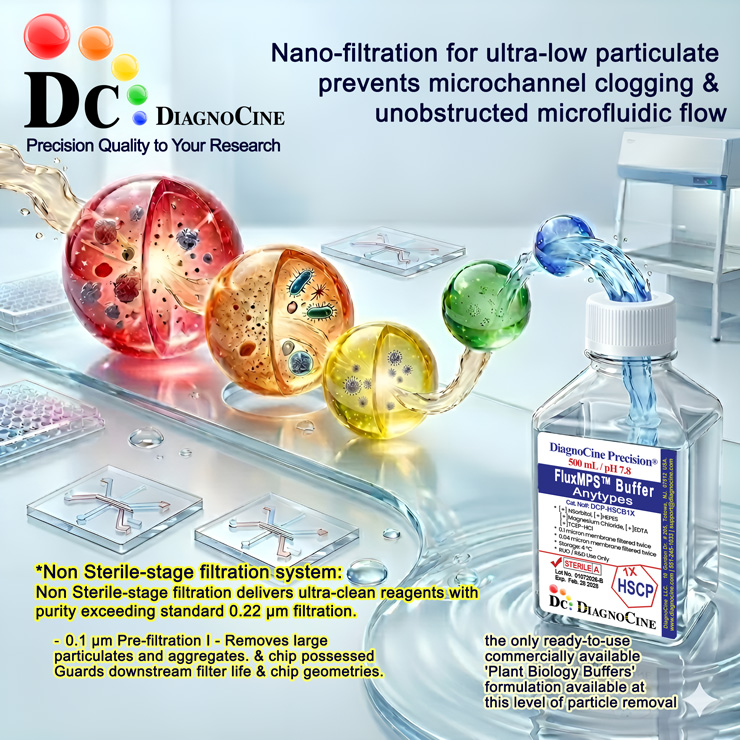
A sequential filtration process reaching 0.1 µm for clean reagent purity exceeding standard 0.22 µm filtration.
-
1
0.1 µm filtration
Removes large particulates, aggregates, and bacteria. Primary guard providing baseline purity exceeding standard 0.22 µm filtration.
Performance vs. conventional reagents
Standard 0.22 µm single-pass filtration leaves particles in the 0.12–0.22 µm range. FluxMPS™ removes these contaminants for cleaner results and higher reproducibility.
Validated applications
- Isolation of total RNA for RT-qPCR, digital PCR, RNA-Seq, and other gene expression analyses.
- Extraction of viral RNA or RNA from difficult samples when strong chaotropic conditions are required.
- Preparation of lysates compatible with phenol-chloroform extraction or column/bead-based purification systems.
- High-throughput sample processing in research, academic, and core laboratory settings.
Protocol & usage instructions
- Add the recommended volume of AGPC RNA Lysis Buffer directly to the sample (typically 10-20 volumes of buffer per volume of sample, depending on sample type and density).
- Homogenize thoroughly by pipetting, vortexing, or mechanical disruption until no visible particulates remain.
- Incubate at room temperature for 5-10 minutes to ensure complete lysis and RNase inactivation.
- Proceed with your preferred RNA purification method, such as: Acid phenol-chloroform extraction followed by alcohol precipitation. Binding to silica spin columns or magnetic beads using an appropriate binding buffer and wash solutions.
- Elute purified RNA in RNase-free water or low salt buffer and quantify by spectrophotometry or fluorometry.
Composition & specifications
| Component | Concentration |
|---|---|
| Guanidine Thiocyanate | 4 M |
| Sodium Citrate | 25 mM |
| N-lauroylsarcosine | 0.5% |
| TCEP-HCl | 10 mM |
Quality assurance & logistics
ISO 13485:2016 Certified
Manufactured under certified QMS with full traceability and lot documentation.
Made in USA
All manufacturing, QA testing, and final assembly at DiagnoCine Precision, Totowa, NJ.
Supporting literature
- Chomczynski P, Sacchi N. Single-step method of RNA isolation by acid guanidinium thiocyanate-phenol-chloroform extraction. Anal Biochem. 1987;162(1):156-159.
- Chomczynski P, Sacchi N. The single-step method of RNA isolation by acid guanidinium thiocyanate-phenol-chloroform extraction: twenty-something years on. Nat Protoc. 2006;1(2):581-585.
- Rio DC, Ares M Jr, Hannon GJ, Nilsen TW. Purification of RNA using TRIzol (TRI reagent). Cold Spring Harb Protoc. 2010;2010(6):pdb.prot5439.