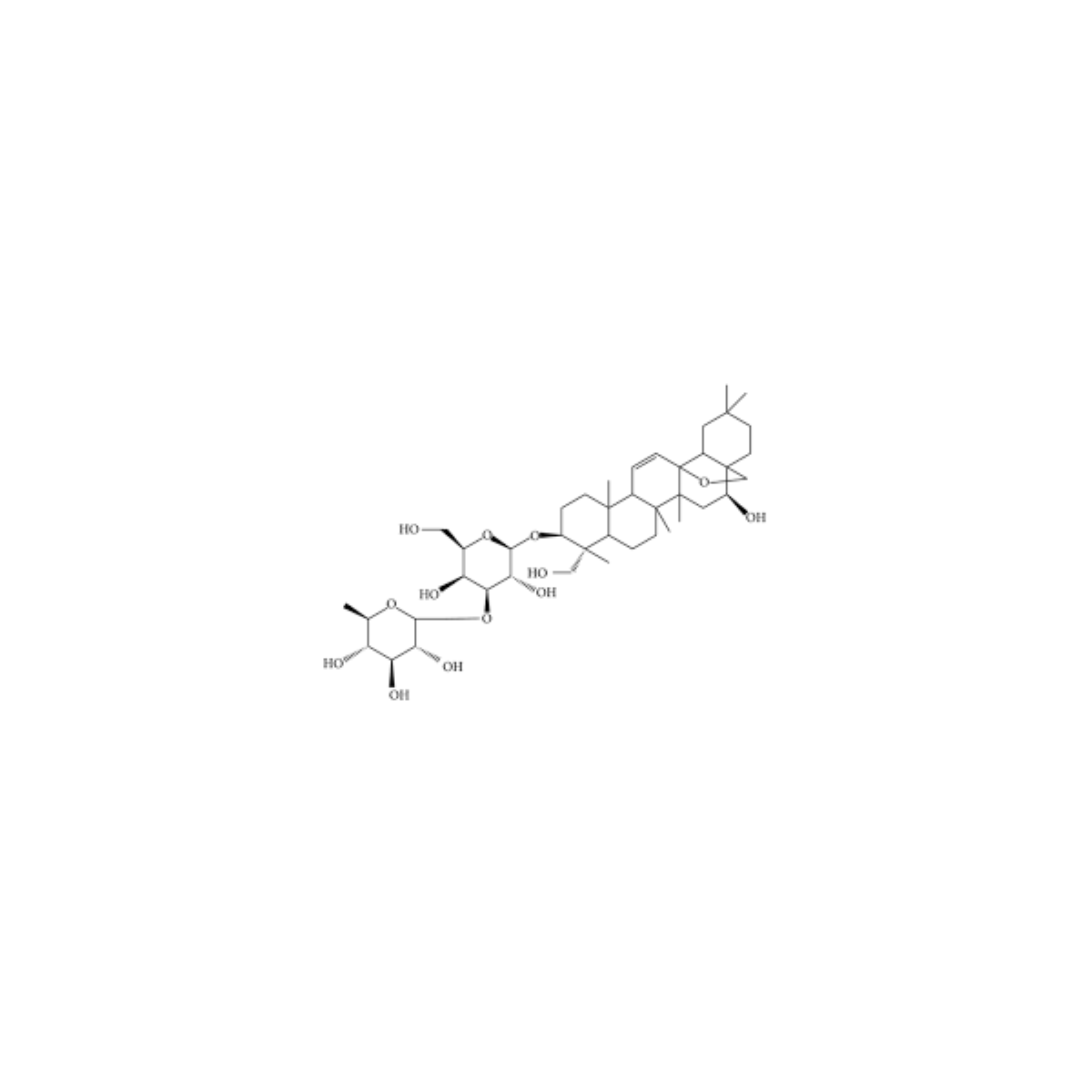
Saikosaponin A
Product#: FNK-2400228
$144.34
Availability:
Ships in 1-2 Weeks
Saikosaponin A
- CAT Number :FNK-2400228
- Pack size: 10 mg
- Store: Store at 2-10℃ in a dry and dark place.
- Purity: (HPLC) ≥95%
Saikosaponin A is a triterpenoid saponin derived from the Chinese herbal medicine Radix Bupleuri (Chai Hu). It exhibits diverse biological activities, including anti-inflammatory, antiallergic, anticonvulsive, antiproliferative, and antiviral properties.
Property
Molecular Formula: C42H68O13
Formula Weight: 781.0
CAS Number: 20736-09-8
Purity: >98%
Physical State: Crystalline solid
Application and Usage
- Anti-inflammatory research: Reduces expression of TNF-alpha, IL-6, and IL-1beta in primary mouse macrophages
- Neuroprotection studies: Reduces brain edema and blood-brain barrier disruption in traumatic brain injury models
- Cancer research: Decreases viability in various cancer cell lines and inhibits tumor growth in xenograft models
- Immunology studies: Inhibits proliferation and activation of T cells
- Addiction research: Decreases self-administration of cocaine and morphine
- Use appropriate personal protective equipment
- Handle in accordance with good laboratory practices
Anti-inflammatory Effects
SSA exhibits potent anti-inflammatory properties through multiple mechanisms:
- Inhibits the production of pro-inflammatory cytokines like IL-6, IL-1β and TNF-α14
- Suppresses NF-κB signaling pathway activation
- Inhibits the assembly of the NLRP3 inflammasome
- Counteracts inflammatory responses in nervous tissue
- These anti-inflammatory effects make SSA potentially useful for treating inflammatory conditions like arthritis, atherosclerosis, and neuroinflammation.
SSA has demonstrated anticancer effects against various cancer types:
- Sensitizes cancer cells to chemotherapy drugs like cisplatin
- Inhibits proliferation and induces apoptosis in cancer cells
- Suppresses angiogenesis and tumor growth by inhibiting VEGFR2 signaling
- Causes G0/G1 cell cycle arrest in cancer cells
- The antitumor properties of SSA suggest its potential as an adjuvant therapy for cancers like lung, ovarian, cervical and glioma.
SSA shows promise for neurological and neurodegenerative conditions:
- Counteracts inflammatory responses and neurological deficits in nerve injury models
- Inhibits drug addiction behaviors by regulating GABA receptor systems
- May have therapeutic potential for Alzheimer's disease by reducing Aβ generation and tau phosphorylation
SSA exhibits antiviral effects against certain viruses:
- Inhibits human coronavirus 229E infection in the early stages of viral replication
- Attenuates influenza A virus replication and associated lung inflammation
Cell Signaling Pathways Affected
NF-κB pathway:
SSA inhibits the activation of the NF-κB pathway, which is crucial in inflammatory processes. It does this by:
- Inhibiting phosphorylation of IκBα, p65, p38, JNK, and Akt
- Blocking translocation of NF-κB and NF-κB/Rel A to the nucleus
MAPK pathway:
SSA downregulates the MAPK pathway by inhibiting phosphorylation of key kinases:
- p38 MAPK
- c-JNK
- ERK 1/248
PI3K/Akt/mTOR pathway:
- SSA inactivates the Akt/mTOR signaling pathway
VEGFR2 signaling pathway:
SSA inhibits angiogenesis by suppressing VEGFR2 signaling and its downstream proteins including:
- PLCγ1
- FAK
- Src
- Akt
CXCR4/SDF-1 axis:
- SSA inhibits CXCR4 expression, which is involved in tumor growth and metastasis
AMPK pathway:
- SSA enhances phosphorylation of AMPK and its substrate acetyl-CoA carboxylase (ACC)
Caspase pathways:
- SSA activates caspase-4, 2, and 8, leading to caspase-3 activation and apoptosis in cancer cells
ERK signaling:
- SSA induces phosphorylation of ERK, which is associated with inhibition of cancer cell growth
p53-p21 pathway:
- In breast cancer cells, SSA induces apoptosis through p53-p21-dependent or independent pathways depending on the p53 status of the cells