Pyruvate Kinase HI1, Thermostable
Pyruvate Kinase HI1, Thermostable
Cat.No. FNK-PYK-75-01
Lot No. 0-I101A
Protein conc. 1.5 mg/ml
Volume 1 ml
Form 50 mM Tris-HCl (pH 7.5), 50 mM NaCl
Storage -20 ℃
Activity 113 U/ml
Notes For research use only
EC No. 2.7.1.40
Substrate phosphoenolpyruvic acid
Reaction product pyruvic acid
Reaction temperature ~75℃
Reaction pH 5.0~8.0
Description
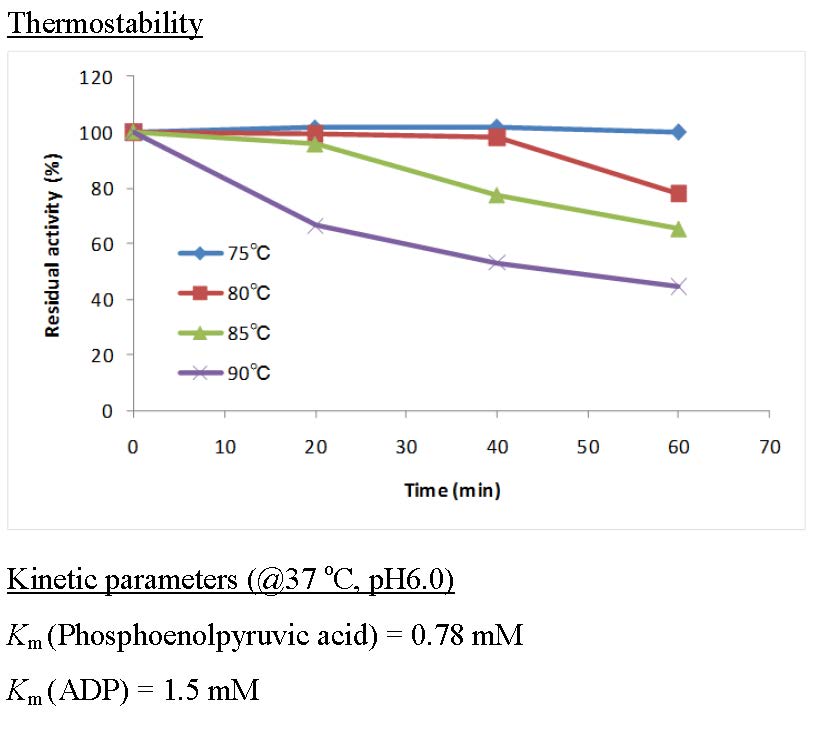
Generally, enzymes in the living body are denatured and lose activities at the temperature over 50 - 60°C.
However, the thermostable enzymes obtained from special microorganisms (hyper-thermophilic microorganisms) alive at high temperature (over 70°C) have unique characteristics.
Using regular enzymes as a catalyst in chemical reactions are not cost effective due to its low stability and needs of additional enzyme.
By using these thermostable enzymes, we can expect not only cost saving but also other advantages - especially in the field of fine chemicals.
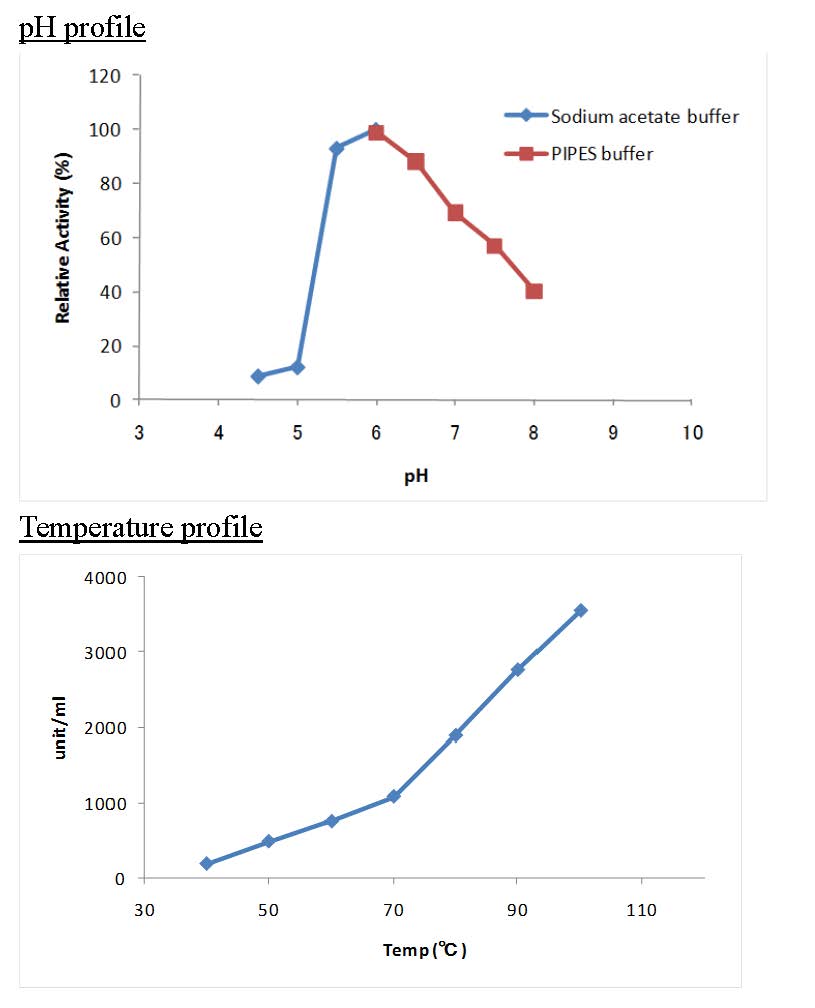
Features of Thermostable Enzyme
- Highly stable and durable for long term use
- High reactivity at high temperature (70 - 100°C)
- Resistance to organic solvent is expected
- Special instruments to inhibit bacterial growth are not required.
- Reaction speficity is much higher compared with chemical reaction
- Speed of reaction can be accelerated
Reaction mix (20 mM Potassium phosphate buffer (pH 7.0), 5 mM Phosphoenolpyruvate, 0.3 mM NADH, 5 mM MgCl2, 1 mM ADP, 0.1 mM TPP, 4 U/ml Pyruvate decarboxylase、46 U/ml Alcohol dehydrogenase and appropriate amount of the enzyme) was incubated at 50 oC and A340
was monitored. One unit is defined as the amount of the enzyme oxidizing 1 µmol of NADH (e340=6.22 mM-1 cm-1 ) per 1 minute using Phosphoenolpyruvate as a substrate.