Pteropodine (Uncarine C)
Product#: FNK-2400239
$348.43
Availability:
Ships in 1-2 Weeks
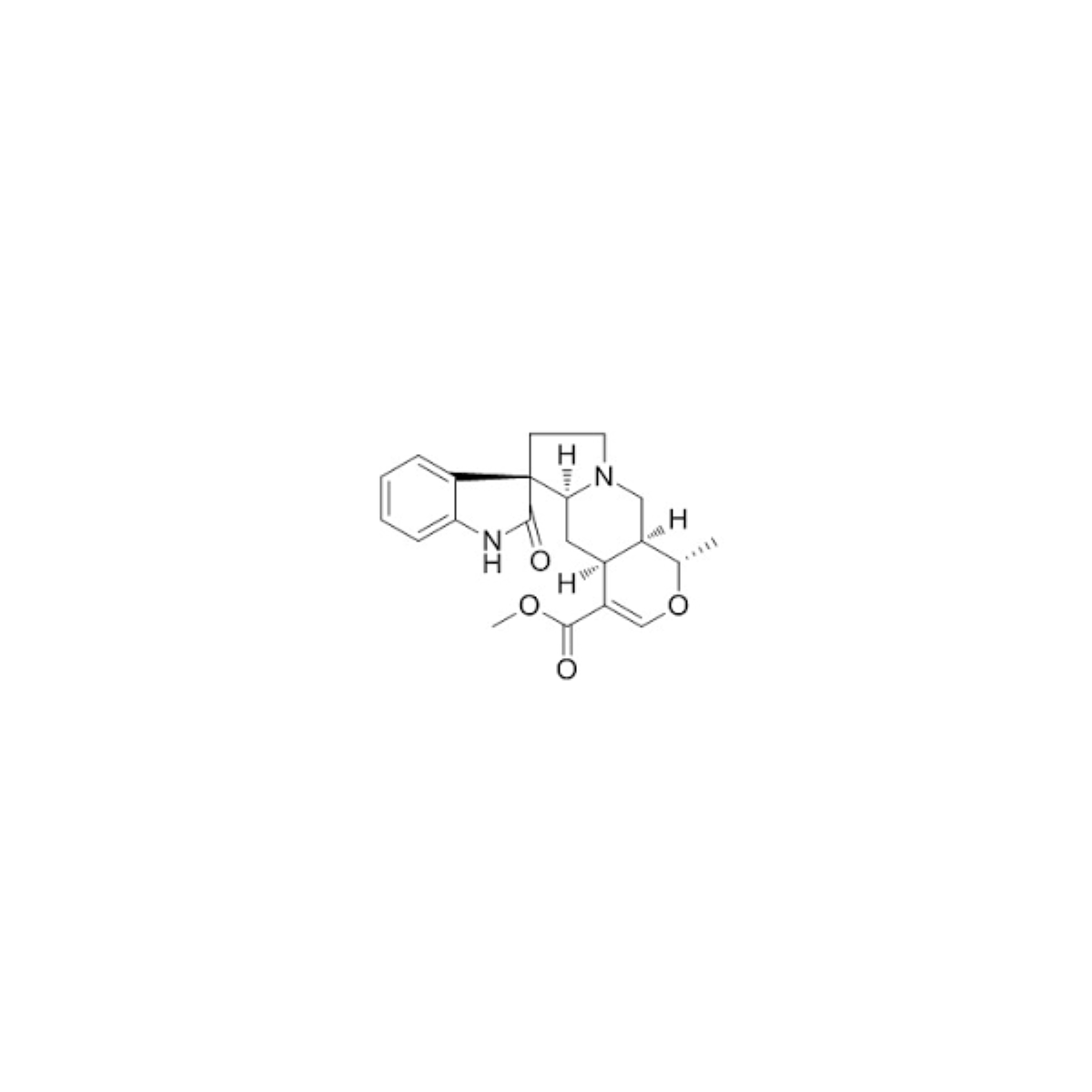
Pteropodine (Uncarine C)
- CAT Number : FNK-2400239
- CAS Number : 5629-60-7
- Molecular Weight : 368.43
- Molecular Formula : C21H24N2O4
- Pack size: 5 mg
- Store: Store at 2-10℃ in a dry and dark place.
- Purity: (HPLC) ≥98%
Pteropodine, also known as Uncarine C, is a heterohimbine-type oxindole alkaloid primarily isolated from 'Cat's claw' (Uncaria tomentosa). It is a natural product with various biological activities and potential medicinal properties.
Properties
- Chemical formula: C21H24N2O4
- Molecular weight: 368.43 g/mol
- Appearance: Likely a white to off-white crystalline powder
- CAS number: 5629-60-7
- Solubility: Likely soluble in organic solvents
- Neuropharmacological research, particularly for muscarinic M1 and 5-HT2 receptor modulation
- Antigenotoxic and antioxidant studies
- Cancer research, including studies on medullary thyroid carcinoma, acute lymphoblastic leukemia, and ovarian carcinoma
- Anti-inflammatory investigations
- Natural product research and discovery
- Potential neuroprotective, anticancer, and antihypertensive applications
- Use appropriate personal protective equipment
- Store in a cool, dry place in tightly closed containers
- Handle with care and avoid skin contact or inhalation
- Treat as a potentially hazardous research chemical
Anti-inflammatory Effects
Pteropodine demonstrates significant anti-inflammatory properties:
It can decrease the frequency of sister-chromatid exchanges and micronucleated polychromatic erythrocytes in mice administered doxorubicin, indicating a protective effect against genetic damage1.
Studies in rodent models show pteropodine reduces inflammation in arthritis and induced edema.
It inhibits pro-inflammatory markers like NF-κB and interleukin-6 (IL-6).
Antioxidant Activity
Pteropodine exhibits strong antioxidant capabilities:
It shows a potent capacity to scavenge free radicals, with 98.26% DPPH radical trapping at 250 μg/ml concentration.
This antioxidant effect may contribute to its protective properties against cellular damage.
Immune System Modulation
Research indicates pteropodine can influence immune function:
It increased lymphocyte production by 25.8% over control values in a 96-hour assay.
Studies suggest it may encourage proliferation of myeloid precursor cells.
Potential Neuroprotective Effects
Some evidence points to possible benefits for neurological conditions:
Cat's claw extracts containing pteropodine have shown promise in reducing beta-amyloid plaques and tau protein tangles associated with Alzheimer's disease in animal models.
Components of cat's claw extract, including pteropodine, were found to cross the blood-brain barrier rapidly in rodent studies.
Anti-cancer Potential
While more research is needed, some studies indicate possible anti-cancer properties:
Pteropodine and other alkaloids from cat's claw have demonstrated antioxidant and anti-neoplastic activities in laboratory studies.
Cellular Signaling Pathways Affected
NF-κB pathway:
Pteropodine inhibits the activation of nuclear factor kappa B (NF-κB), a major transcription factor involved in inflammatory responses.
MAPK pathway:
It modulates the mitogen-activated protein kinase (MAPK) signaling pathway, which is linked to inflammation and cell proliferation.
Cytokine signaling:
Pteropodine reduces the expression of pro-inflammatory cytokines like interleukin-6 (IL-6).
Akt/mTOR pathway:
Studies suggest it may affect the Akt/mTOR signaling pathway, which is involved in cell growth and survival.
JAK/STAT pathway:
There is evidence that pteropodine influences the JAK/STAT signaling pathway, important for immune function and cell growth.
Antioxidant pathways:
It exhibits strong antioxidant capabilities, likely modulating cellular antioxidant defense pathways.
Apoptosis pathways:
Pteropodine has shown potential to induce apoptosis in certain cell types, suggesting effects on apoptotic signaling pathways.
Immune cell signaling:
It enhances lymphocyte production and may affect myeloid precursor cell proliferation, indicating modulation of immune cell signaling