We provide natural products containing cancer growth suppression activities selected from biologically active microbial metabolites that were discovered and isolated at the Institute of Microbial Chemistry (BIKAKEN). Cancer cells exhibit exceptionally high rates of proliferation and require a massive supply of nucleotides, such as GTP, to support DNA and RNA replication, as well as protein synthesis (ribosome biogenesis). Recent findings demonstrate that the genetic or pharmacological inhibition of IMPDH1/2 and GMPS leads to the depletion of the GTP pool, resulting in significant suppression of cell proliferation across a wide range of cancer types.
SDF (Structure Data Format) files of the compounds are available.
Please do not hesitate to contact Funakoshi if you need a Structure Data Format (SDF) file and/or bulk purchase (large quantity) of the compounds.
The products shown on this webpage are for research use only.
Nucleotide synthesis inhibition for cancer cell proliferation suppression
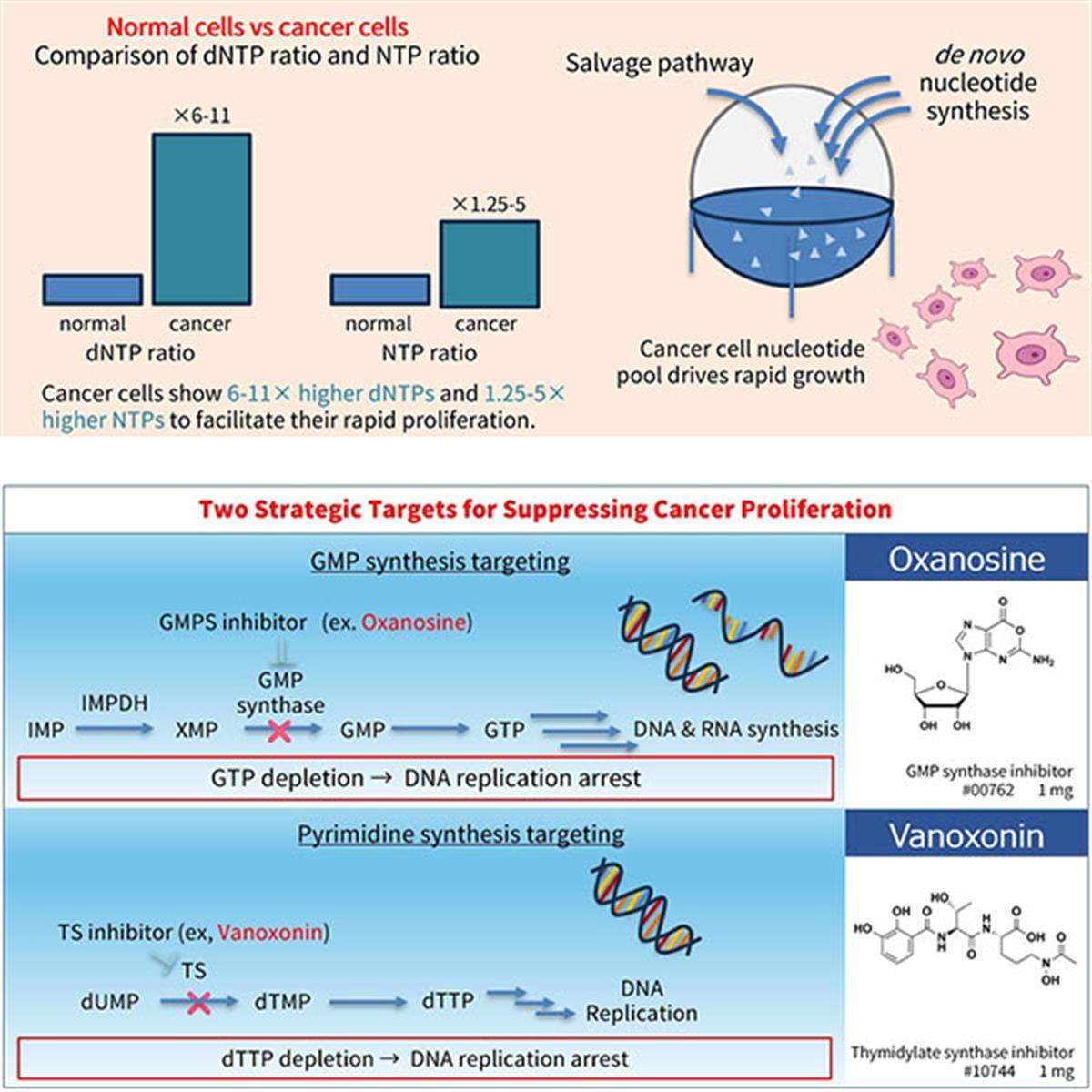
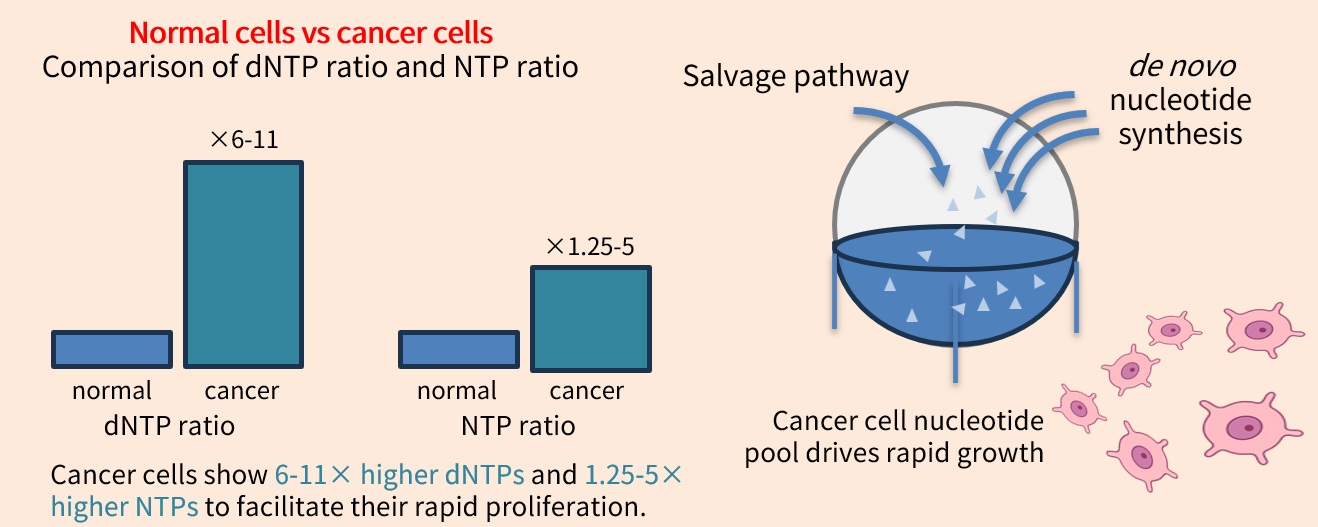
Typically, differentiated normal cells maintain homeostatic balance through the nucleotide salvage pathway. In contrast, cancer cells experience a demand for (d)NTPs that exceeds supply, leading to the oncogene-driven (e.g., KRAS/MYC/PI3K) upregulation of the de novo biosynthesis pathway. In fact, intracellular levels of dNTPs and NTPs in cancer cells are elevated 6- to 11-fold and 1.25- to 5-fold, respectively, compared to normal cells; this elevation serves as the fundamental basis for their enhanced replication, transcription, and ribosome biogenesis. Consequently, novel therapeutic strategies are being developed that target these cancer-specific dependencies on nucleotide metabolism.
Growth arrest via inhibition of GMP synthesis
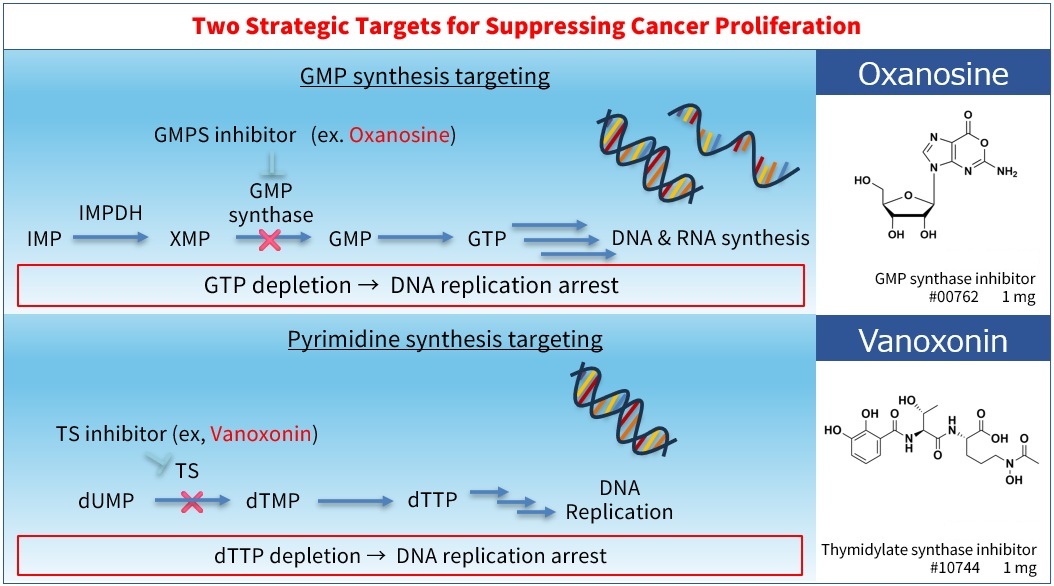
Inhibition of the GMP biosynthetic pathway leads to intracellular GTP depletion, which subsequently halts RNA transcription and ribosome biogenesis. In murine models, the disruption of this GTP supply has been shown to effectively suppress cancer cell proliferation and prolong survival.
Furthermore, thymidylate synthase (TS) in pyrimidine metabolism serves as the sole enzyme responsible for the conversion of dUMP to dTMP (thymidylic acid), a process essential for the supply of dTTP required for DNA synthesis. Pharmacological inhibition of this enzyme causes dTTP depletion, directly arresting DNA replication in cancer cells. Moreover, this dTTP deficiency inhibits the repair of DNA damage induced by radiation or chemotherapy, potentially offering a synergistic effect that further promotes cancer cell apoptosis.
Genome Destabilization via DNA Helicase Inhibition
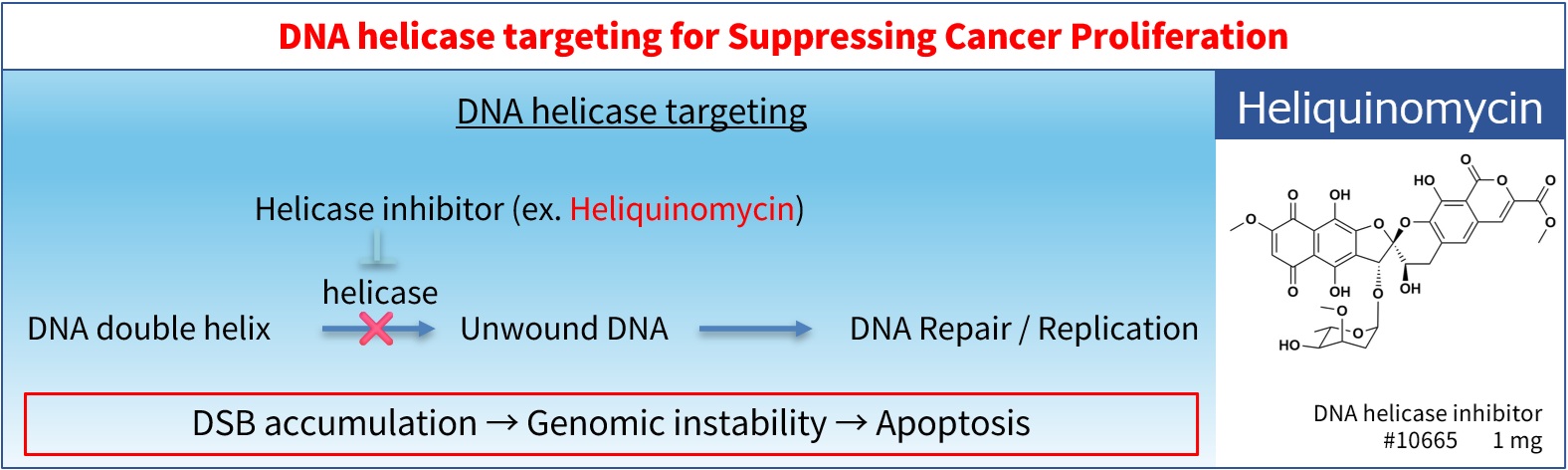
Enzymes involved in DNA replication—the fundamental process of cell proliferation—are also attracting attention as promising therapeutic targets. DNA helicases function as enzymes that utilize ATP to unwind the DNA double helix, thereby facilitating the processes of replication, transcription, and repair. Inhibition of these functions triggers the following intracellular events:
Abrogation of DNA Repair: The inability to unwind DNA, which is essential for recognizing and repairing damage sites, leads to the accumulation of severe lesions, such as DNA double-strand breaks (DSBs).
Exacerbation of Replication Stress: The stalling of replication fork progression rapidly increases genomic instability.
Induction of Apoptosis: Cells unable to maintain normal DNA metabolism eventually cease proliferation and are driven toward apoptosis.
Recent research is exploring synthetic lethality approaches, where specific helicases are inhibited to selectively eliminate cancer cells harboring distinct genetic defects. Furthermore, strategies are being investigated to maximize therapeutic efficacy by combining helicase inhibition with radiation or chemotherapy to ablate cellular repair mechanisms. Since many cancer cells overexpress specific helicases (such as DNA2 or the RECQ family) to compensate for their inherent genomic instability, targeting these enzymes offers a viable strategy to neutralize the survival mechanisms unique to cancer cells.
Reference
Mullen, J N., et al., “Nucleotide metabolism: a pan-cancer metabolic dependency”
Nat. Rev. Cancer., 23(5), 275-294(2023). [PMID:36973407]
Menon, V., et al., “DNA repair helicases: from mechanistic understanding to therapeutic implications”
NAR. Cancer., 7(4),(2025). [PMID:41064806]
Solubility: Soluble in H2O, Methanol, and DMSO, Insoluble in CHCl3.
Activity: Inhibitory activity of leukemia L1210 : IC50=1.0 µg/ml, Competitive inhibitory activity of GMP synthase : Ki=7.4×10⁻⁴ M.
Oxanosine was isolated from culture broth of Streptomyces capreolus MG265-CF3 and was reported as a novel nucleoside. It was also reported that this compound has an inhibitory activity of HIV replication and leukemia L1210 cell growth.
Solubility: Soluble in MeOH, DMSO, Acetic acid, and H2O, Insoluble : EtOAc, Chloroform, and n-hexane.
Vanoxonin is a natural product delivered from cell culture of Saccharopolyspora hirsuta MG245-CF2 as an inhibitor of thymidylate synthetase. Vanoxonin forms a complex with a vanadium (V5+) which exhibits a strong inhibition against the synthetase. However, Vanoxonin alone shows weak inhibition (IC50: 200 µg/mL). Vanoxonin-V5+ complex also showed in vitro cytotoxic activity against L-1210 lymphatic leukemia cells (MIC: 25 µg/mL).
Solubility: Soluble in EtOAc, EtOH, and DMSO, Insoluble in H2O, and Hexane.
Heliquinomycin is a natural product derived from actinomycetes and inhibits DNA helicase. In addition, it inhibits growth of human tumor cell lines such as HeLa S3, KB, LS180, K562, and HL60. In cell culture, this compound also inhibits both DNA and RNA synthesis but do not inhibit protein synthesis. It was reported that HeLa S3 growth was arrested at G2/M phase by Heliquinomycin treatment.
The products shown on this webpage are for research use only.