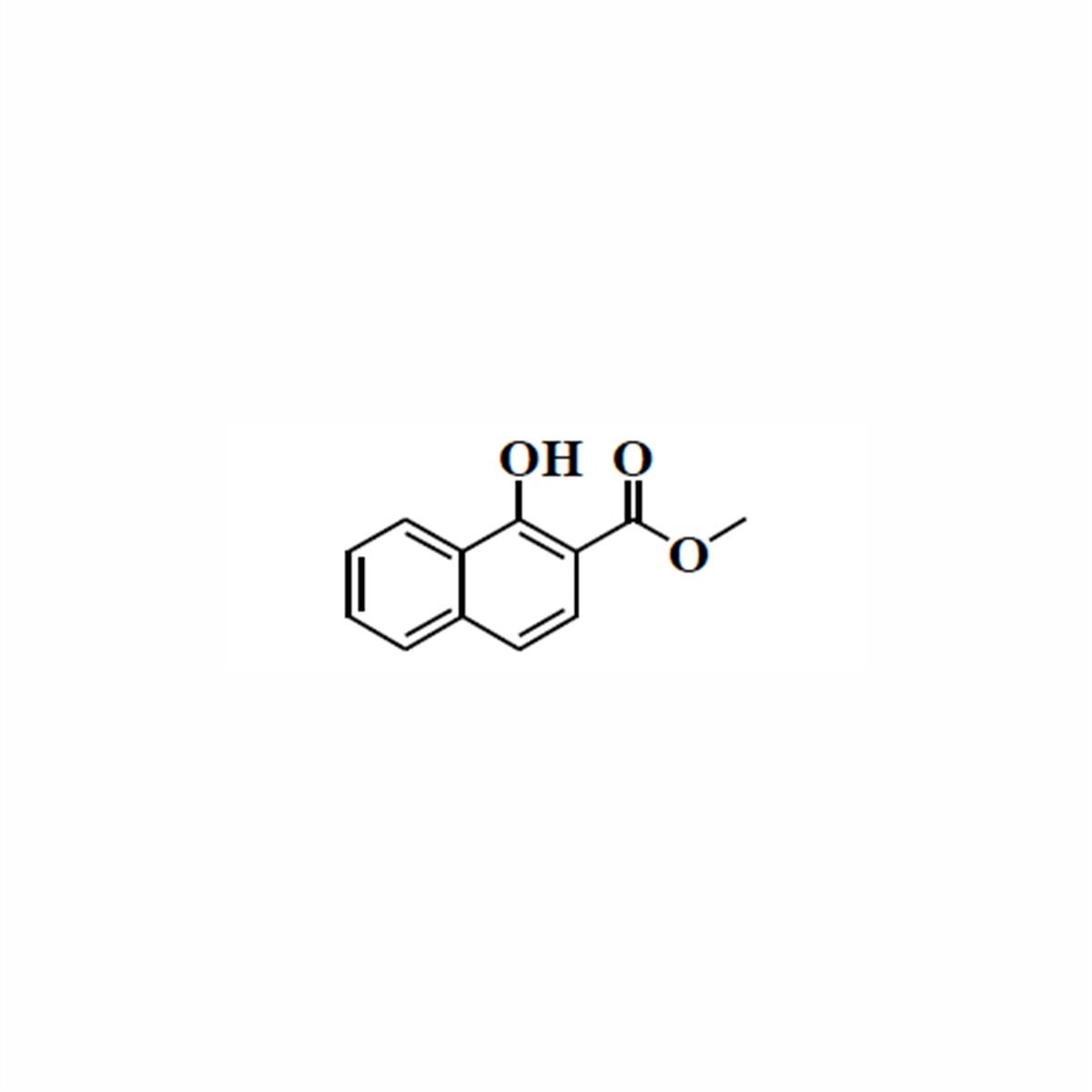
Methyl 1-hydroxy-2-naphthoate
Product#: Gly-GMSM-109
$300.00
Availability:
Ships in 1-2 Weeks
Methyl 1-hydroxy-2-naphthoate
- CAT Number : Gly-GMSM-109
- CAS Number : 948-03-8
- Molecular Weight : 202.21
- Molecular Formula : C12H10O3
- Pack size: 1 g
Methyl 1-hydroxy-2-naphthoate is an organic compound with the chemical formula C12H10O3 that is used as an intermediate in organic synthesis.
Properties:
- White to brown crystalline powder
- Molecular weight: 202.21 g/mol
- Melting point: 76-80°C
- Soluble in organic solvents
- Used as an intermediate in the synthesis of various pharmaceutical compounds and dyes
- Potential use in research and development
- No direct commercial applications reported
- Avoid exposure through inhalation, skin contact, or ingestion
- Use appropriate personal protective equipment including gloves and fume hood
- Store at ambient temperature
- Dispose of properly as chemical waste
- Avoid release to the environment
Anti-inflammatory Properties
MHNA has demonstrated significant anti-inflammatory effects in laboratory studies, particularly in the context of lipopolysaccharide (LPS)-induced inflammation in murine macrophages1. This suggests potential applications in treating inflammatory conditions in humans, although further research is needed to confirm its efficacy and safety in clinical settings.
Affected Cellular Signaling Pathways:
NF-κB Pathway
MHNA inhibits the activation of the nuclear factor kappa B (NF-κB) signaling pathway12. Specifically:
It decreases NF-κB DNA-binding activity
It reduces NF-κB transcriptional activity
It inhibits IκB-α degradation
It suppresses NF-κB translocation to the nucleus
These effects on the NF-κB pathway occur in a dose-dependent manner.
MAPK Pathways
It decreases NF-κB DNA-binding activity
It reduces NF-κB transcriptional activity
It inhibits IκB-α degradation
It suppresses NF-κB translocation to the nucleus
These effects on the NF-κB pathway occur in a dose-dependent manner.
MHNA also modulates the mitogen-activated protein kinase (MAPK) signaling pathways12:
p38 MAPK: MHNA decreases the activation of p38 MAPK induced by lipopolysaccharide (LPS).
JNK pathway: It reduces the activation of c-Jun N-terminal kinases (JNK) in response to LPS stimulation.
Inflammatory Mediator Production
p38 MAPK: MHNA decreases the activation of p38 MAPK induced by lipopolysaccharide (LPS).
JNK pathway: It reduces the activation of c-Jun N-terminal kinases (JNK) in response to LPS stimulation.
As a result of its effects on these signaling pathways, MHNA influences the production of various inflammatory mediators:
It inhibits the release of nitric oxide (NO), interleukin-1beta (IL-1β), and interleukin-6 (IL-6)12.
It suppresses the protein expression of inducible nitric oxide synthase (iNOS) and cyclooxygenase-2 (COX-2)12.
It downregulates the mRNA expression of iNOS, COX-2, IL-1β, and IL-612.
By modulating these cellular signaling pathways, MHNA exhibits its anti-inflammatory effects, particularly in the context of LPS-induced inflammation in murine macrophages. These findings suggest that MHNA's impact on these signaling cascades contributes to its potential as an anti-inflammatory agent, though further research is needed to fully elucidate its mechanisms and potential therapeutic applications in human inflammatory conditions.
It inhibits the release of nitric oxide (NO), interleukin-1beta (IL-1β), and interleukin-6 (IL-6)12.
It suppresses the protein expression of inducible nitric oxide synthase (iNOS) and cyclooxygenase-2 (COX-2)12.
It downregulates the mRNA expression of iNOS, COX-2, IL-1β, and IL-612.
By modulating these cellular signaling pathways, MHNA exhibits its anti-inflammatory effects, particularly in the context of LPS-induced inflammation in murine macrophages. These findings suggest that MHNA's impact on these signaling cascades contributes to its potential as an anti-inflammatory agent, though further research is needed to fully elucidate its mechanisms and potential therapeutic applications in human inflammatory conditions.