LipiDye Lipid Droplet Green
LipiDye <Lipid Droplet Green>
DiagnoCine offers excellent reagents for Lipid and Lipid Metabolism research.
Cat. No. FNK-FDV-0010
Size 0.1 mg
Storage RT
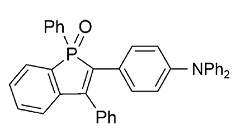
IUPAC name 1,3-Diphenyl-2-[4-(N,N-diphenylamino)phenyl]benzo[b]phosphole-P-oxide
Formulation C38H28NOP
Molecular weight 545.58 g/mol
Chemical structure See right
Solubility Soluble in DMSO
License This product is licensed by Nagoya University
Application
- Live cell imaging of lipid droplet
- Lipid droplet staining of fixed cells for immunostaining
Reconstitution and Storage
Shipping : Shipped on ambient temperature
Storage : Store at ambient temperature (powder). For reconstituted solution, store at -20oC. Protected from light. Reconstitution : Reconstitute at 1 mM in 100% DMSO
Description
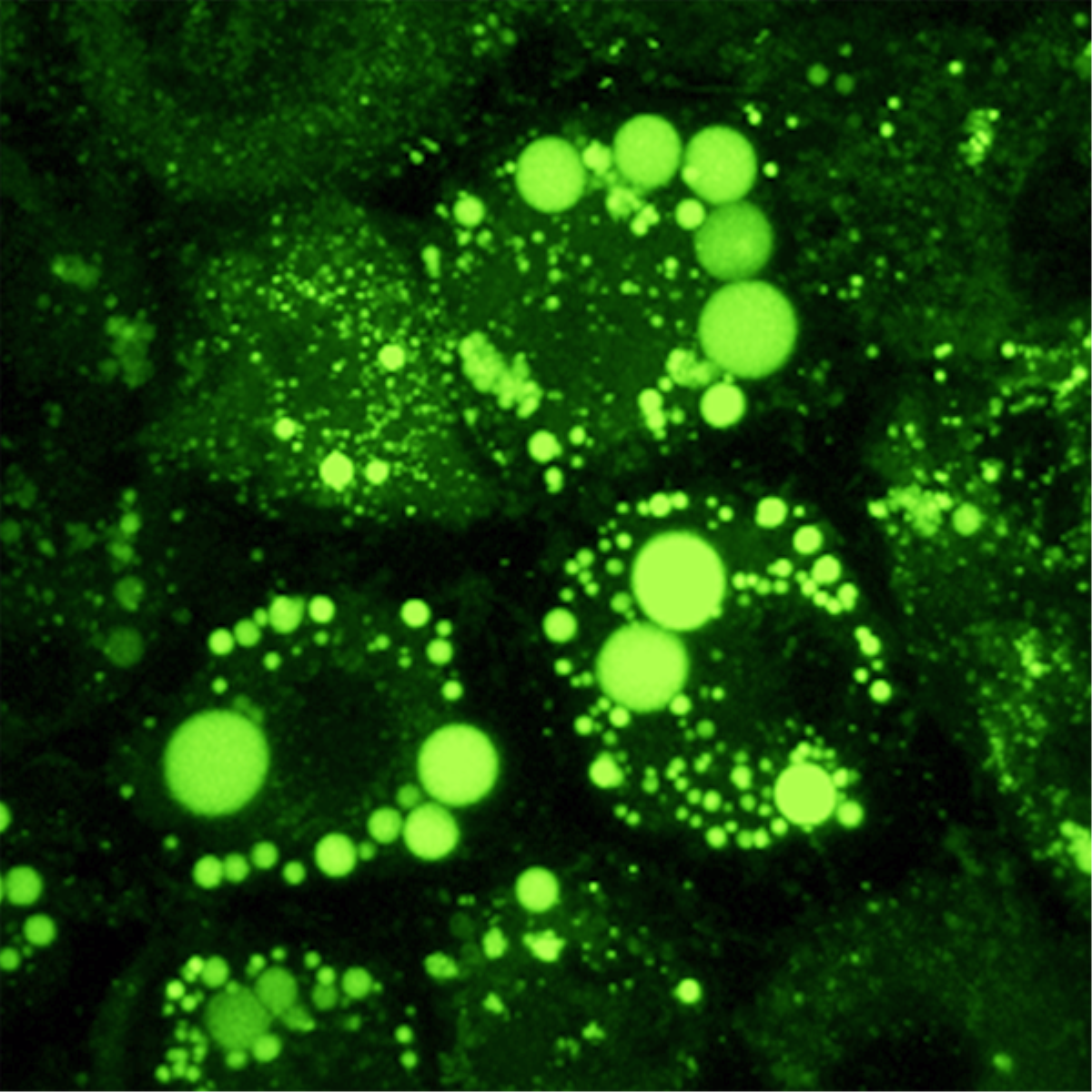
LipiDye is a highly sensitive, new fluorescent dye for lipid droplets. Compared to conventional lipid droplet detection dye (Nile Red or boron-dipyrromethene), LipidDye has higher S/N ratio and photo-stability. LipiDye can be used for both live and fixed cell.
Background
Lipid droplets are organelle, which store neutral lipids such as triglycerides and steryl esters, and frequently observed in adipose tissue. It is considered to play a role in energy storage or lipid turnover. Recent studies reported that lipid droplets are not only found in adipocytes, but also in ubiquitous cells such as skeletal muscle cells, macrophages and glia cells. Size of lipid droplets in adipocyte is >10 um and this can be detected by conventional lipid droplet probes like Nile Red. However, size of lipid droplet in non-adipocyte is too small (~0.1 um) to be detected by Nile Red or other probes. LipiDye is a newly developed green fluorescent dye for detecting lipid droplets selectively with high sensitivity, which overcomes a weakness in conventional lipid droplet probes.
Features
- Selectively incorporated into lipid droplets and gives out green fluorescence.
- No fluorescence is observed in solution
- Non specific fluorescence is limited in a cytoplasm.
- High S/N ratio
- Compatible with both live and fixed cell
- Can be used for Live Cell Imaging
- Low cytotoxicity at normal dose (1 uM)
- IUPAC name: 1,3-Diphenyl-2-[4-(N,N-diphenylamino)phenyl]benzo[b]phosphole-P-oxide
- Formulation : C38H28NOP
- Molecular weight : 545.58 g/mol
- Solubility : Soluble in DMSO
- Excitation / Emission: 405 nm / 521-530 nm
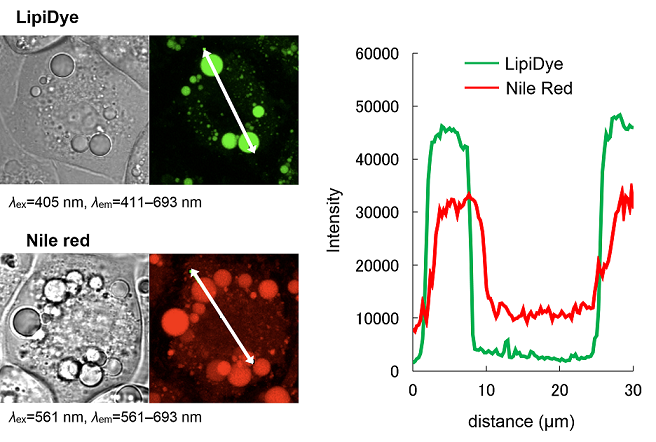
Fig. 1 Comparison data between LipiDye and Nile Red
Lipid droplet in Adipocyte is stained with LipiDye or Nile Red. Nile Red also stains cytoplasm, while LipiDye specifically stains lipid droplet clearly.
* General filter for green fluorescent (e.g. FITC or GFP, etc) is not compatible with LipiDye. Please use an appropriate filter.
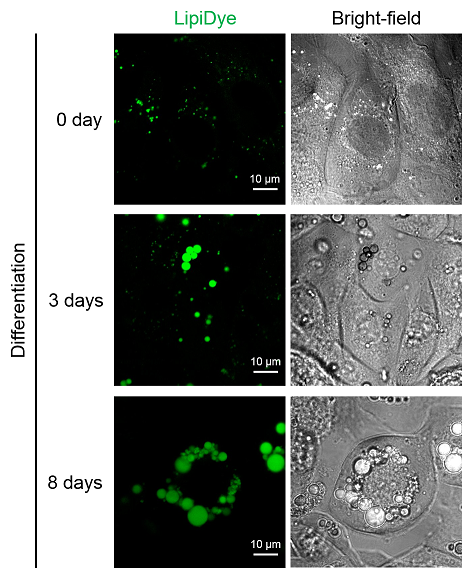
Fig.2 Preadipocytes differentiation
Differentiation process of preadipocyte (adipose progenitor cell) : 3T3-L1 is observed with LipiDye. Along with differentiation, lipid droplet also becomes grows in size.
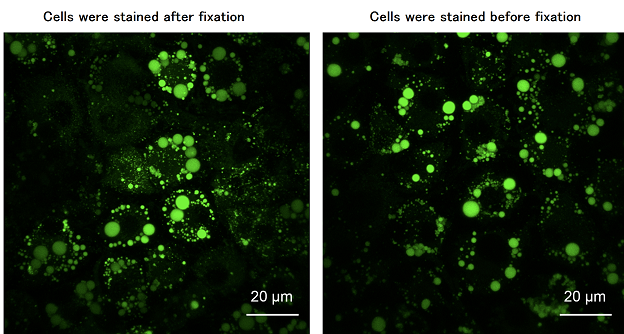
Fig.3 Application of LipiDye in both post-fixed and pre-fixed cells
LipiDye is applied to cultured adipocytes after (left) or before (right) paraformaldehyde fixation. Regardless of fixation timing, LipiDye detects lipid droplet highly sensitive.
* Methanol fixation is not recommeded as it affect to the structure of lipid droplets. Please use cross-linking fixatives, such as paraformaldehyde.
How to use
Concentration:
For adipocytes, 1 ?M LipiDye (0.1-1% DMSO) is desirable.
For other cell types, concentrations depend on cell types. Please optimize concentration.
- Live cell imaging
1. Prepare proper concentration of LipiDye in culture medium
2. Exchange culture medium to the LipiDye containing medium
3. Cells were stained by LipiDye for at least 2 hours
- Fixed cells
1. After fixing cells with 4% formaldehyde, cells were washed with PBS two times.
2. Cells were stained with proper concentration of LipiDye in PBS for at least 30 min on ice.
Excitation/ Emission: 405 nm/521-530 nm (Emission: if you need, 450-650nm are available)
Reference
- Bando Y, et al. Kallikrein 6 secreted by oligodendrocytes regulates the progression of experimental autoimmune encephalomyelitis. GLIA. 66(2): 359-378 (2018).
- Maruyama T, et al. Loss of DDHD2, whose mutation causes spastic paraplegia, promotes reactive oxygen species generation and apoptosis. Cell Death and Disease, 9(8):797 (2018).
- Kobayashi K, et al. Moderate High Temperature Condition Induces the Lactation Capacity of Mammary Epithelial Cells Through Control of STAT3 and STAT5 Signaling J Mammary Gland Biol Neoplasia, 23(1-2):75-88 (2018)
- Sugihara M, et al. The AAA+ ATPase/ubiquitin ligase mysterin stabilizes cytoplasmic lipid droplets. J Cell Biol 218(3):949-960 (2019).
- Kobayashi T, et al. Homeostatic Control of Sebaceous Glands by Innate Lymphoid Cells Regulates Commensal Bacteria Equilibrium Cell. 176: 1-16 (2019).
- Kakazu E, et al. Branched chain amino acids are associated with the heterogeneity of the area of lipid droplets in hepatocytes of patients with non-alcoholic fatty liver disease. Hepatol Res. 49(8):860-871 (2019)
- Kato Y, et al. The ceramide analogue N-(1-hydroxy-3-morpholino-1-phenylpropan-2-yl)decanamide induces large lipid droplet accumulation and highlights the effect of LAMP-2 deficiency on lipid droplet degradation. Bioorg Med Chem Lett. 30(3):126891 (2019).
- Taguchi K, et al. Role of small proliferative adipocytes: possible beige cell progenitors. J Endocrinol. 245(1): 65–78 (2020).
- Eshima H, et al. A chronic high-fat diet exacerbates contractile dysfunction with impaired intracellular Ca2+ release capacity in the skeletal muscle of aged mice. J Appl Physiol. 128(5):1153-1162 (2020).
- Cho S, et al., Alpha-Lipoic Acid Attenuates Apoptosis and Ferroptosis in Cisplatin-Induced Ototoxicity via the Reduction of Intracellular Lipid Droplets. Int. J. Mol. Sci. 2022, 23(18), 10981
- Hasegawa, K., Takenaka, N., Yamamoto, M., Sakoda, Y., Aiba, A., & Satoh, T. (2023). Regulation of De Novo Lipid Synthesis by the Small GTPase Rac1 in the Adipogenic Differentiation of Progenitor Cells from Mouse White Adipose Tissue. International Journal of Molecular Sciences, 24(5), 4608. https://doi.org/10.3390/ijms24054608
- Xu, M., Tan, J., Zhu, L., Ge, C., Zhang, Y., Gao, F., Dai, X., Kuang, Q., Chai, J., Zou, B., & Wang, B. (2023). Palmitoyltransferase ZDHHC3 Aggravates Nonalcoholic Steatohepatitis by Targeting S?Palmitoylated IRHOM2. Advanced Science, 10(28), 2302130. https://doi.org/10.1002/advs.202302130
- Li, G., Li, J., Otsuka, Y., Zhang, S., Takahashi, M., & Yamada, K. (2020). A BODIPY-based fluorogenic probe for specific imaging of lipid droplets. Materials, 13(3), 677. https://doi.org/10.3390/ma13030677
- Fam, T. K., Klymchenko, A. S., & Collot, M. (2018). Recent advances in fluorescent probes for lipid droplets. Materials, 11(9), 1768. https://doi.org/10.3390/ma11091768
- Sagara, A., Nakata, K., Matsumoto, S., Guan, W., Shinkawa, T., Iwamoto, C., Ikenaga, N., Ohuchida, K., & Nakamura, M. (2021). Repositioning of duloxetine to target pancreatic stellate cells. Oncology Letters, 22(4), 744. https://doi.org/10.3892/ol.2021.13005
- Meng, Y. D., Fang, W., Pei, Z. H., Chen, W. H., Ding, S. Y., Shen, M. L., Bu, Y., Yao, C. Z., Li, Q., Yu, J., & Jiang, H. J. (2025). Organocatalyzed enantioselective C–N bond-forming $S_{N}Ar$ reactions for synthesizing stereogenic-at-boron BODIPYs. JACS Au, 5(4), 1965–1973. https://doi.org/10.1021/jacsau.5c00196
- Östlund, C., Hernandez-Ono, A., Turk, S. J., Dauer, W. T., Ginsberg, H. N., Worman, H. J., & Shin, J. Y. (2022). Hepatocytes deficient in nuclear envelope protein lamina-associated polypeptide 1 are an ideal mammalian system to study intranuclear lipid droplets. Journal of Lipid Research, 63(10), 100277. https://doi.org/10.1016/j.jlr.2022.100277
- Hara, Y., Ikeda, Y., Kimura, H., Shimamoto, S., Ishikawa, M., Kobayashi, K., Nagasaka, H., Shimoyama, H., & Hirano, K. I. (2023). A novel homozygous missense mutation in PNPLA2 in a patient manifesting primary triglyceride deposit cardiomyovasculopathy. Molecular Genetics and Metabolism Reports, 34, 100960. https://doi.org/10.1016/j.ymgmr.2023.100960
- Ibayashi, M., & Tsukamoto, S. (2025). Methods for analyzing lipid droplets in mammalian oocytes and fertilized embryos. Reproductive Medicine and Biology, 24(1), e70002. https://doi.org/10.1002/rmb2.7000
- Akasu, R., Miyazaki, T., Elhussiny, M. Z., Sugiura, Y., Tomitsuka, Y., Haraguchi, S., Otsu, K., Chowdhury, V. S., & Miyazaki, A. (2022). Calpain-mediated proteolytic production of free amino acids in vascular endothelial cells augments obesity-induced hepatic steatosis. Journal of Biological Chemistry, 298(6), 101953. https://doi.org/10.1016/j.jbc.2022.101953