- Home
- Natural & Chemical Compounds
- Compounds H-L
- Licoricesaponin H2 (Liquiritinic Acid Diglucuronide)
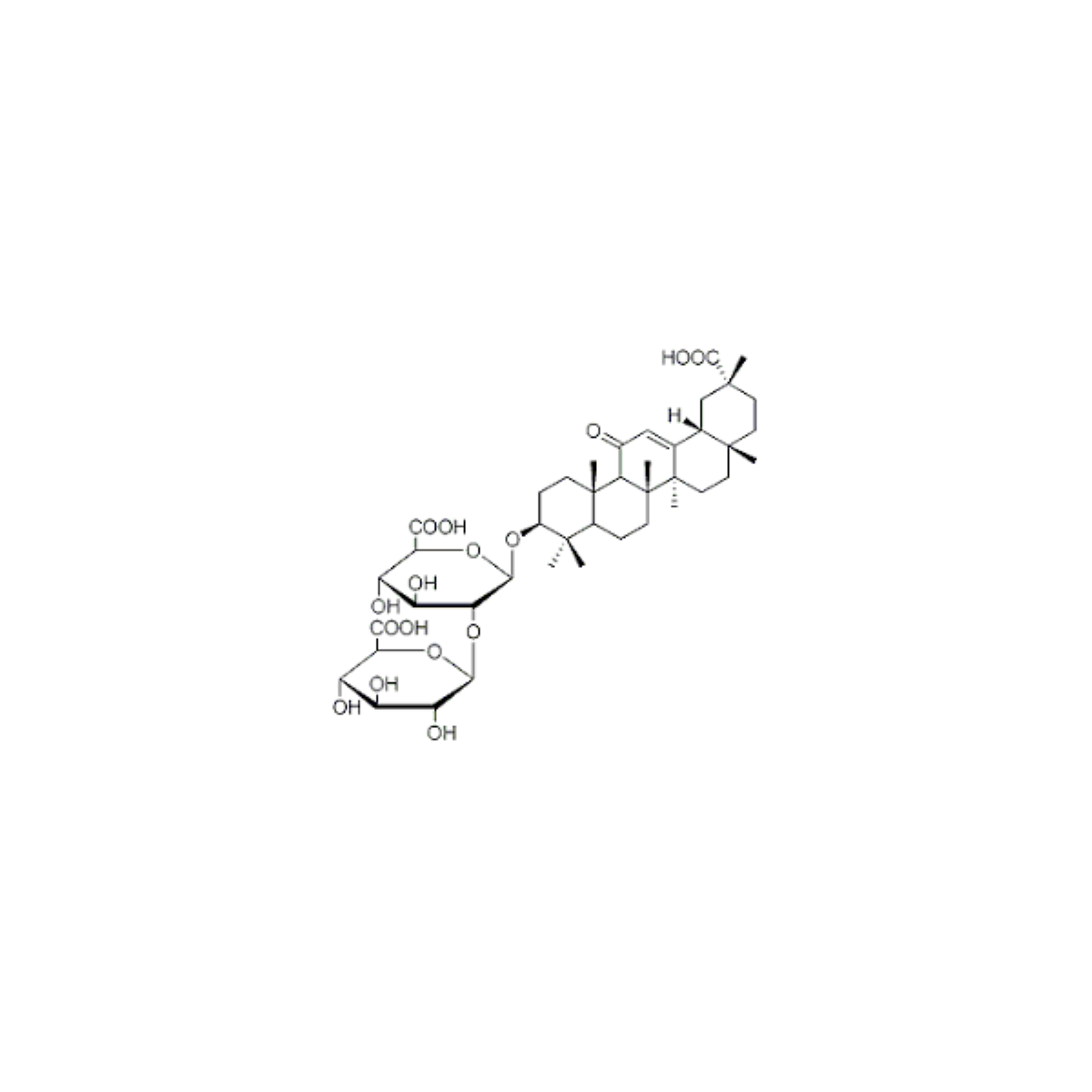
Licoricesaponin H2 (Liquiritinic Acid Diglucuronide)
Product#: FNK-2400215
$686.95
Availability:
Ships in 1-2 Weeks
Licoricesaponin H2 (Liquiritinic Acid Diglucuronide)
- CAT Number : FNK-2400215
- CAS Number : 118441-85-3
- Molecular Weight : 822.4
- Molecular Formula : C42H62O16
- Pack size: 10 mg
- Store: Store at 2-10°C in a dry and dark place.
- Purity: (HPLC) ≥98%
Licoricesaponin H2, also known as Liquiritinic Acid Diglucuronide, is a saponin derived from the roots of Glycyrrhiza uralensis Fischer. It is primarily used for research purposes and is not intended for human consumption.
Property:
Molecular Weight: 822.93 g/mol
CAS Number: 118441-85-3
Solubility: Soluble in DMSO
Storage: Store at -20°C
Application and Usage:
Licoricesaponin H2 is utilized in various biochemical and pharmacological research studies. It is often used to investigate its effects on different enzymes and proteins, including oxidoreductases, transferases, hydrolases, and matrix metalloproteinases. It is also employed in studies related to cell culture, protein sample preparation, and molecular biology techniques.
Safety and Handling:
Safety:
- Products are for research use only and not for human use.
- Handle with appropriate safety measures, including the use of personal protective equipment (PPE) such as gloves and safety goggles.
- Avoid inhalation, ingestion, and contact with skin and eyes.
- Use in a well-ventilated area and follow standard laboratory safety protocols.
Anti-inflammatory Effects
Licoricesaponin H2 has demonstrated anti-inflammatory properties that may be beneficial for inflammatory conditions. It can inhibit the production of pro-inflammatory cytokines like TNF-α, IL-6, and IL-1β1. This anti-inflammatory action could potentially help in managing diseases with an inflammatory component.
Anticancer Potential
Some studies have indicated that licoricesaponin H2 may have anticancer effects against certain types of cancer cells. It has shown the ability to inhibit proliferation and induce apoptosis in some cancer cell lines1. However, more research is needed to fully elucidate its anticancer mechanisms and potential.
Hepatoprotective Activity
Licoricesaponin H2 has exhibited hepatoprotective effects in some experimental models. It may help protect liver cells from damage and support liver function1. This suggests potential applications in liver diseases, though clinical evidence is still limited.
Cardiovascular Effects
Some research indicates that licoricesaponin H2 could have beneficial effects on the cardiovascular system. It may help modulate blood pressure and vascular function, though the exact mechanisms require further study1.
Immunomodulatory Properties
There is evidence that licoricesaponin H2 can modulate immune system function. It may enhance certain immune responses while suppressing others, potentially benefiting immune-related disorders1.
Cell Signaling Pathways Affected
TNF-α Signaling Pathway
Licoricesaponin H2 has been found to suppress the activation of the TNF-α signaling pathway2. This is significant because:
- The TNF-α pathway plays a crucial role in inflammation and fibrosis development.
- Inhibition of this pathway can help mitigate pulmonary fibrosis by reducing inflammatory responses.
Epithelial-Mesenchymal Transition (EMT)
Licoricesaponin H2 modulates the EMT process2. This is important because:
- EMT is a key process in the development of fibrosis.
- By regulating EMT, Licoricesaponin H2 may help prevent excessive fibrotic tissue formation.
Extracellular Matrix (ECM) Remodeling
The compound has been shown to influence ECM remodeling2. This affects:
- The balance of ECM production and degradation, which is crucial in fibrosis.
- Potentially reducing excessive ECM deposition associated with fibrotic diseases.
TGF-β Pathway
While not directly mentioned for Licoricesaponin H2, related compounds from licorice have shown interactions with the TGF-β pathway2. This pathway:
- Is central to fibrosis development and progression.
- Regulates many aspects of cell growth, differentiation, and ECM production.
Inflammatory Signaling
Licoricesaponin H2, like other licorice saponins, may affect various inflammatory signaling pathways13. This includes:
- Potential modulation of NF-κB signaling, a key regulator of inflammation.
- Effects on cytokine production and signaling.
Antioxidant Pathways
While not specifically mentioned for Licoricesaponin H2, licorice saponins generally have antioxidant properties1. This may involve:
- Activation of Nrf2-mediated antioxidant response elements.
- Reduction of oxidative stress-related signaling.