.jpg "/Content/Upload/Product/Human_ELISA_kits_Diagnocine_1200_1200(155).jpg")
Human plasminogen activator inhibitor 1,PAI-1 ELISA Kit
The Ultimate 1-Stop ELISA Marketplace:
60,000+ ELISA kits Available to Serve Scientists from All Fields of Life Science
Always Powered by Diagnocine for Precision Research.
Most comprehensive buffers, reagents and detection agents are provided with each kit to optimize data output.
All-inclusive format covers everything from sample preparation to signal detection. Every step can be customized and optimized for your precision research.
DiagnoCine Precision buffers and reagents are Made in USA ISO 13485 Certified
Why waste time searching for your ELISA kit when you can get everything in one place? Diagnocine can provide you with all the ELISA needs you have (customized ELISAs also available) on the planet through a single, streamlined ordering process.
* all types of species
* HRP and AP detection
* Low target signal enhancement
* Inquire about a trial version or a customized version
4 core reagents below are included with every order, plus 1 of the 2 detection-specific reagents (matched automatically to your kit type) — 5 components, every time.
+ the 5th component, matched to your kit's detection method:
If you have any questions or need additional information, please call us at 551-245-1033 or email us at support@diagnocine.com. Our team will be happy to assist you.
Universal Compatibility
All buffers and detection reagents work seamlessly across target proteins, bridging the gap in assay consistency.
1-Stop Convenience
Consolidate your lab's purchasing. Source all ELISA needs and experience optimal buffers and reagents in a single shipment.
Enhanced Precision
Designed by scientists for scientists, all components are engineered to deliver sharper results and an optical signal.
Human plasminogen activator inhibitor 1,PAI-1 ELISA Kit
Sandwich quantitative immunoassay for serpin peptidase inhibitor, clade E (nexin, plasminogen activator inhibitor type 1), member 1 in human serum, plasma, tissue homogenates available in multiple catalog sizes:
Note: Please send inquiries regarding Trial 24T orders to support@diagnocine.com.
| Target name | serpin peptidase inhibitor, clade E (nexin, plasminogen activator inhibitor type 1), member 1 |
| Uniprot No. | P05121 |
| Species | Homo sapiens (Human) |
| Sample types | serum, plasma, tissue homogenates |
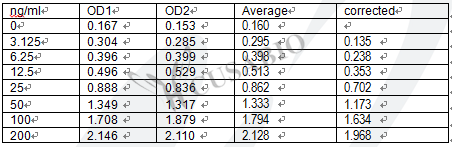
| Detection range | 3.125 ng/mL-200 ng/mL |
| Sensitivity | 2.201 ng/mL |
| Assay time | 1-5h |
| Sample loading volume | 50-100μL |
| Detection wavelength | 450 nm |
| Assay principle | Sandwich (Quantitative) |
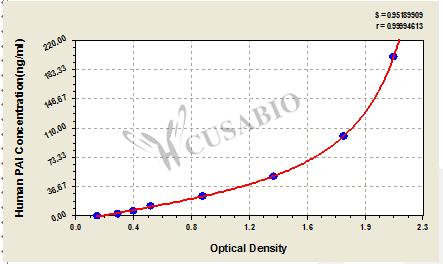
| Data analysis | Standard curve + Curve Expert software |
| Research area | Cell Biology |
| Storage condition | 2-8°C (see protocol for full details) |
| Shipping condition | 4 °C |
| Shelf life | 6 months |
10 business days
Processing + 3-5 days shipping
In Stock : USA
Worldwide shipping available
Antibody capture
450 nm detection
Standard curve
Quantification
In this sandwich ELISA, serpin peptidase inhibitor, clade E (nexin, plasminogen activator inhibitor type 1), member 1 in the sample is captured between a pre-coated capture antibody and a detection antibody. Signal intensity is proportional to analyte concentration. Quantification uses a standard curve fitted with Curve Expert software, covering 3.125 ng/mL-200 ng/mL with a minimum detectable dose of 2.201 ng/mL.
This Human SERPINE1 ELISA Kit was designed for the quantitative measurement of Human SERPINE1 protein in serum, plasma, tissue homogenates. It is a Sandwich ELISA kit, its detection range is 3.125 ng/mL-200 ng/mL and the sensitivity is 2.201 ng/mL.
- This study suggests that PAI-1 is an independent predictor of impaired insulin sensitivity among chronic HIV-infected individuals. PMID: 28322572
- The PAI-1 4G/5G genotype was not a relevant predictor of persistent residual venous occlusion after idiopathic deep vein thrombosis, which however was associated with age. PMID: 28347810
- Plasminogen activator inhibitor-1 has a role in determining leukocyte telomere length in American Indians PMID: 28378522
- In this meta-analysis, it was determined that PAI-1 polymorphism confers a genetic contribution to the development of recurrent spontaneous abortion. PMID: 28395596
- uPA, uPAR, and PAI-1 expression was up-regulated in the epidermis of psoriatic skin and in tumor cells in basal cell carcinomas. PMID: 28429105
- The homozygous variant 4G/4G also was found to be associated with the higher PAI-1 levels (0.005). The variant allele 4G of PAI-1 4G/5G polymorphism and higher plasma PAI-1 levels were found to be significantly associated with IS in young Asian Indians. PMID: 28460568
- Plasminogen activator inhibitor 1 (PAI-1) is associated with the risk of Alzheimer's disease (AD) in Tunisian patients. PMID: 28466654
- We show that the tumor-suppressive actions of MEPs are mediated by PAI-1, uPA and its receptor, uPAR, and are sustained even in the presence of the CAFs, which themselves enhance DCIS tumorigenesis via IL-6 signaling. PMID: 28506312
- the association of a gain-of-function polymorphism in the PAI-1 promoter region, rs2227631, with lung function is modified by asthma status. The polymorphism is associated with decreased FEV1/FVC ratio and increased prevalence of airway obstruction in Latino and African American subjects with asthma, but it has no effect in healthy controls. PMID: 28543872
- Review/Meta-analysis: indicates a causal effect of elevated PAI-1 level on coronary heart disease risk, which may be mediated by glucose dysfunction. PMID: 28550093
- Statistically significant association was not found between 4G/4G genotype and CVT risk. PAI-1 4G/4G is a strong risk factor for venous thrombosis in Indian patients and should be included in laboratory testing panel of thrombophil. PMID: 28561456
- data suggest that even an isocaloric exchange of macronutrients - for example, a switch to a fat-rich diet - affects PAI-1 concentrations in humans and that this is highly heritable. PMID: 28633683
- The personalization of the patients' treatment using uPA/PAI-1 tumor levels allows the reversion of the well-known poor prognostic impact of high uPA/PAI-1 levels and strongly supports the use of this biomarker in clinical practice. PMID: 28685212
- Plasma PAI-1 levels may be determined by the degree of obesity and triglyceride metabolic disorders. These factors correlate with a decreased LDL-particle size, increasing the risk of atherosclerosis. PMID: 28692480
- PAI-1 levels are increased in patients with recurrent pregnancy losses (RPL), preeclampsia, intrauterine growth restriction (IUGR), gestational diabetes mellitus (GDM) in the previous pregnancy, endometriosis and polycystic ovary syndrome (PCOS). In general, an increased expression of PAI-1 in the blood is associated with an increased risk for infertility and a worse pregnancy outcome. PMID: 28758928
- Decreased fibrinolytic activity increased, whereas PAI-1 4G/5G polymorphism did not influence venous thrombosis risk in this study. PMID: 28777103
- PAI-1 -675 4G/5G polymorphism was not associated with type 2 diabetes mellitus risk in this population. PMID: 28838342
- CCL5, from endothelial cells, acts in a paracrine fashion on triple-negative breast cancer (TNBC) cells to enhance their migration, invasion, and metastasis. CCL5, in turn, accelerates TNBC cell secretion of PAI-1 and promotes TNBC cell metastasis, thus forming a positive feedback loop. Moreover, this enhanced metastatic ability is reversible and dependent on CCL5 signaling via the chemokine receptor, CCR5. PMID: 28899878
- Serum PAI-1 level at the time of traumatic brain injury may serve as a predictive biomarker of late pituitary dysfunction in mild traumatic brain injury patients. PMID: 28931364
- Adjuvant chemotherapy was 9% less likely to be recommended by a multidisciplinary board when using the current criteria compared with using a combination of the St. Gallen criteria and Ki67 and uPA/PAI-1 status (P = 0.03). Taken together, our data show discordance among markers in identifying the risk of recurrence, even though each marker may prove to be independently valid. PMID: 28954632
- Our study suggested that SERPINE1 may be a promising therapeutic target for chemoresistance. PMID: 28975405
- Multiple sclerosis patients were categorized as not cognitively impaired (NCI) and cognitively impaired (CI). The NCI group had a higher percentage of heterozygous subjects but no statistical differences were found between the CI and NCI group. Neuropsychological functioning did not correlate with plasma levels of PAI-1 or its genetic polymorphism. PAI-1 plasma levels were related to neurological impairment. PMID: 29111023
- PAI-1 and TGF-beta1 promote non-small cell lung cancer tumor cells and tumor-associated macrophages and might be valuable targets for cancer immunosuppression. PMID: 29253845
- The present study shows that mean serum TSH and PAI-1 levels were higher in MetS cases as compared to healthy controls and even higher in MetS cases with SCH as compared to MetS cases without SCH. Thus, it can be summarized that in MetS with the presence of thyroid dysfunction, adipocytes behave abnormally and secrete various adipokines such as PAI-1 which in future may lead to thrombotic complication PMID: 29261514
- Protease nexin-1 prevents growth of human B cell lymphoma via inhibition of sonic hedgehog signaling. PMID: 29483508
- Data show that plasminogen activator inhibitor-1 (PAI-1) and chemokine CCL5 (CCL5) overexpression promoted cell proliferation and migration in breast cancer cells. PMID: 29601121
- The A allele and AA genotype of rs6092 in SERPINE 1 may protect against T2 diabetes, and have a protective effect on waist circumference, but a negative effect on Triglycerides in men, while may contribute to a lower HbA1c level in women. PMID: 29627522
- results of study have not shown that individual genetic variation in PAI-1 is an independent variable that predispose same of children for renal scarring after first febrile urinary tract infection PMID: 29736094
- Results demonstrated that EMT could promote the secretion of PAI-1 in the triple negative breast cancer (TNBC) cells. TNBC-secreted PAI-1 could increase cell growth, migration and invasion, and the expression of EMT markers in the TNBC cell lines and xenograft mice model. Most importantly, PAI-1 expression is significantly elevated in the breast cancer tissues and associated with prognosis of patients with TNBC. PMID: 29802992
- PAI-1 gene polymorphisms have roles in atherosclerotic diseases [review] PMID: 29908999
- The G-4G-C/A-5G-G PAI-1 haplogenotype may be a genetic marker of susceptibility for obesity and hypertriglyceridemia in Mexican children PMID: 29938477
Intra-assay Precision (Precision within an assay): CV%<8%
Three samples of known concentration were tested twenty times on one plate to assess.
Inter-assay Precision (Precision between assays):CV%<10%
Three samples of known concentration were tested in twenty assays to assess.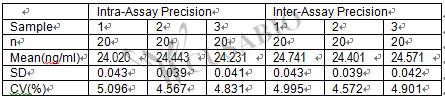
These standard curves are provided for demonstration only. A standard curve should be generated for each set of samples assayed.
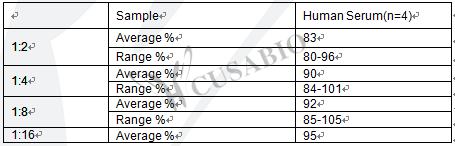
To assess the linearity of the assay, samples were spiked with high concentrations of human PAI-1 in various matrices and diluted with the Sample Diluent to produce samples with values within the dynamic range of the assay.