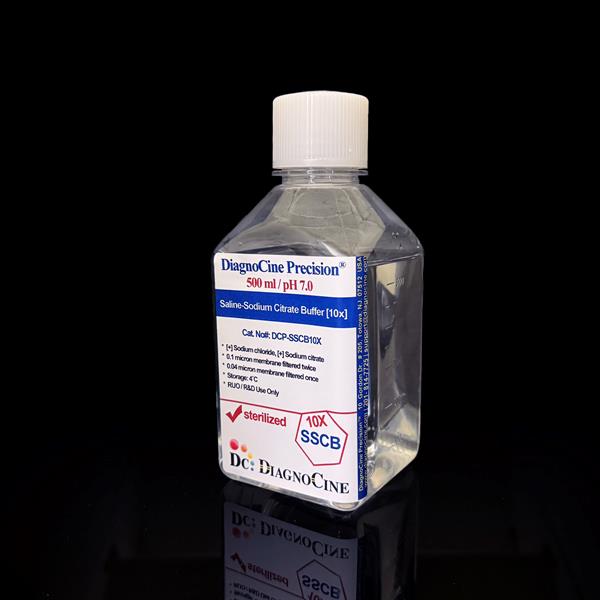
FluxMPS™, Plant-Adapted RIPA Lysis Buffer
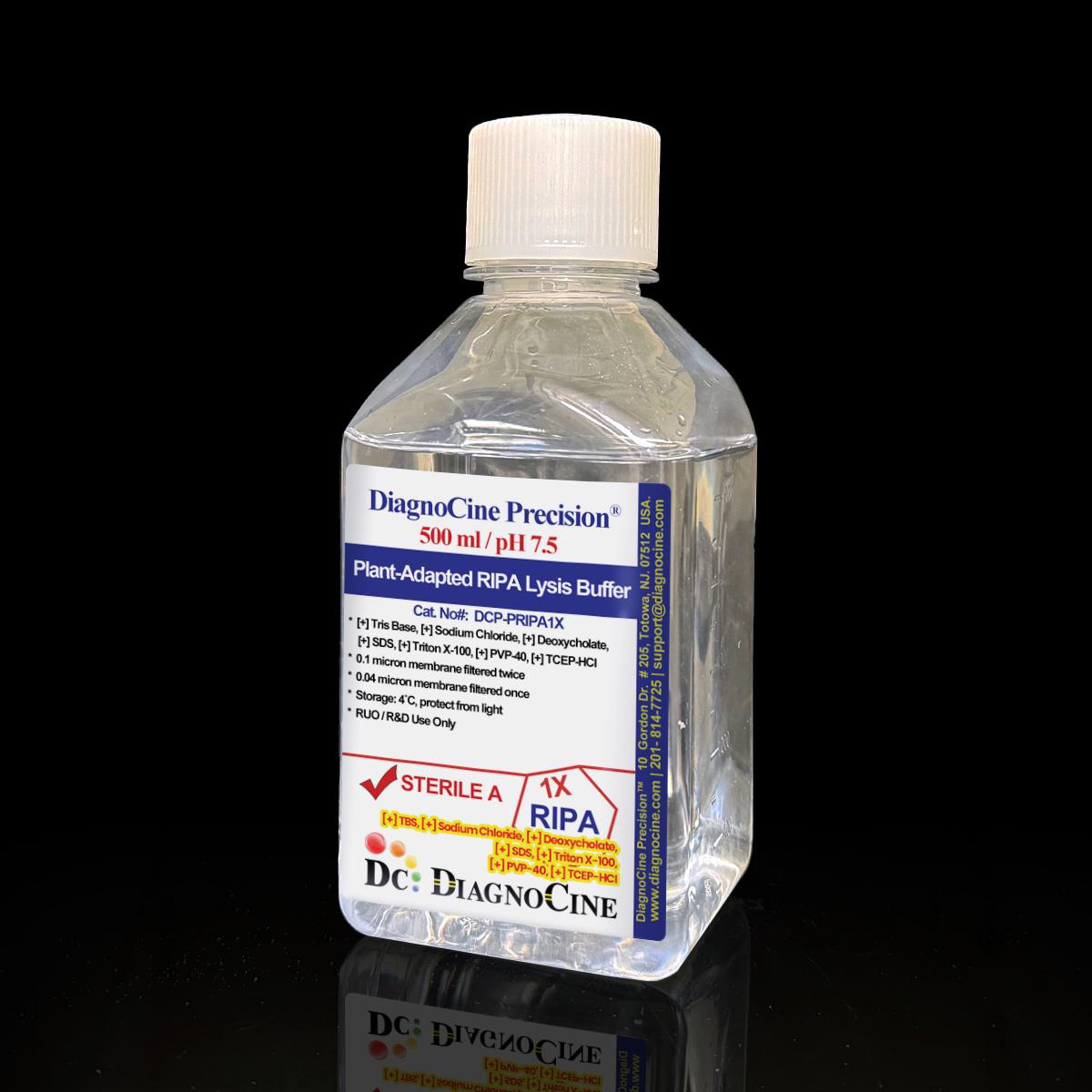
FluxMPS™ Plant-Adapted RIPA Lysis Buffer
A high-stringency, plant-optimized RIPA lysis buffer with PVP-40 for polyphenol binding and TCEP-HCl for stable protein reduction. Extracts total protein from leaves, roots, seeds, and other challenging plant tissues for Western blotting and immunoassays.
- 4-stage filtration process (0.1 µm → 0.04 µm, followed by sterile 0.1 µm → 0.04 µm)
- Strong RIPA formulation (ionic and nonionic detergents) efficiently solubilizes membrane, nuclear, and cytosolic proteins from plant tissues.
- PVP-40 binds polyphenolic compounds commonly found in plants, helping prevent protein crosslinking, aggregation, and interference in downstream assays.
- TCEP-HCl maintains proteins in a reduced state, stabilizing disulfide-containing proteins and improving consistency of Western blot band patterns.
- Compatible with SDS-PAGE, Western blotting, ELISA, and many enzyme assays (subject to detergent tolerance).
- Ultrapure Type 1 water (18.2 MΩ·cm)
- ISO Class 5 laminar-flow fill & finish
- Customizable formulation available upon request
- pH7.5
- AppearanceClear Solution
- Filtration0.1µm×2 + 0.04µm×2
- Storage2-8 °C
- Shelf Life1 year
Engineered for maximum purity & performance
Standard laboratory reagents filtered at 0.22 µm leave sub-micron particulates, mycoplasma, and aggregates that interfere with sensitive downstream applications. FluxMPS™ Plant-Adapted RIPA Lysis Buffer is manufactured under ISO 13485 quality systems with multi-stage ultra-filtration to eliminate these failure modes.
Triple-detergent RIPA backbone
Combines SDS (0.1%), sodium deoxycholate (0.5%), and Triton X-100 (1%) for efficient solubilization of membrane, nuclear, and cytosolic proteins.
PVP-40 polyphenol trap
1% PVP-40 binds polyphenolic compounds that cause protein crosslinking and aggregation in plant extracts.
TCEP-HCl reducing power
5 mM TCEP-HCl maintains proteins in a reduced state, stabilizing disulfide-containing targets for consistent Western blot patterns.
Western blot ready
Compatible with SDS-PAGE, Western blotting, ELISA, IP, and enzyme assays (subject to detergent tolerance).
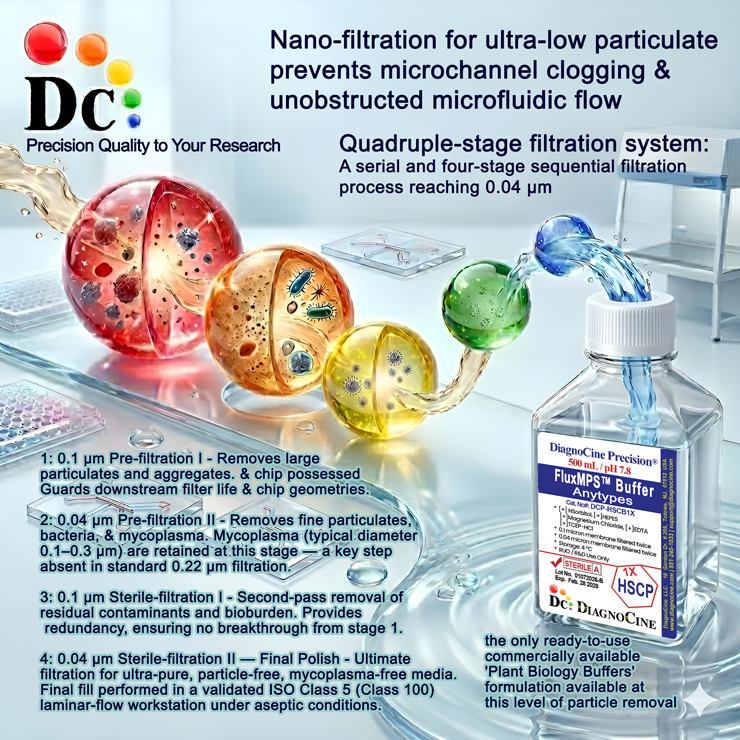
Quadruple-stage filtration system
A serial four-stage sequential filtration process reaching 0.04 µm—the only commercially available buffer at this level of particle removal.
-
1
0.1 µm Pre-filtration I
Removes large particulates and aggregates. Primary guard to extend downstream filter lifetime.
-
2
0.04 µm Pre-filtration II
Removes fine particulates, bacteria, and mycoplasma (0.1–0.3 µm)—a key step absent in standard 0.22 µm filtration.
-
3
0.1 µm Sterile-filtration I
Second-pass removal of residual contaminants and bioburden with full redundancy.
-
4
0.04 µm Sterile-filtration II — Final Polish
Ultimate filtration for particle-free, mycoplasma-free product. Final fill in validated ISO Class 5 laminar-flow workstation.
Performance vs. conventional reagents
Standard 0.22 µm single-pass filtration leaves particles in the 0.05–0.22 µm range. FluxMPS™ removes these contaminants for cleaner results and higher reproducibility.
Validated applications
- Protein extraction from fresh or frozen plant tissues (leaves, roots, stems, seeds, callus cultures).
- Preparation of lysates for: Western blotting (phospho- and total protein targets).
- Immunoprecipitation (depending on antibody and detergent compatibility).
- Enzyme assays and total protein quantification (with appropriate assay choice).
Composition & specifications
| Component |
|---|
| Tris base |
| Sodium Chloride |
| SDS |
| Deoxycholate |
| Triton X-100 |
| PVP-40 |
| TCEP-HCl |
Quality assurance & logistics
ISO 13485:2016 Certified
Manufactured under certified QMS with full traceability and lot documentation.
Made in USA
All manufacturing, QA testing, and final assembly at DiagnoCine Precision, Totowa, NJ.
Supporting literature
- Wang W, Vignani R, Scali M, Cresti M. A universal and rapid protocol for protein extraction from recalcitrant plant tissues for proteomic analysis. Electrophoresis. 2006;27(13):2782-2786.
- Carpentier SC, Witters E, Laukens K, et al. Preparation of protein extracts from recalcitrant plant tissues: an evaluation of different methods for two-dimensional gel electrophoresis analysis. Proteomics. 2005;5(10):2497-2507.