

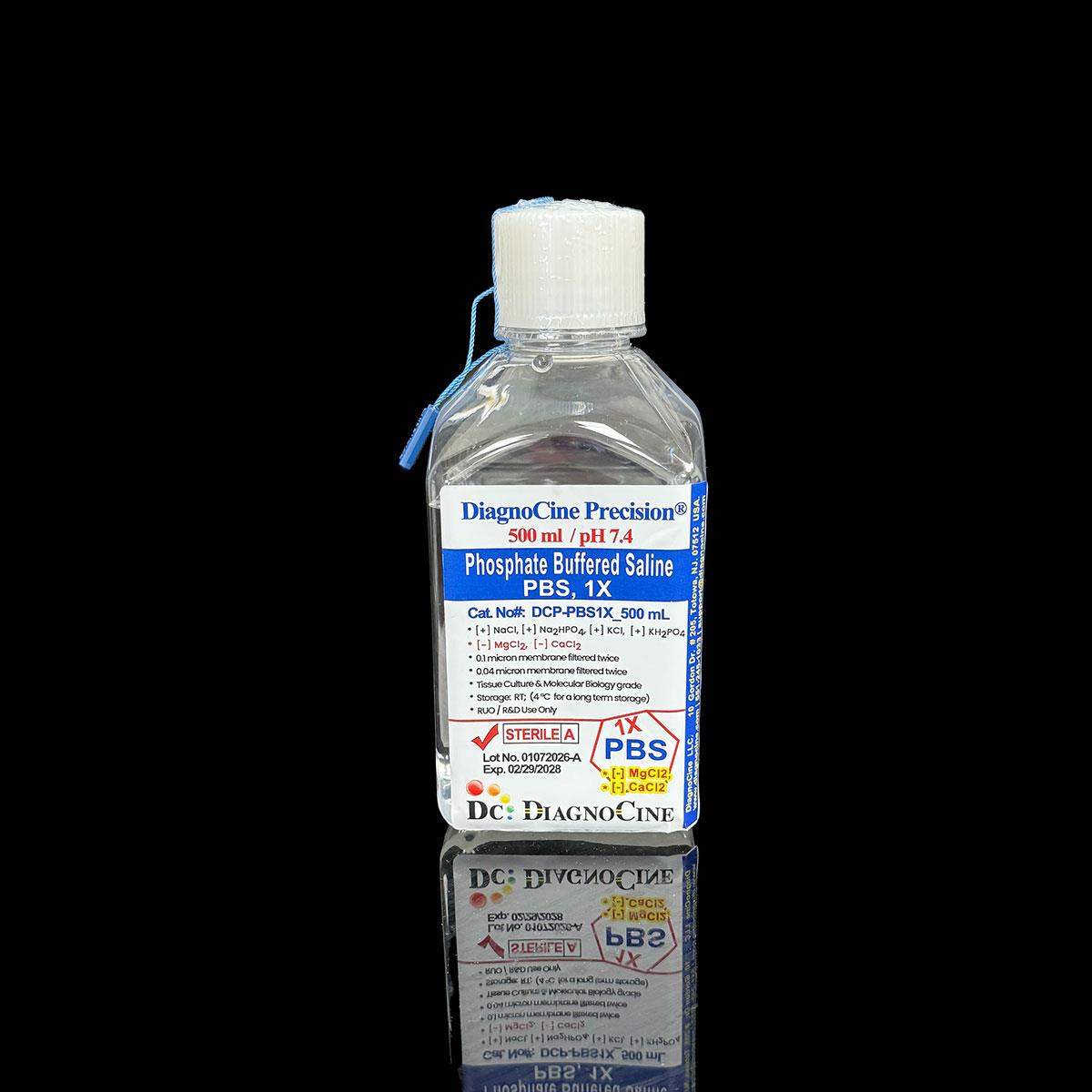

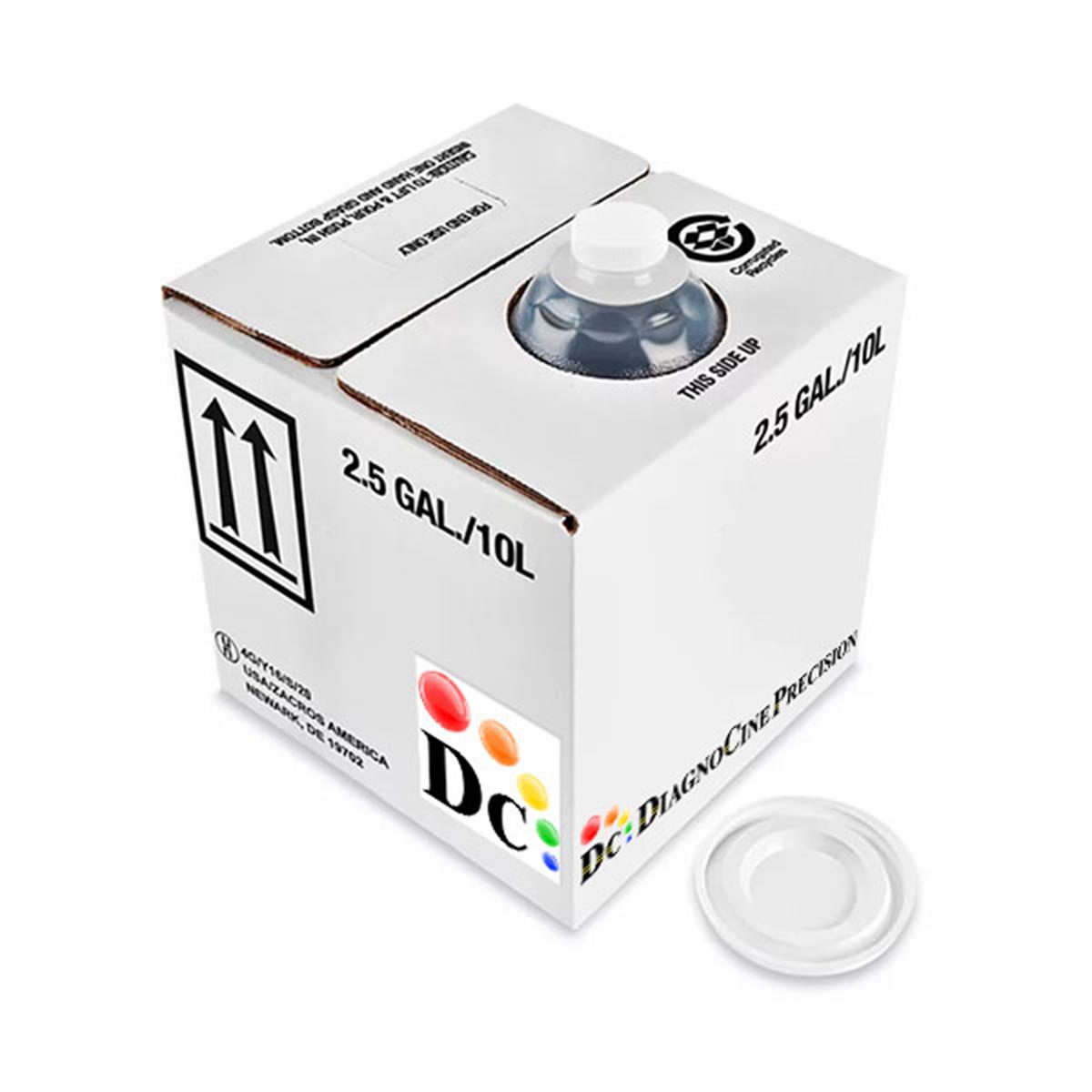
FluxMPS™ PBS, 1X (Phosphate Buffered Saline), Sterile — MPS-Grade Ultra-Filtered
FluxMPS™ PBS, 1X (Phosphate Buffered Saline), Sterile — MPS-Grade Ultra-Filtered
FluxMPS™ PBS 1X is an MPS-grade, Quadruple-stage ultra-filtered (0.1 µm ×2 + 0.04 µm ×2) phosphate buffered saline engineered for microphysiological systems (MPS), organ-on-a-chip (OoC), and precision microfluidic cell culture. Free of calcium, magnesium, proteases, DNase, RNase, and endonucleases, this ultra-low particulate formulation is approximately 5× cleaner than conventional 0.22 µm-filtered saline by particulate count — ensuring microchannel-safe isotonic buffering for demanding tissue-chip and lab-on-a-chip applications.
- Quadruple-stage filtration: 0.1 µm (pre-filter I) → 0.04 µm (pre-filter II) → 0.1 µm (sterile I) → 0.04 µm (final polish) — sub-mycoplasma polishing
- Endotoxin tested: < 0.05 EU/mL (USP <85> BET method), microchannel-safe
- Ca2+-free & Mg2+-free formulation — ideal for enzymatic cell dissociation & rinse workflows
- Protease (-) · DNase (-) · RNase (-) · Endonuclease (-) — nucleic-acid and protein integrity preserved
- ASTM Type 1 Ultrapure water (0.05 µS/cm, 18.2 MΩ·cm) as solvent base
- ISO Class 5 (Class 100) aseptic fill & finish in ISO 13485:2016-certified facility
- pH 7.4 ± 0.1 (25 °C) | Osmolality: 270–290 mOsm/kg
- pH, concentration (2X, 4X, 5X, 10X), and chemical/detergent/inhibitor/protein additive customization available — contact support@diagnocine.com
- FormulationCa2+-free, Mg2+-free, 1X
- NaCl concentration137 mM (8,006 mg/L)
- KCl concentration2.7 mM (201 mg/L)
- Na2HPO48 mM (1,136 mg/L)
- KH2PO42 mM (272 mg/L)
- pH (USP <791>)7.4 ± 0.1 at 25°C
- Osmolality (USP <785>)270–290 mOsm/kg
- Endotoxin (USP <85>)< 0.05 EU/mL
- Filtration0.04µm ×2 + 0.1µm ×2 (4-stage)
- Storage / Shelf LifeRT or 4°C / 24 months
Engineered where standard PBS fails
Conventional 0.22 µm-filtered PBS harbors subvisible particulates (USP <788> ≥10 µm), residual mycoplasma-scale debris, and undeclared endotoxin burden that silently corrupt chip-based assays, clog microfluidic channels, and confound biosensor readouts. FluxMPS™ PBS 1X eliminates these failure modes through a four-stage, sub-40-nanometer filtration architecture and ISO 13485 quality management — delivering the isotonic saline backbone that demanding MPS and OoC workflows require.[1,2]
Microchannel-Safe Purity
0.04 µm final-stage polishing reduces USP <788> ≥10 µm particulate counts to near-zero, preventing channel occlusion in microfluidic OoC and MPS devices.[3]
Ca2+ / Mg2+-Free by Design
Formulated without CaCl2 and MgCl2 to enable protease-based cell dissociation, chip re-seeding, and wash protocols without ion-mediated cell-adhesion interference.
Ultrapure Type 1 Water
Prepared with ASTM Type 1 ultrapure water (0.05 µS/cm; 18.2 MΩ·cm) meeting USP <85> resistivity standards — the lowest ionic background achievable.[4]
Low Background for Imaging
Ultra-low particulate count and absence of colored additives (phenol-red free) supports confocal microscopy, live-cell TEER, and optical biosensor workflows with minimal background scatter.[5]
Isotonic, Defined Composition
137 mM NaCl · 2.7 mM KCl · 8 mM Na2HPO4 · 2 mM KH2PO4 — precisely balanced for physiological osmolality (270–290 mOsm/kg) and pH 7.4, per-lot QC verified.
Customization on Demand
Custom pH, concentrated formats (2X, 4X, 5X, 10X), and addition of detergents, inhibitors, or proteins available on request. Contact support@diagnocine.com.
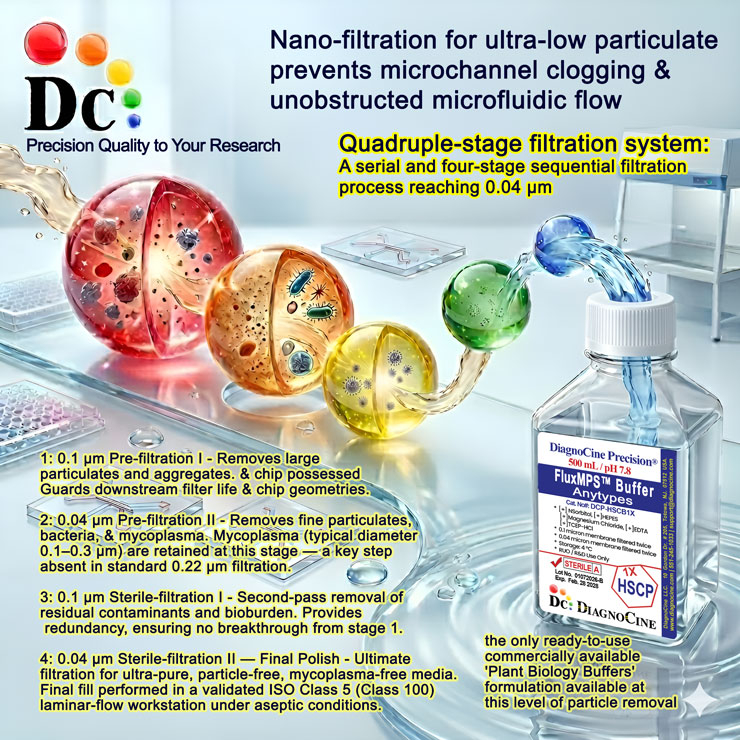
Quadruple-stage filtration system
FluxMPS™ PBS 1X is the only ready-to-use phosphate buffered saline processed through a proprietary four-stage sub-40-nanometer filtration cascade — delivering unprecedented particulate purity for microfluidic, organ-on-a-chip, and microphysiological system workflows where conventional 0.22 µm-filtered saline introduces unacceptable contamination risk.
-
1
0.1 µm Pre-filtration I — Bulk Particulate Removal
First-pass 0.1 µm membrane removes large aggregates, cell debris, and coarse particulates from the bulk solution, protecting downstream filter life and ensuring uniform feed quality into the finer stages.
-
2
0.04 µm Pre-filtration II — Sub-Mycoplasma Polishing
40-nanometer membrane retains fine particulates, bacteria, and mycoplasma-scale contaminants (smallest mycoplasma ~200 nm), dramatically reducing bioburden before the sterile-filtration stages.[6]
-
3
0.1 µm Sterile-filtration I — Redundancy Pass
Second-pass 0.1 µm sterile filtration provides redundant bioburden reduction and confirms upstream filter integrity before the final polishing stage.
-
4
0.04 µm Sterile-filtration II — Final Polish & Aseptic Fill
Ultimate 40-nanometer membrane delivers the lowest achievable particulate burden and sub-mycoplasma sterility assurance, followed immediately by ISO Class 5 (Class 100) aseptic fill & finish. This final stage is the hallmark of FluxMPS™ purity architecture.
Performance vs. conventional PBS
Conventional 0.22 µm-filtered PBS typically contains hundreds to thousands of USP <788> subvisible particles per mL. FluxMPS™ PBS 1X passes through two 0.04 µm membranes and two 0.1 µm membranes, delivering approximately 5× fewer particles ≥10 µm and zero detectable mycoplasma-scale contaminants — critical for fragile MPS and OoC microchannels.
0.22 µm PBS by particulate count
sub-mycoplasma polishing
© Diagnocine® — DCP-PBS1X
Broad-spectrum buffer for precision cell culture & microfluidics
FluxMPS™ PBS 1X is a versatile MPS-grade balanced salt solution validated for use in tissue culture washing, cell dissociation prep, microfluidic chip perfusion, transporting cells and tissues, diluting cells for counting, and preparing laboratory reagents. Its ultra-low particulate burden and defined ionic composition make it the preferred rinse buffer for organ-on-a-chip (OoC), body-on-a-chip (BoC), and lab-on-a-chip (LoC) platforms.
Automated Bioreactors & Robotics
For automated perfusion bioreactors, robotic liquid-handling platforms, and integrated organ-on-a-chip systems, an optional 0.01 µm (10 nm) ultra-filtered variant of FluxMPS™ PBS 1X is available on inquiry. This nano-filtered grade provides the ultimate ionic buffer solution for sensitive fluidic circuits and precision dispensing robotics.
- Total Particulate Exclusion: 10 nm filtration removes colloidal silica, protein aggregates, and nanoparticulate contaminants incompatible with automated valve trains.
- Valve & Sensor Protection: Sub-10-nm particulate burden prevents micro-valve fouling, optical sensor drift, and peristaltic pump degradation in long-duration perfusion runs.
- Extended Perfusion Stability: Consistent ionic strength and near-zero bioburden sustain stable on-chip environments across multi-week organ-on-a-chip experiments.
Inquiry Required: The 0.01 µm (10 nm) grade requires a custom order. Contact support@diagnocine.com to request nano-filtered PBS 1X for automated bioreactor and robotic applications.
Micro Physiological System (MPS) & Chip
Ultra-filtered isotonic saline for chip priming, cell washing, and buffer exchange in MPS, organ-on-a-chip, and tissue-chip devices. Prevents channel fouling and maintains physiological osmolality.[1]
Cell Washing & Dissociation
Ca2+/Mg2+-free formulation for rinsing adherent cells before trypsin or accutase treatment. Widely used for MCF-7, HeLa, HEK293, and other adherent lines prior to passage.[2]
iPSC & Primary Cell Handling
Isotonic, ion-controlled wash buffer for iPSC-derived models, primary hepatocytes, and sensitive stem cell cultures requiring stringent osmolality control during transfer and plating steps.
Endothelial & Primary Cell Wash
Particulate-free PBS for perfusing vascular-on-a-chip systems and washing HUVECs, HAECs, and primary cells without introducing exogenous protein or particulate signals.[7]
Reagent Preparation & Dilutions
Tissue Culture & Molecular Biology grade PBS for diluting cells prior to counting, preparing reagent stocks, protein dilutions, and immunofluorescence wash steps.
Microscopy & Optical Sensing
Ultra-low particulate, colorless buffer minimizes background in confocal, TIRF, and widefield microscopy. Compatible with biosensor arrays and TEER monitoring on chip platforms.[5]
Complete technical parameter profile
Every lot of FluxMPS™ PBS 1X is released against a comprehensive QC panel covering physical, chemical, sterility, purity, and safety parameters. CoA available upon request.
| Parameter | Specification |
|---|---|
| Formulation | 1X PBS — Ca2+-free, Mg2+-free |
| Appearance | Sterilized Liquid, Clear, Colorless |
| pH USP <791> | 7.4 ± 0.1 at 25°C |
| Osmolality USP <785> | 270–290 mOsm/kg |
| NaCl | 137 mM / 8,006 mg/L |
| KCl | 2.7 mM / 201 mg/L |
| Na2HPO4 | 8 mM / 1,136 mg/L |
| KH2PO4 | 2 mM / 272 mg/L |
| Parameter | Specification |
|---|---|
| Endotoxin USP <85> BET | < 0.05 EU/mL |
| Sterility USP <71> | No growth (14-day) |
| Mycoplasma USP <63> equiv. | Not detected |
| Particulate ≥10 µm USP <788> | ≤ 25 particles/mL |
| Particulate ≥25 µm USP <788> M2 | ≤ 3 particles/mL |
| Water purity | ASTM Type 1, 0.05 µS/cm |
| Manufacturing std. | ISO 13485:2016 · cGMP-aligned |
| Fill environment | ISO Class 5 (Class 100) |
| Parameter | Specification |
|---|---|
| Storage temperature | Room Temperature; 4°C recommended for long-term storage |
| Freeze-thaw | Avoid repeated freeze-thaw cycles |
| Shelf life | 24 months from date of manufacture |
| Shipping condition | Ambient / Cold Pack (optional) |
| CO2 requirement | Not required (non-bicarbonate buffer) |
| Parameter | Specification |
|---|---|
| Raw material grade | Reagent-grade / Tissue culture & Molecular Biology grade |
| Traceability | Full lot-level CoA with raw material certs |
| Manufacturing QMS ISO 13485 | ISO 13485:2016-certified |
| Regulatory alignment | 21 CFR Part 820 (cGMP) aligned · CE-approved suppliers |
| Production method | Sterile-filtered, micro-batch, ISO Class 5 fill |
| Intended use | For Research Use Only (RUO) — not for clinical/therapeutic use |
Full composition (mg/L)
FluxMPS™ PBS 1X contains four precisely measured inorganic salt components prepared in ASTM Type 1 ultrapure water. All concentrations are expressed as mg/L at 1X working concentration; per-lot release is verified by gravimetric and osmometric QC.
| Component | CAS Number | mg/L |
|---|---|---|
| INORGANIC SALTS | ||
| Sodium Chloride (NaCl) | 7647-14-5 | 8006 |
| Potassium Chloride (KCl) | 7447-40-7 | 201 |
| Sodium Phosphate dibasic (Na2HPO4) | 7558-79-4 | 1136 |
| Potassium Phosphate monobasic (KH2PO4) | 7778-77-0 | 272 |
| Component | CAS Number | mg/L |
|---|---|---|
| AMINO ACIDS | ||
| PBS 1X does not contain amino acids. This is a balanced salt buffer formulation only. | ||
| Component | CAS Number | mg/L |
|---|---|---|
| VITAMINS | ||
| PBS 1X does not contain vitamins. This is a balanced salt buffer formulation only. | ||
| OTHERS | ||
| No additional components. Ultrapure Type 1 water (ASTM 0.05 µS/cm) is used as the solvent; no phenol red, antibiotics, or additives are included in the standard formulation. | ||
ISO 13485-certified manufacturing & compliance stack
FluxMPS™ PBS 1X is manufactured under ISO 13485:2016-certified quality management, 21 CFR Part 820 (cGMP)-aligned processes, and CE-approved supplier qualifications at DiagnoCine Precision, Totowa, New Jersey, USA. Final packaging, quality assurance, and testing are conducted at the DiagnoCine R&D and Quality Testing Center.
ISO 13485:2016 QMS
Full quality management system certification from raw material intake through final release. Every lot traceable to audited raw material certificates and manufacturing batch records.
Ultrapure Type 1 Water
ASTM Type 1 ultrapure water (0.05 µS/cm; 18.2 MΩ·cm) meeting USP <85> resistivity standards. Zero-ionic-background solvent for salt dissolution and final formulation.
ISO Class 5 Fill & Finish
All final filling performed in a controlled ISO Class 5 (Class 100) cleanroom environment, ensuring zero particulate introduction during bottling and sealing operations.
Micro-Batch Precision
Small-batch production at DiagnoCine Precision (Totowa, NJ) allows per-lot QC verification of all parameters — no large-batch blending that dilutes quality control resolution.
Endotoxin — USP <85> BET
Bacterial endotoxin test (Limulus Amebocyte Lysate) performed on every lot. Release specification: < 0.05 EU/mL. Results reported on CoA.
Particulate — USP <788> Method 2
Light-obscuration particle count for subvisible particulates ≥10 µm and ≥25 µm per mL, confirming microchannel-safe purity levels on every production lot.
Osmolality — USP <785>
Osmometric measurement of every lot confirms 270–290 mOsm/kg physiological range, ensuring isotonic compatibility for all cell types and chip platforms.
Documentation & CoA
Full Certificate of Analysis (CoA) issued per lot, including pH, osmolality, endotoxin, sterility, particulate counts, and raw material traceability. Available at support@diagnocine.com.
How DCP-PBS1X compares
FluxMPS™ PBS 1X is benchmarked against conventional 0.22 µm-filtered PBS and standard laboratory-grade PBS to illustrate the purity and quality advantages critical for MPS, OoC, and precision microfluidic workflows.
| Parameter | DCP-PBS1X (FluxMPS™) | Conventional PBS (0.22 µm filtered) | Standard Lab-Grade PBS |
|---|---|---|---|
| Ca2+ / Mg2+-free | check_circle Yes — standard | check_circle Often available | cancel Often includes Ca/Mg |
| Final filtration pore size | 0.04 µm (40 nm) | 0.22 µm | 0.22 µm or none |
| Number of filtration stages | 4 (Quadruple) | 1 | 1 or none |
| Mycoplasma barrier filtration | check_circle Yes (0.04 µm ×2) | cancel No (0.22 µm only) | cancel No |
| Endotoxin specification | < 0.05 EU/mL | Often < 1.0 EU/mL or unspecified | Often unspecified |
| USP particulate compliance <788> | check_circle Tested every lot | cancel Rarely tested | cancel Not tested |
| Water quality | ASTM Type 1 (0.05 µS/cm) | Varies | Varies / Deionized |
| Manufacturing QMS | ISO 13485:2016 | Varies | None / ISO 9001 |
| Microfluidic channel compatibility | check_circle Validated | cancel Risk of fouling | cancel Not recommended |
| Custom formulation | check_circle pH, conc., additives | cancel Standard only | cancel Standard only |
Frequently asked questions
Answers to the most common technical and application questions about FluxMPS™ PBS 1X (DCP-PBS1X).
Supporting literature
Peer-reviewed publications supporting the application of MPS-grade PBS in organ-on-a-chip, microfluidic perfusion, and precision cell culture contexts.
- Bhatia S.N. & Ingber D.E. Microfluidic organs-on-chips. Nature Biotechnology 32, 760–772 (2014).doi:10.1038/nbt.2989
- Huh D. et al. Reconstituting organ-level lung functions on a chip. Science 328, 1662–1668 (2010).doi:10.1126/science.1188302
- Bhimji A. et al. Particulate contamination in intravenous solutions: what is the clinical significance? Intensive Care Medicine 37, 2p (2018). — [Subvisible particulate risk context for microfluidic buffers]
- ASTM D5391-99(2017) Standard Test Method for Electrical Conductivity and Resistivity of a Flowing High-Purity Water Sample. ASTM International (2017).
- Deosarkar S.P. et al. A novel dynamic neonatal blood–brain barrier on a chip. PLOS ONE 10, e0145499 (2015).doi:10.1371/journal.pone.0145499
- Lam M.T. et al. Mycoplasma detection in cell culture using a 0.04-micron filtration approach. Biologicals 44, 201–207 (2016). — [Mycoplasma retention by 40 nm membranes]
- Jeon J.S. et al. Human 3D vascularized organotypic microfluidic assays to study breast cancer cell extravasation. PNAS 112, 214–219 (2015).doi:10.1073/pnas.1417115112
- USP <788> Particulate Matter in Injections. United States Pharmacopeia, 43rd ed. (2020).
- USP <85> Bacterial Endotoxins Test. United States Pharmacopeia, 43rd ed. (2020).
- Kimura H. et al. An integrated microfluidic system for long-term perfusion culture and on-line monitoring of intestinal tissue models. Lab on a Chip 18, 2023–2031 (2018).doi:10.1039/C8LC00166A