FluxMPS™ | Microfluidic-Ready, Honda Nuclei Isolation Buffer
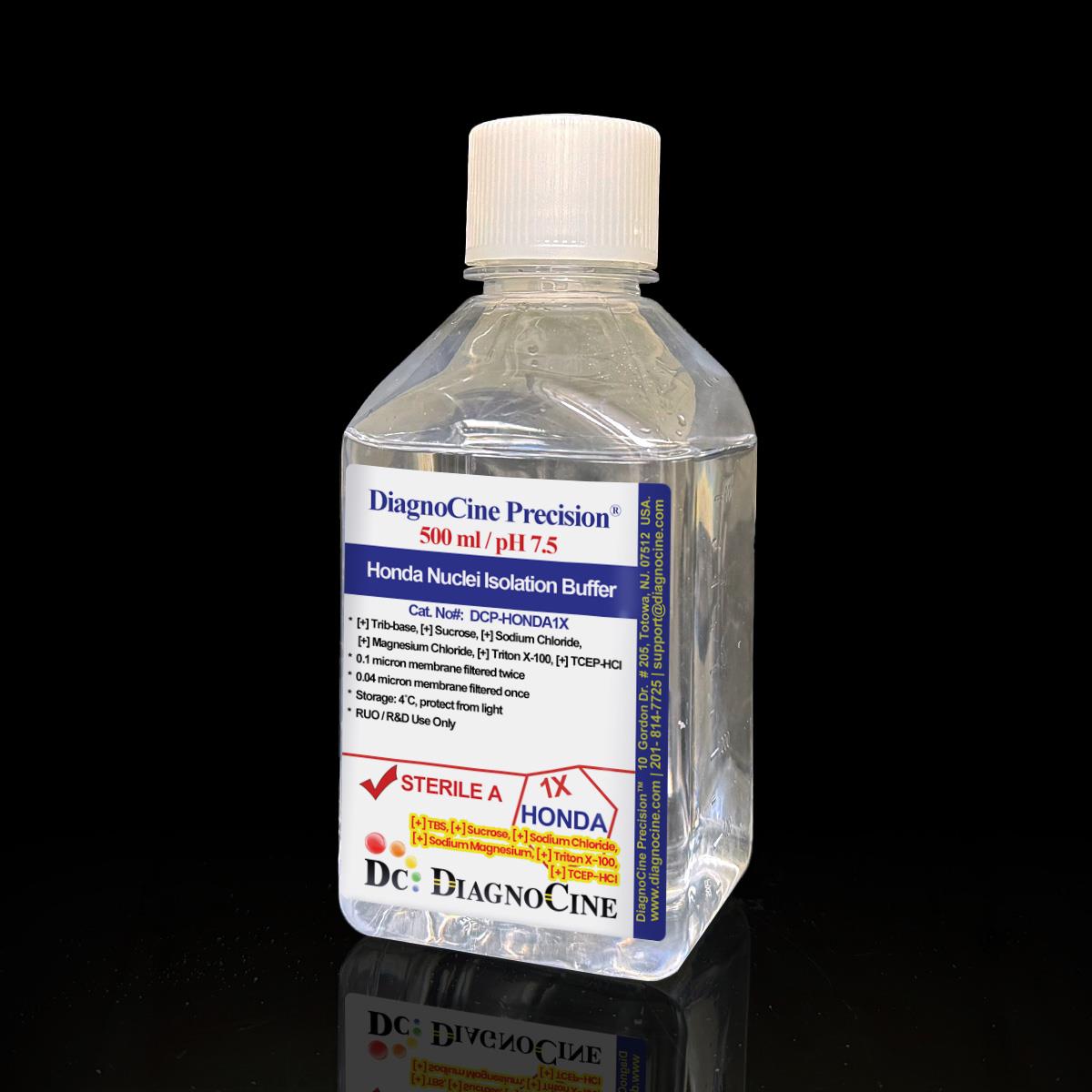
FluxMPS™ Honda Nuclei Isolation Buffer
A ready-to-use Honda Nuclei Isolation Buffer (Honda NIB) optimized for gentle, high-yield isolation of intact nuclei from plant tissues. Combines sucrose-based osmotic support with mild detergent lysis, TCEP-HCl reducing agent, and divalent cations to preserve nuclear structure.
- 4-stage filtration process (0.1 µm → 0.04 µm, followed by sterile 0.1 µm → 0.04 µm)
- Sucrose and MgCl₂ maintain nuclear integrity while 0.1% Triton X-100 selectively disrupts plasma membranes with minimal damage to nuclei.
- TCEP-HCl provides robust, long-lasting reduction of disulfide bonds without the strong odor and rapid oxidation associated with β-mercaptoethanol.
- Tris base and NaCl support physiological pH and ionic strength, helping preserve chromatin and nuclear protein complexes.
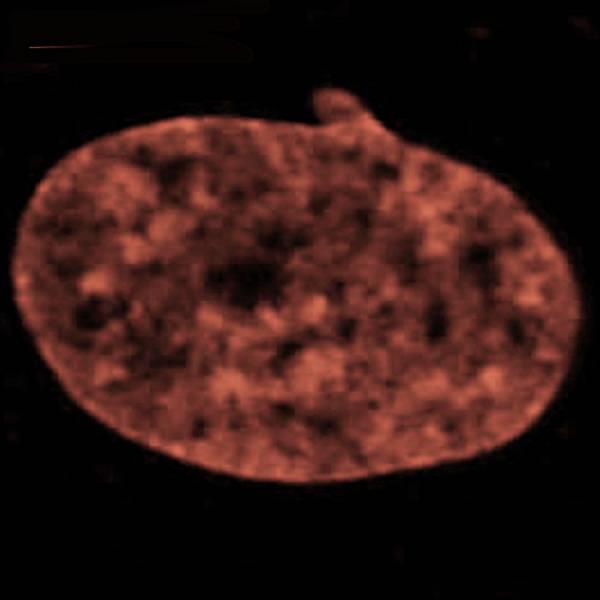
- Isolated nuclei are suitable for nuclear protein extraction, Western blotting, chromatin assays, DNA/RNA extraction from nuclei, and nuclei-based sequencing workflows (after appropriate cleanup).
- Ultrapure Type 1 water (18.2 MΩ·cm)
- ISO Class 5 laminar-flow fill & finish
- Customizable formulation available upon request
- pH7.5
- AppearanceClear Solution
- Filtration0.1µm×2 + 0.04µm×2
- Storage2-8 °C
- Shelf Life1 year
Engineered for maximum purity & performance
Standard laboratory reagents filtered at 0.22 µm leave sub-micron particulates, mycoplasma, and aggregates that interfere with sensitive downstream applications. FluxMPS™ Honda Nuclei Isolation Buffer is manufactured under ISO 13485 quality systems with multi-stage ultra-filtration to eliminate these failure modes.
Sucrose osmotic support
0.4 M sucrose maintains nuclear integrity during homogenization and pelleting, minimizing swelling and rupture.
Mild Triton X-100 lysis
0.1% Triton X-100 selectively disrupts plasma membranes with minimal damage to nuclear envelopes.
TCEP-HCl reducing agent
2 mM TCEP-HCl provides stable, long-lasting disulfide bond reduction without the odor of β-mercaptoethanol.
Omics-ready nuclei
Isolated nuclei are suitable for nuclear protein extraction, chromatin assays, DNA/RNA extraction, and single-nucleus sequencing workflows.
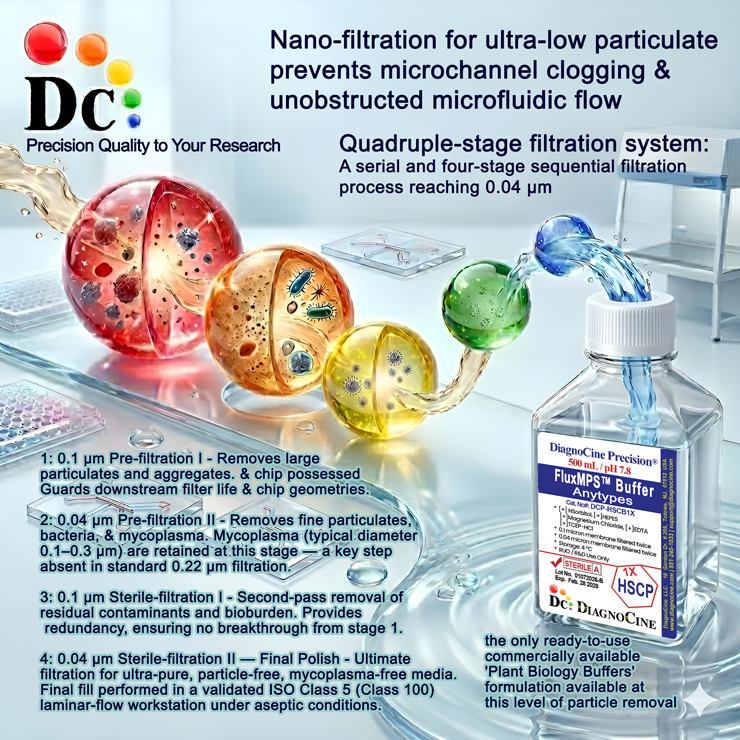
Quadruple-stage filtration system
A serial four-stage sequential filtration process reaching 0.04 µm—the only commercially available buffer at this level of particle removal.
-
1
0.1 µm Pre-filtration I
Removes large particulates and aggregates. Primary guard to extend downstream filter lifetime.
-
2
0.04 µm Pre-filtration II
Removes fine particulates, bacteria, and mycoplasma (0.1–0.3 µm)—a key step absent in standard 0.22 µm filtration.
-
3
0.1 µm Sterile-filtration I
Second-pass removal of residual contaminants and bioburden with full redundancy.
-
4
0.04 µm Sterile-filtration II — Final Polish
Ultimate filtration for particle-free, mycoplasma-free product. Final fill in validated ISO Class 5 laminar-flow workstation.
Performance vs. conventional reagents
Standard 0.22 µm single-pass filtration leaves particles in the 0.05–0.22 µm range. FluxMPS™ removes these contaminants for cleaner results and higher reproducibility.
Validated applications
- Nuclear protein extraction and analysis.
- Chromatin and epigenetic studies.
- Nuclei-based DNA and RNA extraction.
- Nuclei preparation for single-nucleus or bulk omics workflows (after method-specific optimization).
Composition & specifications
| Component |
|---|
| Sucrose |
| MgCl₂ |
| Tris base |
| Sodium Chloride |
| Triton X-100 |
| TCEP-HCl |
Quality assurance & logistics
ISO 13485:2016 Certified
Manufactured under certified QMS with full traceability and lot documentation.
Made in USA
All manufacturing, QA testing, and final assembly at DiagnoCine Precision, Totowa, NJ.
Supporting literature
- Honda SI, Hongladarom T, Laties GG. A new isolation medium for plant organelles. J Exp Bot. 1966;17(3):460-472.
- Sikorskaite S, Rajamaki ML, Baniulis D, et al. Protocol: Optimised methodology for isolation of nuclei from leaves of species in the Solanaceae and Rosaceae families. Plant Methods. 2013;9:31.
- Deal RB, Henikoff S. The INTACT method for cell type-specific gene expression and chromatin profiling in Arabidopsis thaliana. Nat Protoc. 2011;6(1):56-68.