Anti-Sup35/PSI+ (S.cerevisiae) antibody, rabbit polyclonal IgG
Product#: FNK-62-300
$421.11
Availability:
Ships in 1-2 Weeks
Anti-Sup35/PSI+ (S.cerevisiae) antibody, rabbit polyclonal IgG
General information
| Cat. No. | :FNK-63-300 |
| Size | :100 ul |
| Antigen Species | :Yeast |
| Host Species | :Rabbit |
| Purification | :Affinity Purified |
| Label | :Unlabeled |
| Reactivity | :S. cerevisiae Sup35, not tested with other species |
| Immunogen | :Synthetic peptide corresponding to a.a. 494-507 of Sup35 |
| Product | :Rabbit polyclonal antibody, purified IgG fraction |
| Application | :Western blotting (1,000~2,000 fold dilution). Not tested for other applications. |
| Storage | :-20℃ (for longer period, -70℃) |
| Form | :Purified IgG 4 mg/ml in PBS, 50% glycerol, 0.09% sodium azide, |
| Data Link | :SGD SUP35/YDR172W, UniProtKB P05453 (ERF3_YEAST) |
Description
Sup35 protein of S. cerevisiae is the translation termination factor eRF3. The altered conformation of this protein generates the [PSI+] prion phenotype . In this state, a dominant cytoplasmically inherited protein aggregates are formed which sequester the normal function of Sup35 thereby nonsense suppressor phenotype is created . The molecular chaperon Hsp104 is necessary for the formation and maintenance of the aggregates.
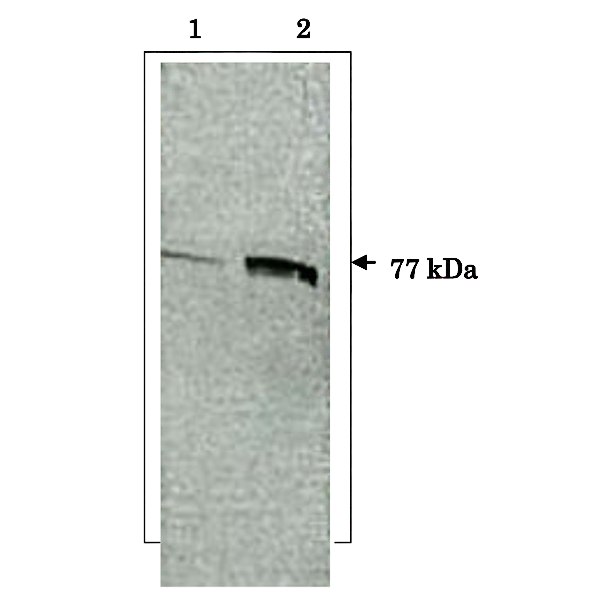 |
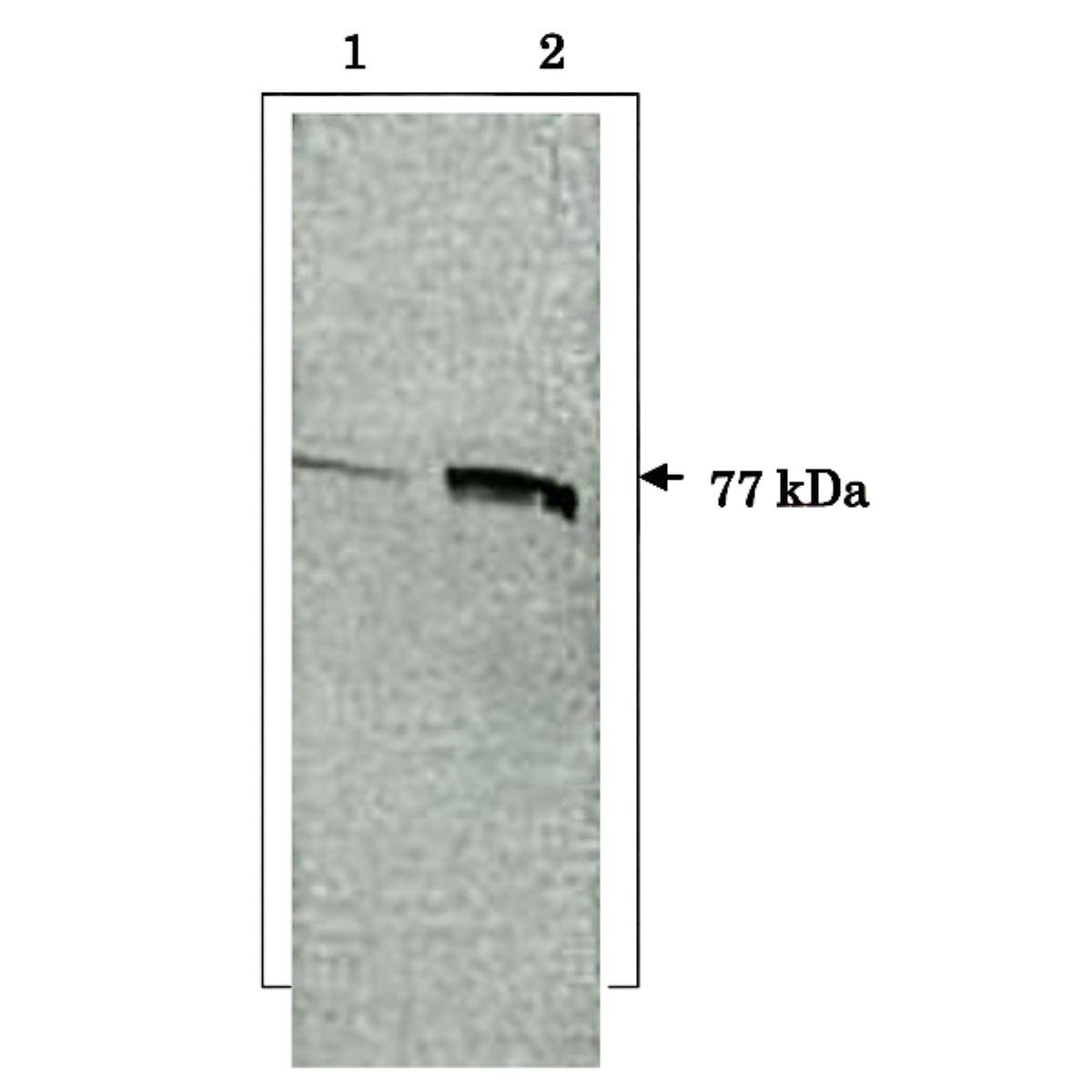
Figure. Identification of Sup35 protein in crude extracts of S. cerevisiae by western blotting with anti-Sup35 antibody.
Anti-Sup35 antibody was used at 1/2,000 dilution. Sup35 protein was identified at 77 kDa position (Expected molecular mass of Sup35 is 76.6 kDa) . |
Reference
This antibody was used in the following ref.erence.
- Kimura Y et al “The role of pre-existing aggregates in Hsp104-dependent polyglutamine aggregate formation and epigenetic change of yeast prions” Genes to Cells 9: 685-696 (2004)