Anti-SARS CoV spike glycoprotein antibody, mouse monoclonal (3A2)
Product#: FNK-65-101
$211.54
Availability:
Ships in 1-2 Weeks
Anti-SARS CoV spike glycoprotein antibody, mouse monoclonal (3A2)
General Information
| Cat. No. | :FNK-65-101 |
| Size | :50 ug |
| Host Species | :Mouse |
| Isotype | :IgG2b (κ) |
| Clone | :3A2 |
| Immunogen | :Formaldehyde inactivated SARS Coronavirus. |
| Reactivity | :Reacts with spike protein of SARS-CoV but does not with SARS-CoV2 and MERS virus. |
| Purification | :ProteinA-purified IgG |
| Application |
|
| Storage | :Ship at 4℃ or -20℃ and store at -20℃. Do not freeze |
| Form | :1 mg/ml in PBS (-), 50% glycerol, filter-sterilized, azide free |
| Data Link | :UniProKB: P59594 |
Background
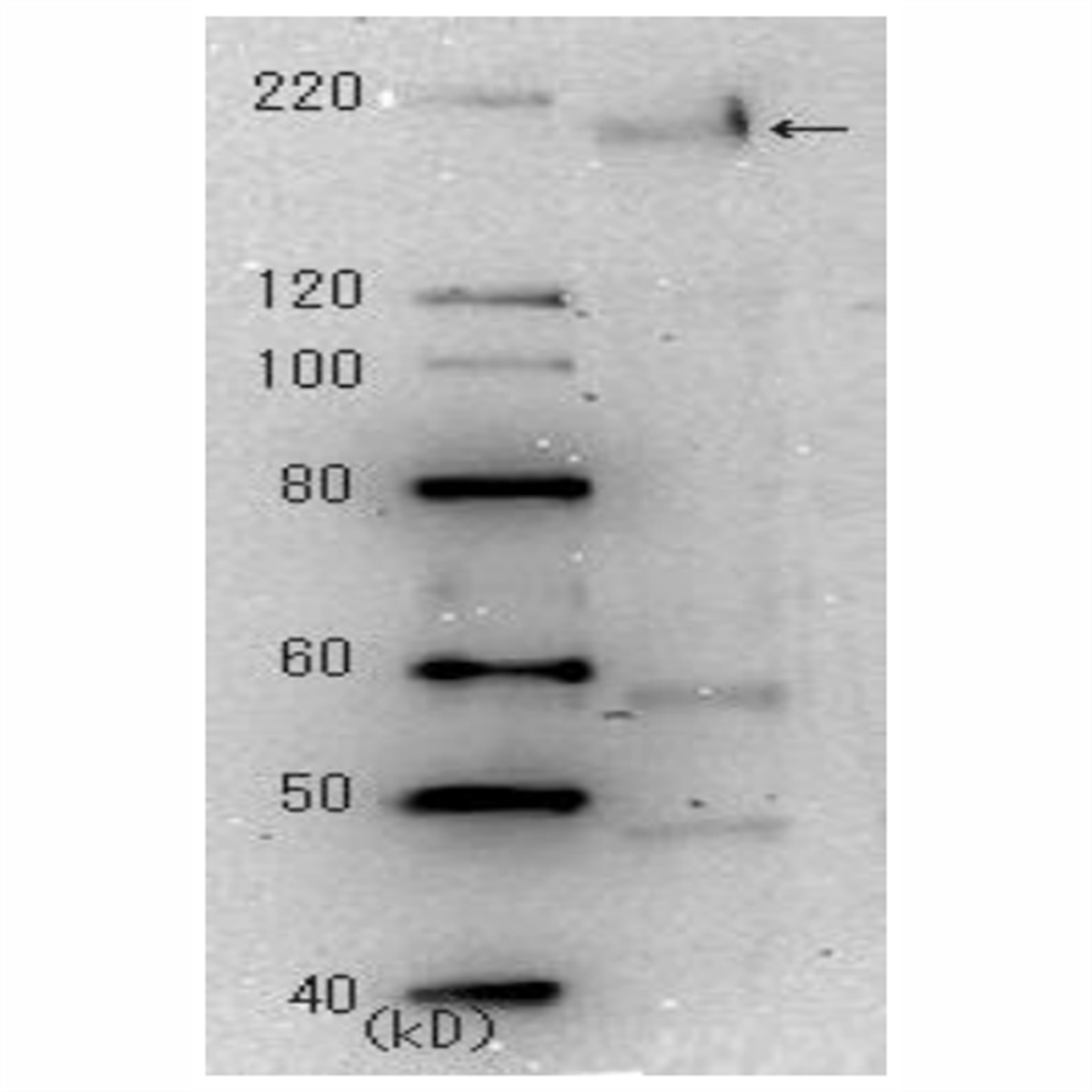
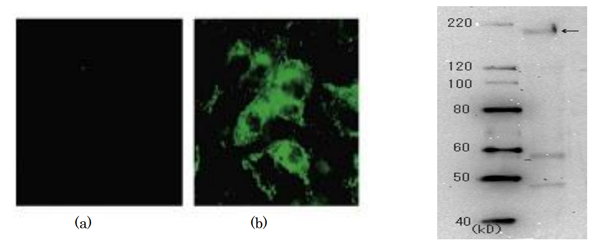
A novel type of coronavirus has been identified as the causative agent of SARS (Severe Acute Respiratory Syndrome). Spike glycoprotein is essential for the infection and directly binds to the virus receptor, ACE2 (Angiotensin-Converting Enzyme 2). The spike protein consisting of 1181 amino acids, which migrates at 200 kDa position on SDS-PAGE (Fig. 2), the larger size due to its glyco-chains.
 |
|
| Fig 1. Identification of the spike antigen in the SARS virus infected cells by indirect immunostaining with 3A2 antibody at 1/1,000 dilution. (a) Uninfected Vero E6 cells. | Fig 2. Identification of the spike glycoprotein in the crude extract of the SARS virus infected cells by Western blotting using 3A2 antibody at 1/10,000 dilution. |
References
This product has been used in the following Publications.
- Yamate M et al. Establishment of Vero E6 cell clones persistently infected with severe acute respiratory syndrome coronavirus. Microbes Infect. 2005 Dec;7(15):1530-40.PMID: 16269264 IF, FC
- Yamashita M et al. Susceptibility of human and rat neural cell lines to infection by SARS-coronavirus. Biochem Biophys Res Commun. 2005 Aug 19;334(1):79-85. PMID:15992768. IF
- Li GM et al. Reduced incorporation of SARS-CoV spike protein into viral particles due to amino acid substitutions within the receptor binding domain. Jpn J Infect Dis. 2008 Mar;61(2):123-7. PMID:18362400 WB, Neutralization