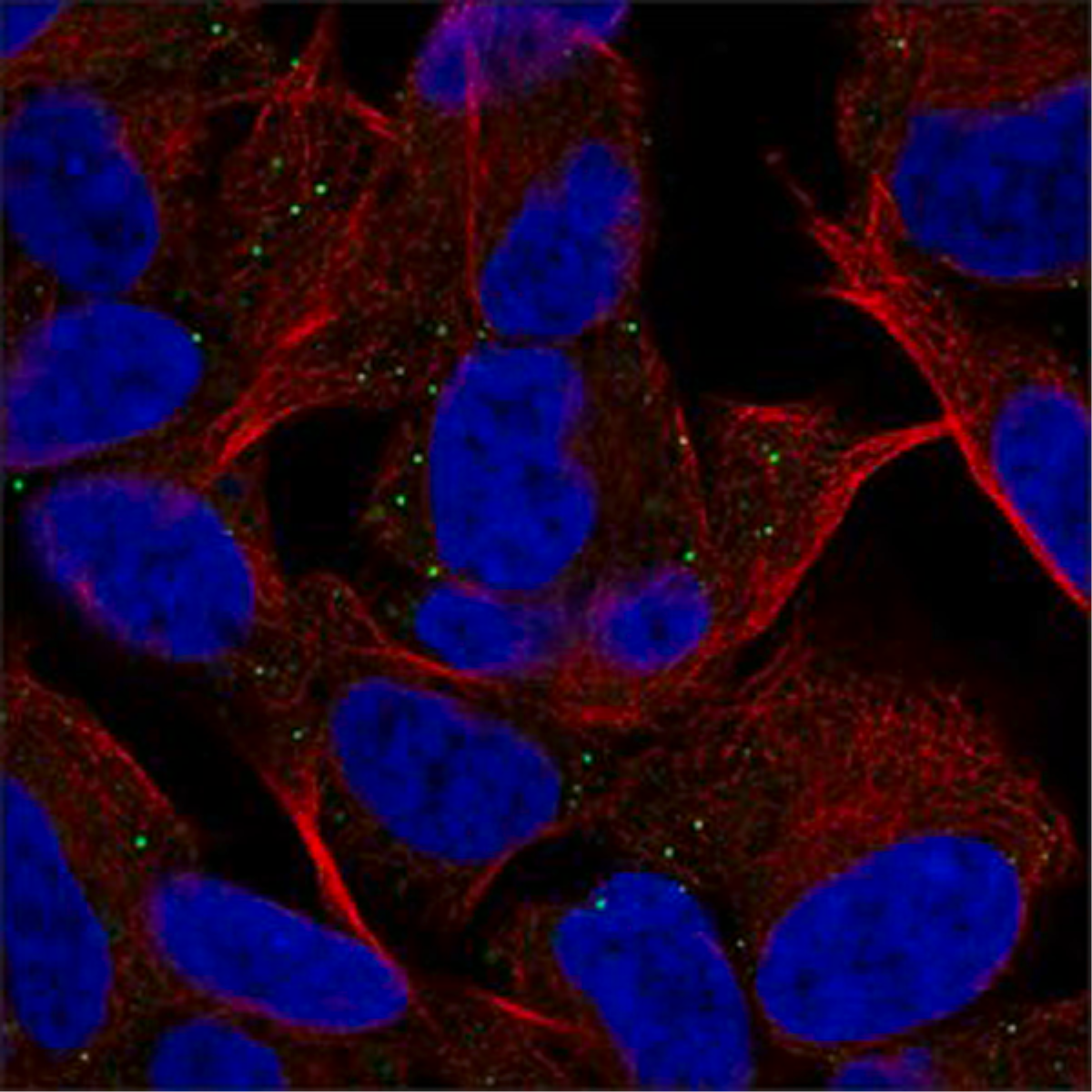
Anti-Mouse MYT1L (KIAA1106) Polyclonal Antibody, Rabbit
Product#: FNK-MKA1106AF
$495.39
Availability:
Ships in 1-2 Weeks
Anti-Mouse MYT1L (KIAA1106) Polyclonal Antibody, Rabbit
General information
| Cat. No. | :FNK-MKA1106AF |
| Quantity | :50 µg (250 µL) |
| Gene | :mouse myelin transcription factor 1-like (MYT1L) (mMYT1L, mKIAA1106) |
| Immunogen | :GX0194 (GST-fusion protein, 154 amino acids) RATSAMKKAKLSGEQMLTIKQRASNGIENDEEIKQLDEEIKELNESNSQMEADMIKLR TQITTMESNLKTIEEENKVIEQQNESLLHELANLSQSLIHSLANIQLPHMDPINEQNFD AYVTTLTEMYTNQDRYQSPENKALLENIKQAVRGIQV |
| Format | :Affinity Purified Rabbit IgG |
| Constitution | :PBS containing with 50% glycerol and 0.02% of NaN3 |
| Antigen Species | :Mouse |
| Host Species | :Rabbit |
| Label | :Unlabeled |
| Cross Reactivity | :Mouse |
| Application | :Western blotting (1 : 1,000), Other applications have not been tested. |
| Specificity |
:Specific to recombinant protein GX0194. This antibody detects mMYT1L protein.
Other species have not been tested. |
| Long Term Storage | :-20°C or below |
| Shipping Condition | :Dry Ice |
Antigen Characterization
- Type: Primary
- Application: Western Blot (WB),Enzyme-Linked Immunosorbent Assay (ELISA),Immunoprecipitation (IP),Immunofluorescence (IF)
- Species: Human
- Recombinant: Yes
Human Diseases
- Intellectual Disability: Mutations in MYT1L have been linked to developmental disorders, including intellectual disability and autism spectrum disorder.
- Schizophrenia and Depression: MYT1L expression has been associated with these psychiatric conditions, suggesting its role in brain development and function.
- Obesity and ADHD: Animal models show phenotypes resembling these disorders due to MYT1L mutations.
Cellular Signaling Pathways
- Neuronal Differentiation: MYT1L is crucial for promoting the differentiation of oligodendrocyte precursor cells (OPCs), which are essential for myelination in the central nervous system.
- Transcriptional Regulation: It interacts with other transcription factors like Brn2 and Ascl1 to regulate neuronal identity and differentiation pathways.
- Chromatin Remodeling: MYT1L recruits histone deacetylases, influencing gene expression related to neuronal fate.
Aliases for MYTL1 Gene
References
- Okazaki,N. et al.: DNA Res., 10(1), 35 (2003).
- 25234-1-AP.” MYT1L Antibody (25234-1-AP) | Proteintech, 31 Aug. 2024, www.ptglab.com/products/MYT1L-Antibody-25234-1-AP.htm.
- Shi, Yanqing, et al. “Myt1L Promotes Differentiation of Oligodendrocyte Precursor Cells and Is Necessary for Remyelination after Lysolecithin-Induced Demyelination.” Neuroscience Bulletin, U.S. National Library of Medicine, Apr. 2018, www.ncbi.nlm.nih.gov/pmc/articles/PMC5856724/.
- Chen, Jiayang, et al. “A MYT1L Syndrome Mouse Model Recapitulates Patient Phenotypes and Reveals Altered Brain Development Due to Disrupted Neuronal Maturation.” Neuron, U.S. National Library of Medicine, 1 Dec. 2021, www.ncbi.nlm.nih.gov/pmc/articles/PMC8668036/.
- Account - Genecards Suite, www.genecards.org/cgi-bin/carddisp.pl?gene=MYT1L.
- MYT1L Myelin Transcription Factor 1 like [Homo Sapiens (Human)] - Gene - NCBI.” National Center for Biotechnology Information, U.S. National Library of Medicine, www.ncbi.nlm.nih.gov/gene?Cmd=DetailsSearch&Db=gene&Term=23040.