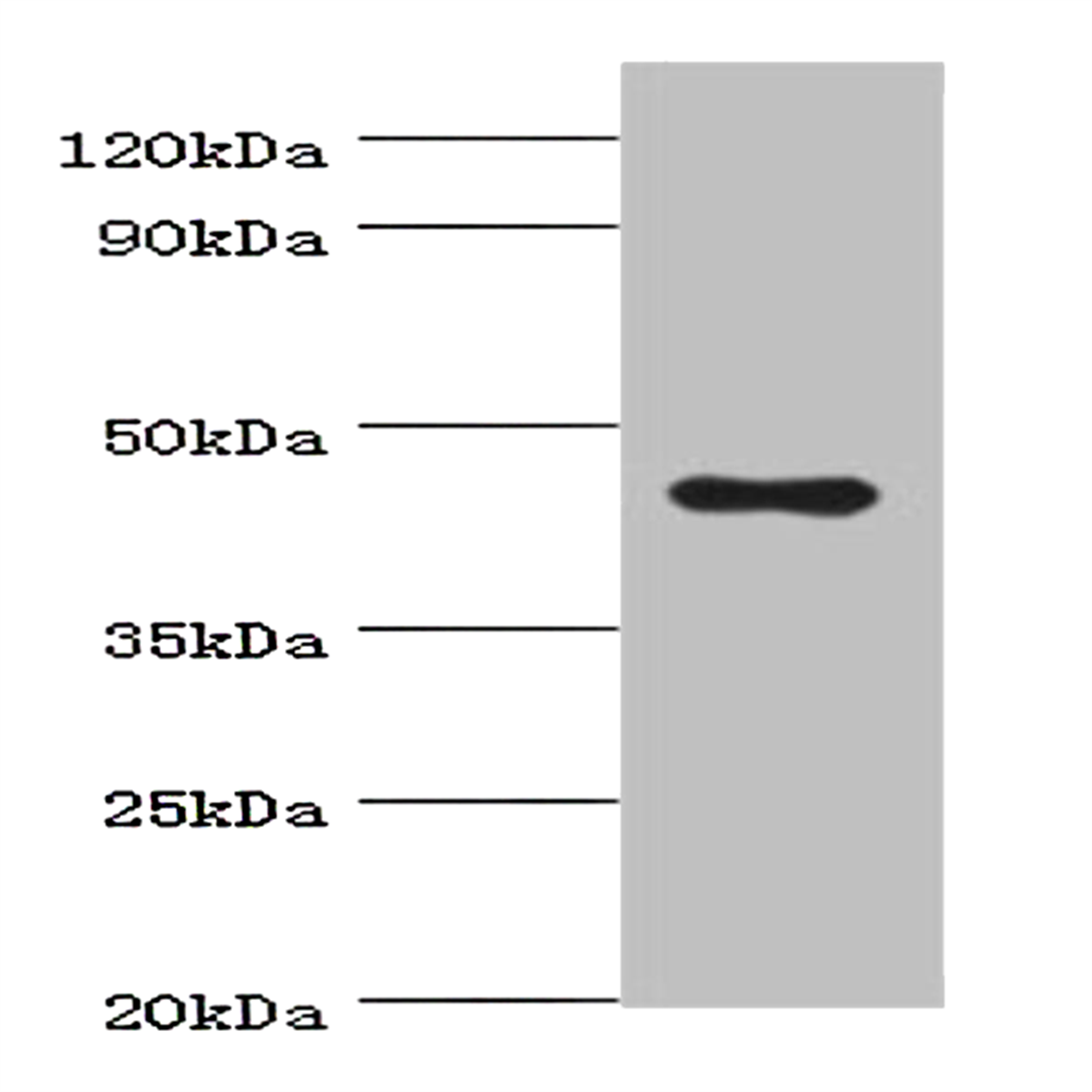
Anti-Human Apolipoprotein A-IV, Mouse Monoclonal, (A4-11G12)
Anti-Human Apolipoprotein A-IV, Mouse Monoclonal, (A4-11G12)
DiagnoCine offers excellent APOLIPOPROTEIN antibodies to researchers studying human induced pluripotent stem cell, mitochondrial dysfunction, pathophysiology, genetic polymorphisms, metabolism, phospholipase A2 activity, cellular surface factor, angiotensin-converting enzyme, nitric oxide synthase activity, amyloidosis, epigenome/metabolome research, sialylation proteoforms, pathogenesis, and progression.
Human diseases include type 1 diabetes, Memory Deficit, hepatitis C virus, Alzheimer's Disease, Osteoporotic Fractures. endoplasmic reticulum stress, atherosclerotic lesions, cancer, multiple sclerosis, Toxic Hetero-oligomers, brain amyloid load, hypertriglyceridemic pancreatitis, Atherosclerosis, Schnauzers, coronary artery disease, psoriasis, cardiac amyloidosis, cardiovascular disease and hypertension, dementia, type 2 diabetes mellitus, toxicity in human neurons, cognitive impairment, atherothrombosis, familial hypobetalipoproteinemia, hyperlipidemia, Parkinson's disease, metabolic syndrome, coronary heart disease, and depression.
APOLIPOPROTEIN antibodies have excellent quality and this highly pure antibody can be adapted for Western Blots, ELISA, Immunohistochemistry, Immunofluorescence research with optimization.
General information
| Cat. No. | :FNK-BML002 |
| Size | :50 µg |
| Formulation | :0.2 µm filtered PBSsolution containing 0.1% sodium azide |
| Label | :Unlabeled |
| Specificity | :This antibody has been selected for its ability to bind for human plasma apoA-IV and recombinant apoA-IVfrom CHO cells by western blot. |
| Class | :IgG |
| Clone | :A4-11G12 |
| Application | :ELISA, Western Blot |
| Cross Reactivity | :Human |
| Antigen | :Human |
| Host Animal | :Mouse |
| Purification | :PAPu |
| Storage | :IgG in PBS solution are stable for twelve months from the date of receipt when stored at-80˚C. Avoid repeated freeze-thaw cycles. |
Preparation
Produced in mice immunized with apolipoprotein A-IV (apo A-IV) purified from human plasma. Apo A-IV specific IgG was purified from mouse ascites fluid with a proteinA-Sepharose.
Additional Applications
Western Blot – This antibody can be used at 0.5 – 1.0 µg/mL with the appropriate secondary reagent to detect human plasma apo A-IV. The detection limit for purified apo A-IV and plasma sample is approximately 0.01 µg/lane and 0.1 µL, respectively, by SDS-PAGE and western blotting under reducing condition.
Sandwich ELISA – Biotinylated antibody (BML003) of this antibody can be used as a detection antibody in a human apo A-IV ELISA in combination with the monoclonal capture antibody (Catalog #BML001). In general, using plates coated with 100 µL/well of 5 µg/ml capture antibody (Catalog #BML001), in combination with 100 µL/well of 0.05 µg/ml detection antibody (Catalog #BML003), an ELISA for sample volumes of 100 µL can be obtained. Titrate each preparation of the serum sample for standard preparation to arrive at the most suitable dose range. For this antibody pair, a two-fold dilution series starting at 200 ng/mL is suggested.
Optimal dilutions should be determined by each laboratory for each application.
Antigen Characterization
| Type | :Glycoprotein |
| Application | :ELISA, Western Blot, Platelet aggregation studies, Lipid metabolism research, Glucose homeostasis experiments, Anti-inflammatory studies, Cardiovascular disease research |
| Species | :Human, rodent models |
| Recombinant | :Not specified |
Apolipoprotein A-IV in the Cell
- Primarily synthesized in the small intestine
- Packaged into chylomicrons during fat absorption
- Involved in lipid metabolism as a lipid-binding protein
- Facilitates lipid transport
- Possesses anti-inflammatory properties
- Suppresses effector cell functions in eosinophils
- Activates signaling pathways involving Rev-ErbA-α and PI3K/PDK1/PKA
- Improves insulin sensitivity and glucose uptake in adipocytes through PI3K-Akt signaling
Apolipoprotein A-IV in the Human Body
- Circulates in the bloodstream, with about 80% in lipid-free form
- Acts as an endogenous inhibitor of thrombosis
- Binds to activated αIIbβ3 integrin on platelets, inhibiting platelet aggregation
- Protects against atherosclerosis and diabetes
- Improves glucose homeostasis by enhancing insulin secretion
- Exhibits anti-inflammatory properties throughout the body
- Potentially benefits conditions such as allergic inflammation
- Plasma levels negatively correlate with cardiovascular events
- Suggests a protective role against cardiovascular diseases
Aliases for APOA4 Gene

References
- Xu, Xiaohong Ruby et al. “Apolipoprotein A-IV binds αIIbβ3 integrin and inhibits thrombosis.” Nature communications vol. 9,1 3608. 6 Sep. 2018, doi:10.1038/s41467-018-05806-0
- Obinata, Hideru et al. “Identification of ApoA4 as a sphingosine 1-phosphate chaperone in ApoM- and albumin-deficient mice.” Journal of lipid research vol. 60,11 (2019): 1912-1921. doi:10.1194/jlr.RA119000277
- Qu, J., Fourman, S., Fitzgerald, M. et al. Low-density lipoprotein receptor-related protein 1 (LRP1) is a novel receptor for apolipoprotein A4 (APOA4) in adipose tissue. Sci Rep 11, 13289 (2021). https://doi.org/10.1038/s41598-021-92711-0
- “Apolipoprotein A-IV/APOA4 Antibody (APOA4/3372) [HRP].” Novus Biologicals, www.novusbio.com/products/apolipoprotein-a-iv-apoa4-antibody-apoa4-3372_nbp3-08947h.