6-Shagaol, 5 mg
Product#: FNK-2400259
$301.48
Availability:
Ships in 1-2 Weeks
6-Shagaol
Cat No: FNK-2400259
Size: 5 mg
Storage: Store at 2-10 °C in a dry and dark place
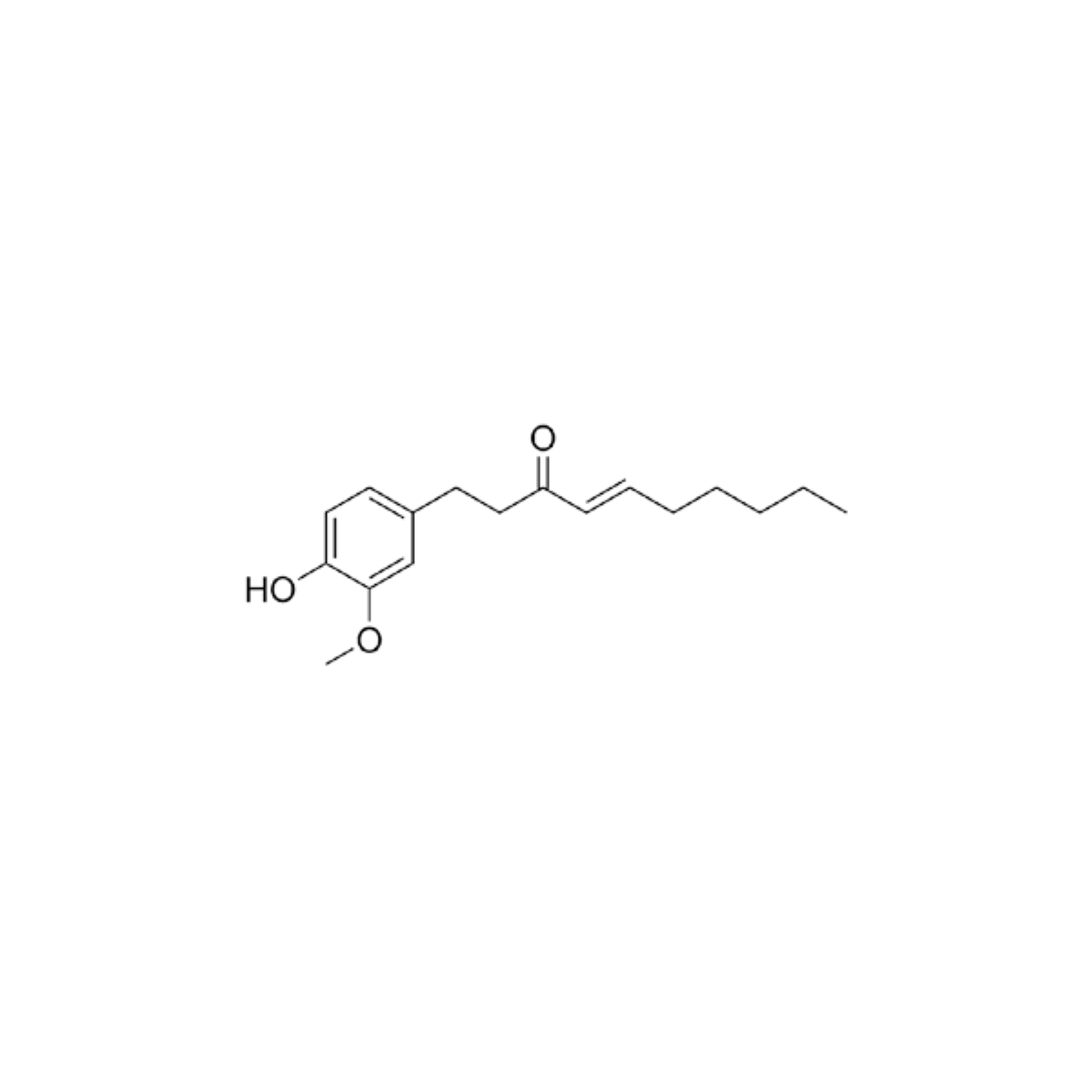
M. F.: C17H24O3
M.W.: 276.37
Purify: >= 98 % (HPLC)
Cas: 555-66-8
Storage: Store at 2-10 °C in a dry and dark place
M. F.: C17H24O3
M.W.: 276.37
Purify: >= 98 % (HPLC)
Cas: 555-66-8
Product Description
6-Shogaol is a bioactive compound found in ginger (Zingiber officinale Roscoe) with notable anti-inflammatory and anticancer properties.
Property
- Molecular Formula: C17H24O3
- Molecular Weight: 276.4 g/mol
- CAS Number: 555-66-8
- Purity: ≥95%
6-Shogaol is used in biochemical research to study its effects on cancer cells and inflammatory pathways. It has been shown to induce apoptosis in cancer cells, impair tubulin polymerization, downregulate NF-κB signaling, inhibit inflammatory mediators, and activate TRPV1 and TRPA1 channels.
Safety and Handling
This product is for research use only and not for human or veterinary diagnostic or therapeutic use. It should be handled with care, avoiding ingestion, inhalation, and contact with skin or eyes.
Involved Human Diseases
- Cancer
- 6-Shogaol has demonstrated anticancer properties through various mechanisms:
- Induction of paraptosis and apoptosis in cancer cells
- Increased production of reactive oxygen species
- Inhibition of cancer cell proliferation and metastasis
- 6-Shogaol has demonstrated anticancer properties through various mechanisms:
- Kidney Protection
- Research has shown that 6-shogaol can protect against cisplatin-induced acute kidney injury by:
- Suppressing oxidative stress
- Inhibiting tubular cell death
- Reducing inflammation
- Research has shown that 6-shogaol can protect against cisplatin-induced acute kidney injury by:
- Cardiovascular Health
- 6-Shogaol has shown potential benefits for vascular health:
- Reduced adhesion of leukocytes to activated endothelial cells
- Decreased expression of cell adhesion molecules
- Inhibition of angiogenesis-related processes
- 6-Shogaol has shown potential benefits for vascular health:
- Antiviral and Anti-inflammatory Effects in COVID-19
- Recent studies have explored 6-shogaol's potential in addressing COVID-19:
- Inhibition of SARS-CoV-2 replication
- Reduction of virus-induced inflammation through inactivation of NLRP3 inflammasome
- Recent studies have explored 6-shogaol's potential in addressing COVID-19:
- Myelodysplastic Syndromes (MDS)
- 6-Shogaol shows promise in addressing lower-risk myelodysplastic syndromes:
- Potential to reduce chronic inflammation associated with MDS
- Antioxidant effects that may help combat oxidative stress in MDS patients
- 6-Shogaol shows promise in addressing lower-risk myelodysplastic syndromes:
- PI3K/AKT/mTOR Pathway
- 6-Shogaol inhibits the PI3K/AKT/mTOR signaling pathway in various cancer cell lines:
- Decreases expression of p-PI3K, p-AKT, and p-mTOR in oral squamous cell carcinoma (OSCC) cells
- Inhibits AKT kinase activity by binding to an allosteric site of AKT in non-small cell lung cancer (NSCLC) cells
- NF-κB Signaling
- 6-Shogaol suppresses NF-κB activation in multiple cell types:
- Reduces LPS-activated p50 and p65 translocation from cytosol to nucleus in RAW 264.7 cells
- Inhibits NF-κB DNA binding and abrogates LPS-triggered IκBα phosphorylation in microglia cells
- Decreases NF-κB promoter activity in human umbilical vein endothelial cells (HUVECs)
- MAPK Pathway
- 6-Shogaol modulates various components of the MAPK signaling cascade:
- Reduces ERK activation in RAW 264.7 cells
- Activates JNK, p38 MAPK, and ERK in breast cancer cells
- Decreases LPS-induced MAPK activity (p38, JNK, and ERK phosphorylation) in primary microglia cells
- STAT3 Signaling
- 6-Shogaol inhibits STAT3 activation in cancer cells:
- Suppresses constitutive phosphorylation of STAT3 through inhibition of upstream JAK2 and c-Src kinases in MDA-MB231 and DU145 cells
- Reduces constitutive phosphorylation of STAT3 in NCI-H1650 lung cancer cells
- Notch Signaling
- 6-Shogaol downregulates Notch signaling in breast cancer stem cell-like spheroids:
- Reduces expression levels of Cleaved Notch1 and its target proteins Hes1 and Cyclin D1
- Nrf2/Keap1 Pathway
- 6-Shogaol activates the Nrf2/Keap1 pathway, which is involved in cellular stress response:
- Upregulates expression of Nrf2 target genes (AKR1B10, FTL, GGTLA4, HMOX1) in HCT-116 cells
- Induces Nrf2 nuclear translocation and upregulates expression of MT1, HMOX1, and GCLC in mouse colon tissue
- IKKβ/NF-κB/Snail Signaling
- 6-Shogaol inhibits this pathway in colon cancer cells:
- Reduces protein expression of IKKβ, P-NF-κB, and Snail in Caco2 and HCT116 cells
- PPAR-γ Signaling
- 6-Shogaol may activate the PPAR-γ signaling pathway:
- Increases levels of PPAR-γ receptor in BV2 microglia cell