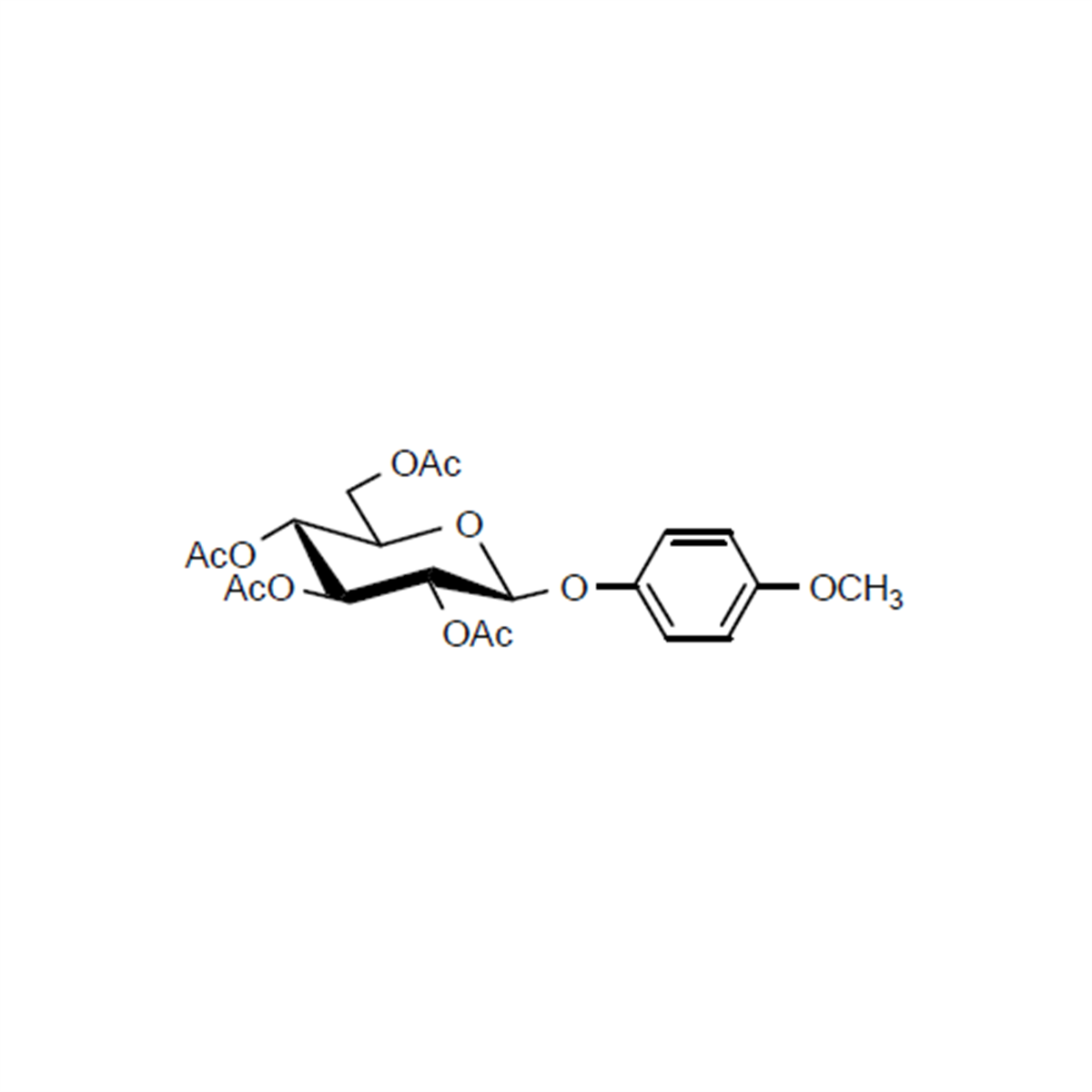
4-Methoxyphenyl 2,3,4,6-tetra-O-acetyl-β-D-glucopyranoside
Product#: FNK-GL001010
$191.84
Availability:
Ships in 1-2 Weeks
4-Methoxyphenyl 2,3,4,6-tetra-O-acetyl-β-D-glucopyranoside
- CAT Number : FNK-GL001010
- CAS Number : 14581-81-8
- Molecular Weight : 454.42
- Molecular Formula : C21H26O11
- Pack size: 10 g
- Store: 2-10 ℃
- Purity: >98%(HPLC)
4-Methoxyphenyl 2,3-di-O-benzyl-β-D-galactopyranoside is a synthetic carbohydrate derivative containing a galactose sugar with benzyl protecting groups and a 4-methoxyphenyl group at the anomeric position. It is likely used as an intermediate in carbohydrate synthesis or as a tool for studying glycosylation reactions.
Properties
- Molecular formula: C21H26O11
- Molecular weight: 454.42 g/mol
- Appearance: Likely a white to off-white crystalline powder
- Solubility: Probably soluble in organic solvents, poorly soluble in water
- Research tool for studying carbohydrate chemistry and glycosylation reactions
- Potential intermediate in the synthesis of complex carbohydrates or glycoconjugates
- Used in studies related to carbohydrate-protein interactions
- Employed in the development of synthetic methodologies for oligosaccharide synthesis
- For research use only - not for human or veterinary use
- Handle with appropriate personal protective equipment (PPE)
- Store in a cool, dry place, protected from light and moisture
- Avoid inhalation, ingestion, and contact with skin and eyes
While this compound itself is not directly associated with treating specific diseases, research involving similar carbohydrate derivatives may be relevant to:
- Cancer (studying carbohydrate-based antigens and vaccines)
- Infectious diseases (investigating host-pathogen interactions involving carbohydrates)
- Autoimmune disorders (studying glycosylation patterns in immune responses)
This compound is not directly involved in cell signaling pathways, but research using similar carbohydrate derivatives may be relevant to:
- Glycosylation-dependent signaling pathways
- Lectin-mediated signaling
- Carbohydrate-receptor interactions in cellular recognition processes