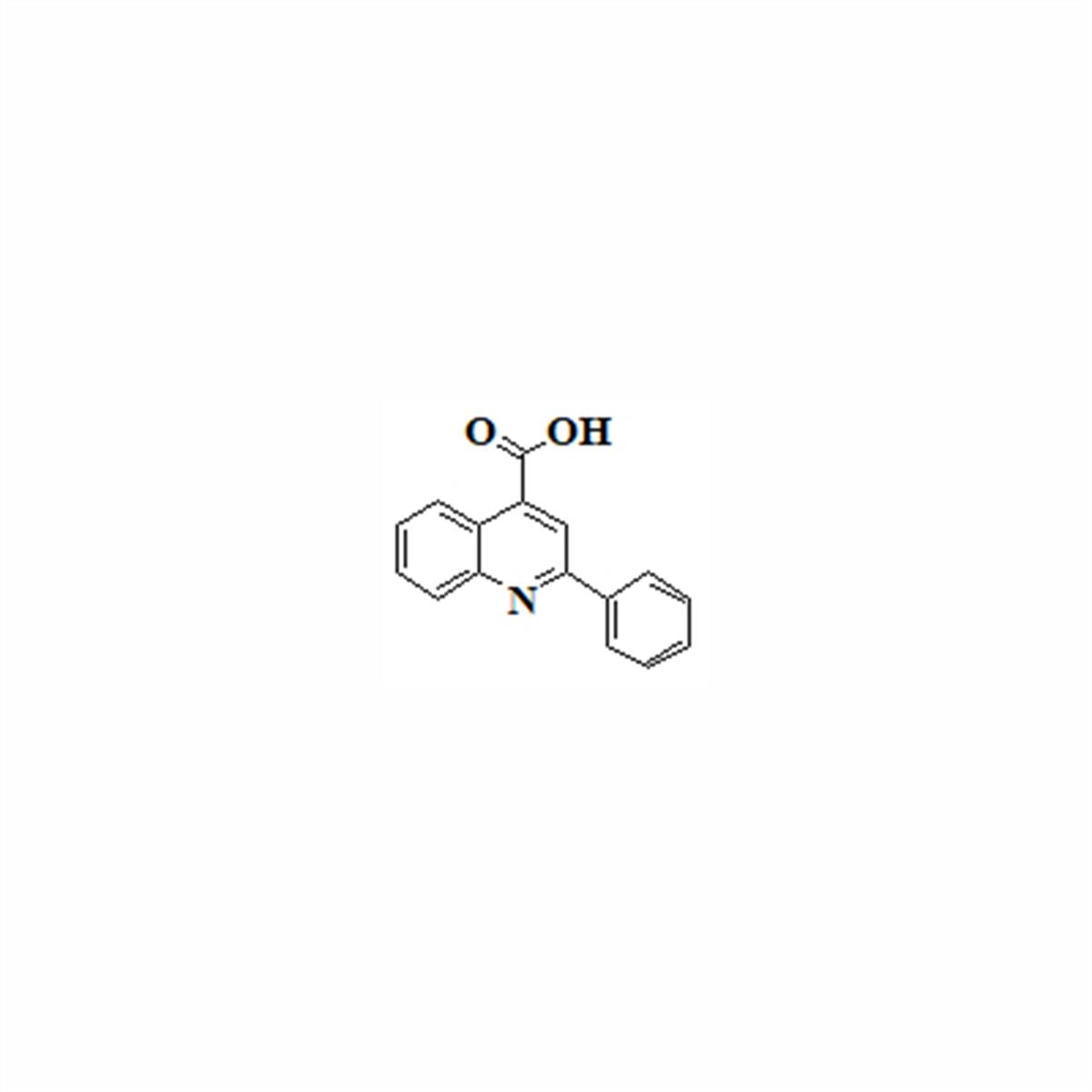
2-Phenyl-4-quinolinecarboxylic acid
Product#: Gly-GMSM-123
$300.00
Availability:
Ships in 1-2 Weeks
2-Phenyl-4-quinolinecarboxylic acid
- CAT Number : Gly-GMSM-123
- CAS Number : 132-60-5
- Molecular Weight : 249.26
- Molecular Formula : C16H11NO2
- Pack size: 10 g
2-Phenyl-4-quinolinecarboxylic acid is an organic compound consisting of a quinoline core with a phenyl group at the 2-position and a carboxylic acid group at the 4-position. It is likely used as an intermediate in organic synthesis and pharmaceutical research.
Properties
- Molecular formula: C16H11NO2
- Molecular weight: 249.27 g/mol
- Physical state: Likely a solid at room temperature
- Structure: Contains a quinoline ring, a phenyl group, and a carboxylic acid group
- Used as an intermediate in organic synthesis
- Potential applications in the development of pharmaceuticals and fine chemicals
- May be used in the synthesis of complex molecules or as a building block in chemical reactions
- Possible applications in the development of antimicrobial or anti-inflammatory agents
- Handle with care in a well-ventilated area
- Wear appropriate personal protective equipment (PPE) such as gloves, safety glasses, and lab coat
- Store in a cool, dry place away from incompatible materials
- Avoid skin contact, inhalation, or ingestion
- May be an eye and skin irritant; avoid exposure
Antibacterial Activity: Derivatives of 2-phenyl-4-quinolinecarboxylic acid have been studied for their antibacterial properties. These compounds have shown activity against bacteria such as Staphylococcus aureus and Escherichia coli, with some derivatives exhibiting significant antibacterial effects while maintaining low cytotoxicity in vitro1.
Antitumor Activity: This compound and its derivatives have been explored for their potential in inhibiting tumor growth. Studies have demonstrated effectiveness against certain types of cancer, such as B16 melanoma and L1210 leukemia in mice, as well as human colon carcinoma cells in vitro2. These findings suggest potential applications in cancer therapy.
Antirheumatic and Analgesic Effects: Historically, 2-phenyl-4-quinolinecarboxylic acid has been used as an antipyretic, analgesic, and in the treatment of rheumatic diseases like gout34. However, its clinical use has been limited due to concerns about potential side effects, including drug-induced liver injury5..
Cellular Signaling Pathways Affected
Bcl-2 Pathway: Quinoline-based compounds have been identified as inhibitors of the Bcl-2 protein, which is involved in regulating apoptosis. These compounds can interfere with the Bcl-2–Bim peptide binding, exhibiting potent anti-proliferative activity against Bcl-2 expressing human cancer cell lines1.
VEGFR-2 Pathway: Some quinoline derivatives have shown inhibitory activity against the vascular endothelial growth factor receptor 2 (VEGFR-2). This inhibition can lead to the suppression of angiogenesis, which is crucial for tumor growth and metastasis. The quinoline derivatives can bind within the VEGFR-2 active site, affecting cell cycle progression and inducing apoptosis in cancer cells24.
RAGE Pathway: The receptor for advanced glycation end products (RAGE) is another pathway influenced by quinoline compounds. RAGE is involved in various metabolic processes, including adaptive thermogenesis and lipid metabolism. Quinoline derivatives can modulate this pathway by affecting protein kinase A (PKA) mediated phosphorylation processes, which are linked to energy expenditure and thermogenic responses3.